Cloud vs. On-Premises eDiscovery: Flexible Options with Venio Systems

Ready to get started?
built for clarity, control, and scale.
Share
What’s the smarter choice for today’s law firms: cloud-based eDiscovery or on-premise software? It’s a question nearly every legal team is asking as data volumes explode and clients demand faster, more cost-efficient outcomes.
The numbers tell the story: only 26% of Am Law 200 firms were using cloud eDiscovery in 2023, yet 94% believed it would become the norm within two years. That’s not just a trend, it’s a wake-up call. The way law firms approach discovery is shifting, and the stakes couldn’t be higher.
On-premise solutions deliver control and security, but often at the expense of flexibility and scalability. Cloud-based eDiscovery offers speed and accessibility, but firms worry about compliance and cost control. So, which model really works best?
In this blog, we’ll explore the cloud vs on-premises eDiscovery debate head-on, unpack the pros and cons of each, and show how hybrid solutions (like Venio’s) can help you achieve the perfect balance.
What is Cloud-Based eDiscovery?
Think of cloud-based eDiscovery as moving your litigation toolkit online. Instead of managing bulky servers and IT infrastructure in-house, law firms tap into secure, web-based platforms hosted by trusted providers.
This means no more late nights worrying about software updates, storage limits, or system crashes, those responsibilities shift to the provider. For legal teams, it’s about logging in from anywhere, accessing case data instantly, and letting the technology scale with your needs.
At its core, eDiscovery in the cloud isn’t just a change in where your data lives; it’s a shift in how efficiently your team can work, collaborate, and stay ahead in fast-moving cases.
Pros & Cons of Cloud-Based eDiscovery
Like every good courtroom argument, cloud-based eDiscovery has two sides. On one hand, it delivers speed, scalability, and flexibility. On the other hand, it raises concerns about security, control, and long-term costs. Here’s a closer look:

Pros of Cloud-Based eDiscovery
- Anytime, Anywhere Access
With cloud-based eDiscovery, your legal team isn’t tied to the office. Whether you’re in court, working remotely, or collaborating across multiple locations, your case data is available with just a secure login.
- Scalability on Demand
Litigation volumes fluctuate, and the cloud scales with you. From small matters to massive, multi-terabyte cases, you can expand storage and processing power instantly without new hardware or IT bottlenecks.
- Lower IT Burden
No servers to manage, no late-night updates, and no extra IT hires. Cloud providers handle the infrastructure, freeing your in-house team to focus on strategy instead of system maintenance.
- Faster Deployment
Unlike on-premise setups that can take weeks (or months) to configure, cloud solutions can be deployed quickly, helping law firms respond faster to urgent litigation or regulatory deadlines.
Cons of Cloud-Based eDiscovery
- Ongoing Subscription Costs
While cloud avoids big upfront investments, the recurring monthly or annual fees can become significant over time, especially for firms managing continuous, large-scale cases.
- Data Security Concerns
Even with encryption and compliance certifications, some firms hesitate to store highly sensitive client data outside their direct control, especially when confidentiality is paramount.
- Internet Dependency
A strong, reliable internet connection is non-negotiable. Any disruption in connectivity can mean delays in accessing case-critical files, which isn’t a risk every firm is willing to take.
- Less Customization and Control
Unlike on-premise systems, cloud platforms often have limited room for customization. Firms used to tailoring workflows or system configurations may find this restrictive.
What is On-Premise eDiscovery?
If cloud eDiscovery feels like renting, then on-premise eDiscovery is like owning your own house. Everything – from the servers to the software – sits inside your firm’s walls, giving you complete control over how and where data is managed.
This setup appeals to law firms that handle sensitive, high-stakes matters or work under regulations requiring strict data residency. With on-premise solutions, nothing leaves your infrastructure, which can feel like the ultimate safeguard for client confidentiality.
But ownership comes at a cost. Unlike the cloud, where upgrades and maintenance happen behind the scenes, on-premise means your team is responsible for every update, patch, and expansion. It offers control and peace of mind, but also requires ongoing investment in IT staff, hardware, and security.
Pros & Cons of On-premise eDiscovery
Like any “own vs rent” decision, on-premise eDiscovery comes with trade-offs. It gives law firms unrivaled control, but that control comes bundled with extra responsibility. Let’s break it down:
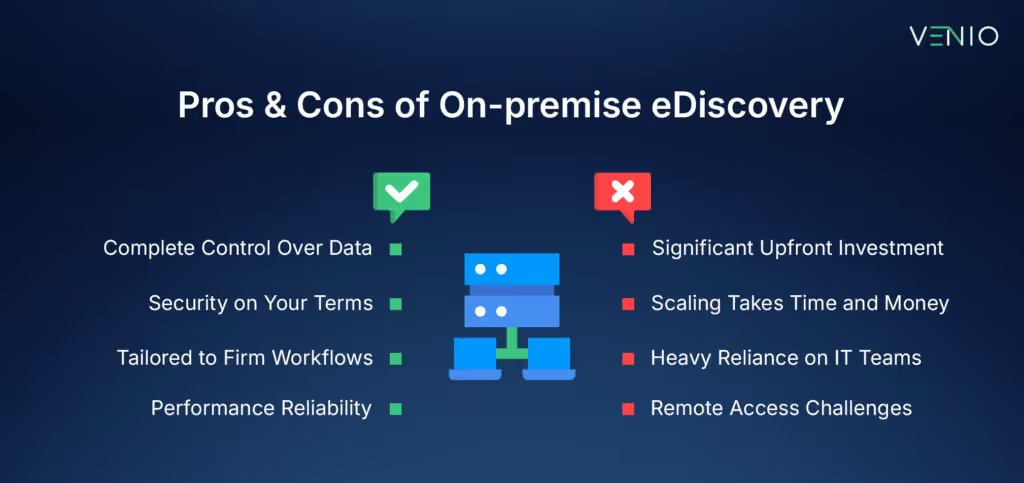
Pros of On-Premise eDiscovery
- Complete Control Over Data
With on-premise solutions, all case files, client information, and sensitive evidence stay within your own infrastructure. This level of control appeals to firms handling ultra-sensitive matters, where even the thought of external hosting raises eyebrows. - Security on Your Terms
Some firms and clients feel greater peace of mind knowing their data never leaves the premises. When servers are under your roof, you dictate every layer of protection from firewalls to encryption standards, without depending on a third-party provider. - Tailored to Firm Workflows
Unlike one-size-fits-all platforms, on-premise software can be heavily customized. From integrating with legacy systems to aligning with unique compliance requirements, firms can fine-tune their setup to match exactly how they operate.
- Performance Reliability
On-premise eDiscovery isn’t dependent on internet speed, external servers, or cloud availability. All performance metrics – from data processing to review workflows are fully controlled within your firm’s IT infrastructure, ensuring consistent, predictable operations even during peak workloads.
Cons of On-Premise eDiscovery
- Significant Upfront Investment
Hardware, licensing fees, and IT infrastructure don’t come cheap. On top of that, ongoing maintenance, storage expansion, and system upgrades add recurring costs that make budgeting more complex than cloud subscriptions. - Scaling Takes Time and Money
Need more processing power or storage for a large case? In the cloud, it’s a quick upgrade. On-premise, it means purchasing, installing, and configuring new servers – a process that delays responsiveness and drives up costs. - Heavy Reliance on IT Teams
System patches, updates, troubleshooting, and security monitoring all fall squarely on your IT department. If your team is already stretched thin, this extra workload can slow down both operations and case timelines. - Remote Access Challenges
Unlike the cloud, on-prem systems aren’t naturally built for mobility. Remote work or cross-office collaboration often requires complex VPNs or additional software layers, making access less seamless for distributed teams.
Factors Law Firms Should Consider Before Choosing
Deciding between cloud and on-premise eDiscovery isn’t just about technology, it’s about what works best for your firm’s strategy, budget, and clients. Here are the key factors to weigh:
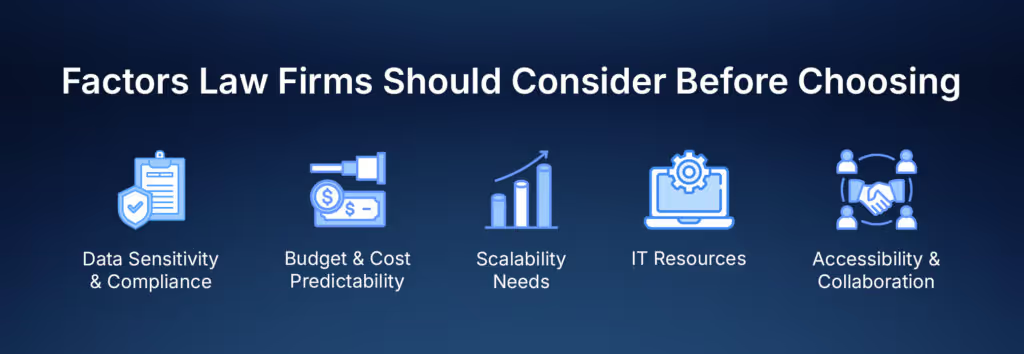
- Data Sensitivity & Compliance
If your cases involve highly confidential or regulated data, on-premises may feel safer. But many cloud providers now meet strict compliance standards like HIPAA and GDPR.
- Budget & Cost Predictability
Cloud typically spreads costs into predictable monthly fees, while on-premises requires large upfront investments plus ongoing maintenance.
- Scalability Needs
Firms handling fluctuating caseloads benefit from the cloud’s flexibility. On-premises requires more planning and investment to scale.
- IT Resources
A strong in-house IT team can manage on-premise systems, but if resources are limited, the cloud reduces that burden with vendor-managed updates and security.
- Accessibility & Collaboration
Cloud platforms enable seamless remote access and cross-office collaboration. On-premises may limit this flexibility without extra setup.
Hybrid eDiscovery Solutions: A Balanced Approach with Venio
Venio’s On-Demand Hybrid eDiscovery Model gives law firms the flexibility of the cloud with the control of on-premise systems.
- Flexibility Without Compromise
Scale up instantly in the cloud for large cases while keeping sensitive data securely on-premise. - Seamless Integration
Venio On-Demand bridges both environments, ensuring teams can work efficiently without juggling multiple tools. - Cost-Effective Control
Avoid the heavy upfront cost of full on-premise systems while maintaining the ability to manage high-priority data in-house.
With Venio On-Demand, you don’t have to choose between cloud vs on-premises – you get both, in a way that’s secure, scalable, and built for modern law firms.
Choose Your Ideal eDiscovery: Cloud, On-Prem, or Hybrid
Every law firm has unique needs, some require the flexibility of the cloud, others demand the control of on-premise, and many want the balance of hybrid On-Demand. With Venio Systems, you don’t have to compromise.
Our unified eDiscovery platform adapts to your firm’s workflows, giving you the power to choose the deployment model that works best without sacrificing speed, security, or defensibility.
Ready to take control of your eDiscovery strategy?
Explore how Venio’s cloud, on-premise, and On-Demand solutions can keep your firm competitive in a rapidly evolving legal landscape. Contact us today for more information.
FAQs About Cloud vs On-Premises eDiscovery
How does cloud eDiscovery reliability compare to on-premise?
Cloud eDiscovery platforms offer high reliability with built-in redundancy, automatic updates, and 24/7 support. On-premise systems can be reliable too, but depend heavily on internal IT infrastructure and maintenance, making them more susceptible to downtime if not managed properly.
Which deployment option is the most cost-effective: cloud, on-premise, or hybrid?
Cost varies by scale, usage, and IT resources. Cloud solutions reduce upfront infrastructure costs, on-premises requires a higher initial investment but may save on long-term subscription fees, and hybrid (like Venio’s on-demand model) combines flexibility and cost-efficiency, letting firms optimize expenses while maintaining control over sensitive data.
Related Articles
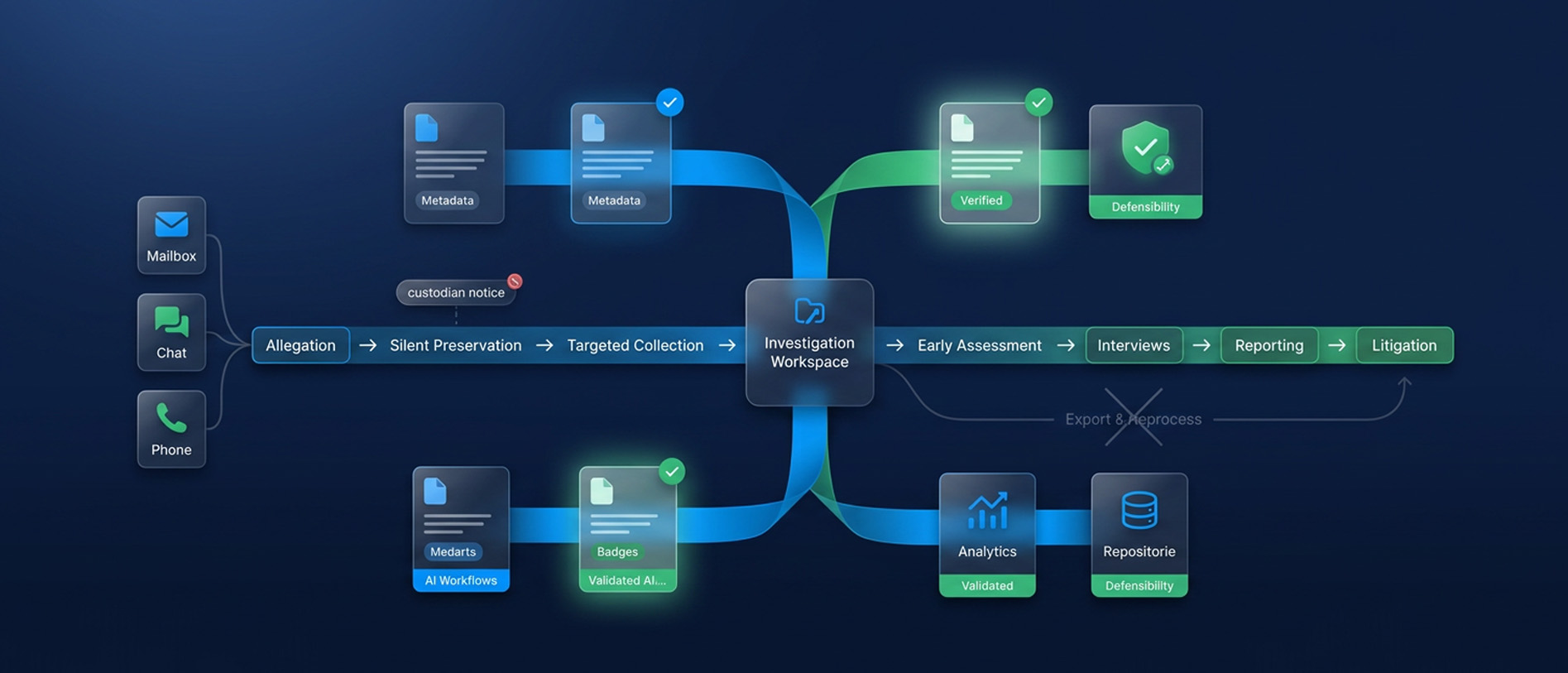
Internal Investigations: Getting the Facts Without Blowing the Matter Open
An internal investigation offers no court schedule and no second chance at prese
Read Article
eDiscovery Data Analytics & Visualization for Trial Preparation
Most litigation teams don’t lose at trial because they lack evidence. They lose
Read Article
What to Ask in an eDiscovery Demo Before You Sign
Twenty questions that make an eDiscovery vendor prove processing, AI, security a
Read Article