What is Data Migration in eDiscovery? Process, Risks & Framework

Ready to get started?
built for clarity, control, and scale.
Share
eDiscovery platforms aren’t static – cases evolve, technology advances, vendors sunset products, and organizations outgrow legacy systems. When that moment arrives, eDiscovery data migration becomes unavoidable. But unlike generic IT data migration, moving evidence, metadata, and review work product carries legal and compliance risk that can’t be compromised.
Legal teams aren’t simply moving files, they’re transferring legal data, audit trails, tags, redactions, coding decisions, and production history. Any loss or corruption can disrupt active matters, weaken defensibility, or even jeopardize case outcomes. That’s why a strategic and highly controlled data migration process is essential.
Understanding what is data migration in the eDiscovery context means recognizing that not every platform or vendor supports the level of accuracy and chain-of-custody required. The difference often comes down to whether legal software vendors provide client data migration support, purpose-built tools, and transparent workflows.
In this blog, we’ll break down the components of a strong data migration strategy, the risks to avoid, and how legal teams can migrate with confidence, without slowing down litigation or investigations.
What Is eDiscovery Data Migration?
To understand why migration is so critical and so risky, it helps to define what eDiscovery data migration really means.
In simple terms, eDiscovery data migration is the process of securely transferring case data, metadata, review work product, and system configurations from one eDiscovery platform to another. Unlike traditional data migration, this isn’t just about moving documents from Point A to Point B, it’s about preserving the legal value of every dataset.
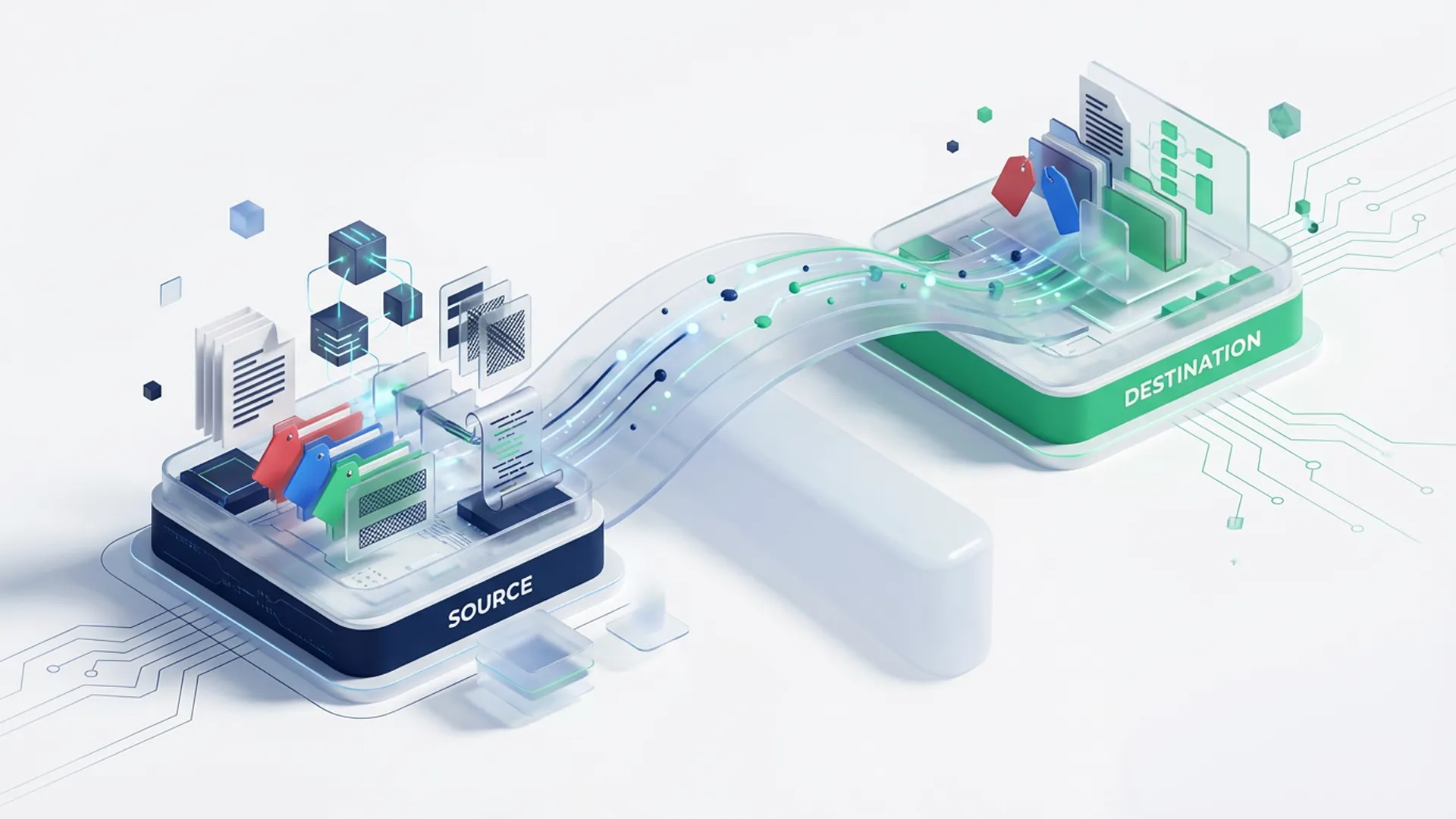
A true legal data migration must maintain:
- Original documents and attachments
- Metadata integrity and timestamps
- Custodian structure and folder hierarchy
- Tags, coding, redactions, and annotations
- Productions, load files, and transcripts
- Audit trails and chain of custody
Because every detail contributes to defensibility, any gaps can trigger rework, delays, or worse – courtroom risk.
This is where the right partner matters. Not all legal software vendors offer client data migration support, and when they don’t, legal teams are left with manual exports, inconsistent load files, and potential loss of work product. Choosing a platform and vendor capable of handling the complete data migration process is the foundation of a successful transition.
So that when executed correctly, a strong data migration strategy protects evidence integrity, minimizes downtime, and allows teams to move to a modern platform without disrupting active matters.
Why Legal Teams Migrate eDiscovery Data
The surge in eDiscovery data migration isn’t coincidental, it’s driven by the pressure to work faster, reduce costs, and protect litigation outcomes. Legal teams are realizing that outdated tools slow down review, increase risk, and inflate billing by making a strategic data migration not just beneficial, but necessary.

Here are the key drivers behind legal data migration today:
- Modernization from Legacy Systems: Older review tools struggle with today’s volumes, file types, and AI-driven workflows. Migrating to a modern platform unlocks analytics, automation, and cloud scale.
- Reducing Vendor Costs and Licensing Restrictions: Rising storage fees and inflexible contracts push firms and enterprises to transition to platforms that match real usage patterns and provide built-in efficiencies.
- Consolidating Tools into One Platform: Teams overwhelmed by multiple systems and exports turn to legal data migration as a way to centralize holds, processing, review, and production in one environment.
- Improving Security and Compliance: As regulations grow more complex, many teams move to platforms designed for stronger audit trails and defensible data migration processes.
- Support for Remote and Distributed Review: Modern matters require seamless access across locations; migration enables smoother collaboration without compromising governance.
Ultimately, every migration ties back to the same goal: to support a smarter data migration strategy that accelerates discovery work while maintaining accuracy and control. Legal teams don’t migrate because it’s easy, they migrate because staying on outdated systems costs more in the long run.
What are the Challenges of Data Migration in eDiscovery
Even when the benefits are clear, eDiscovery data migration is rarely simple. Legal teams manage massive volumes of sensitive information, and every decision in the data migration process affects timelines, defensibility, and cost. A single misstep can disrupt matters already in progress which is why planning and precision are critical

Below are the most common challenges legal teams face during legal data migration:
- Maintaining Metadata Integrity: Metadata isn’t optional in litigation, it is evidence. A poorly executed data migration can alter timestamps, custodian information, or document lineage, putting defensibility at risk.
- Chain of Custody Preservation: During eDiscovery data migration, every transfer must be traceable. Missing audit logs or unclear documentation can compromise case strategy and evidence admissibility.
- Handling Proprietary Formats & Legacy Exports: Older review systems use non-standard export structures, making mappings and field alignments complex. Without proper support, data loss becomes a real threat.
- Migrating Partially Active Matters: When productions, reviews, or legal holds are already active, the data migration process must prevent interruptions, especially for tight deadlines or judicial scheduling orders.
- Vendor Limits in Migration Support: Some legal software vendors client data migration support is limited or costly, leaving internal teams to troubleshoot mapping, hosting, and indexing without assistance.
- Time & Cost Overruns Without a Clear Strategy: A weak data migration strategy often results in rework, delays, and increased billing particularly when scoping and validation weren’t defined from day one.
Best Practices for eDiscovery Data Migration
A successful eDiscovery data migration isn’t only about moving files, it’s about preserving context, security, and review continuity without disrupting active matters. Legal teams that follow the right best practices reduce risk, accelerate transition, and protect every piece of legal data.
Here are the most important best practices to support a smooth and defensible data migration process:
- Put Data Integrity Above Everything: Evidence must arrive exactly as it existed in the prior system, including metadata, coding decisions, tags, redactions, comments, and relational links. Integrity is the backbone of defensible legal data migration.
- Choose Vendors with Strong Client Data Migration Support: Not all platforms offer robust legal software vendors client data migration support. Partner only with providers who supply migration specialists, documentation, validation tools, and hands-on project ownership.
- Maintain Full Chain of Custody Throughout: Track every export, transfer, and import with secured logs. If metadata changes or files go missing, defensibility weakens which is why chain-of-custody auditing must be mandatory.
- Migrate in Phases – Not All at Once: Start with closed or low-risk matters to validate the data migration strategy before transitioning live, time-sensitive cases. A phased rollout protects productivity and confidence.
- Prioritize Communication Across Stakeholders: eDiscovery teams, outside counsel, review managers, and IT must stay aligned on access timelines, testing schedules, and updates. Lack of communication is one of the biggest causes of migration delays.
- Test Workflows – Not Just Files: Validation should include keyword search, deduplication rules, batching, redaction tools, user permissions, and production exports to ensure operational continuity.
- Keep the Old System Accessible Until Full Sign-Off: Even a perfect eDiscovery data migration requires a buffer period where both the legacy and new platform remain accessible. This safeguards against overlooked dependencies and last-minute questions.
Venio: Your Migration-Friendly eDiscovery Platform
Ready to move to a faster, more modern eDiscovery platform without risking your data? A well-planned eDiscovery data migration keeps every document, metadata field, and privilege call intact while unlocking better performance and lower long-term costs.
If you’re evaluating a migration or want expert support through the process, Venio makes it seamless, secure, and defensible. Book a demo and explore how easy the transition can be.
Related Articles
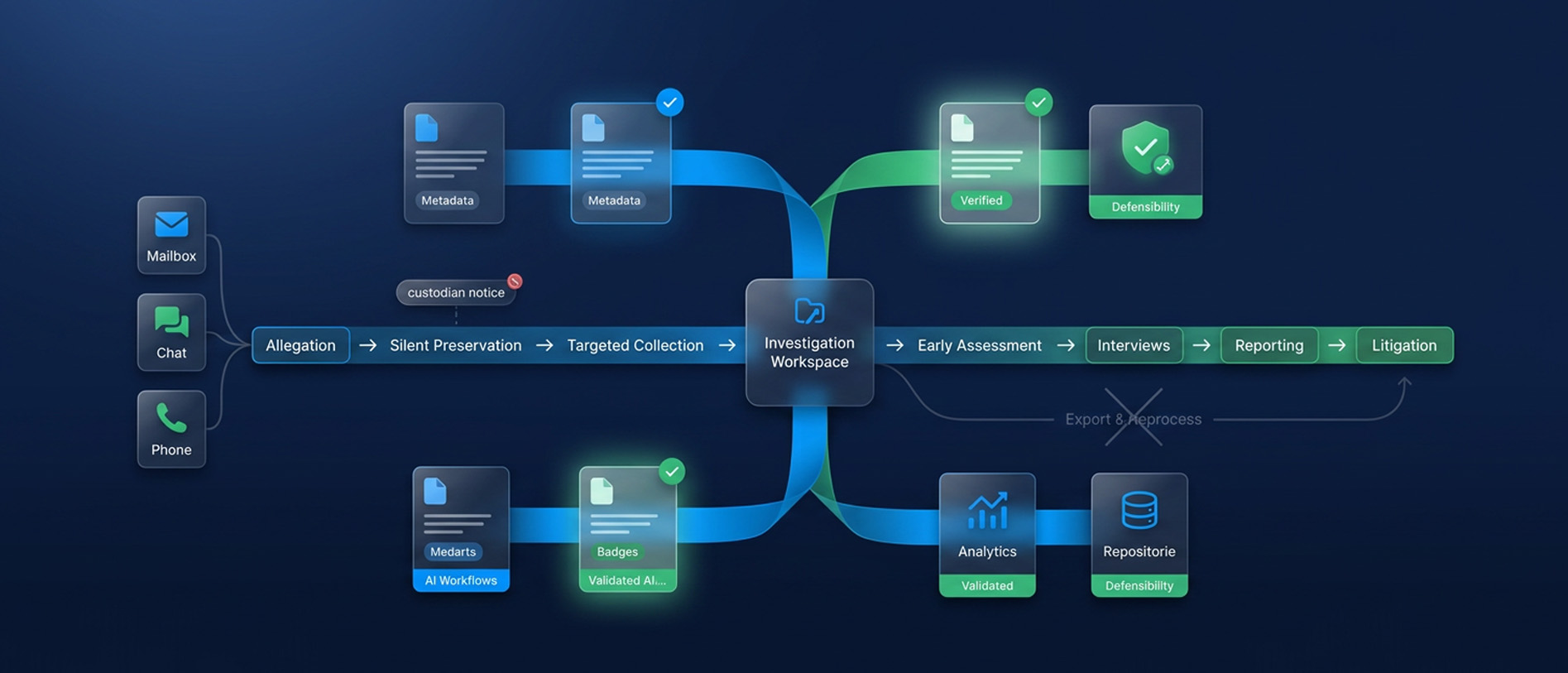
Internal Investigations: Getting the Facts Without Blowing the Matter Open
An internal investigation offers no court schedule and no second chance at prese
Read Article
eDiscovery Data Analytics & Visualization for Trial Preparation
Most litigation teams don’t lose at trial because they lack evidence. They lose
Read Article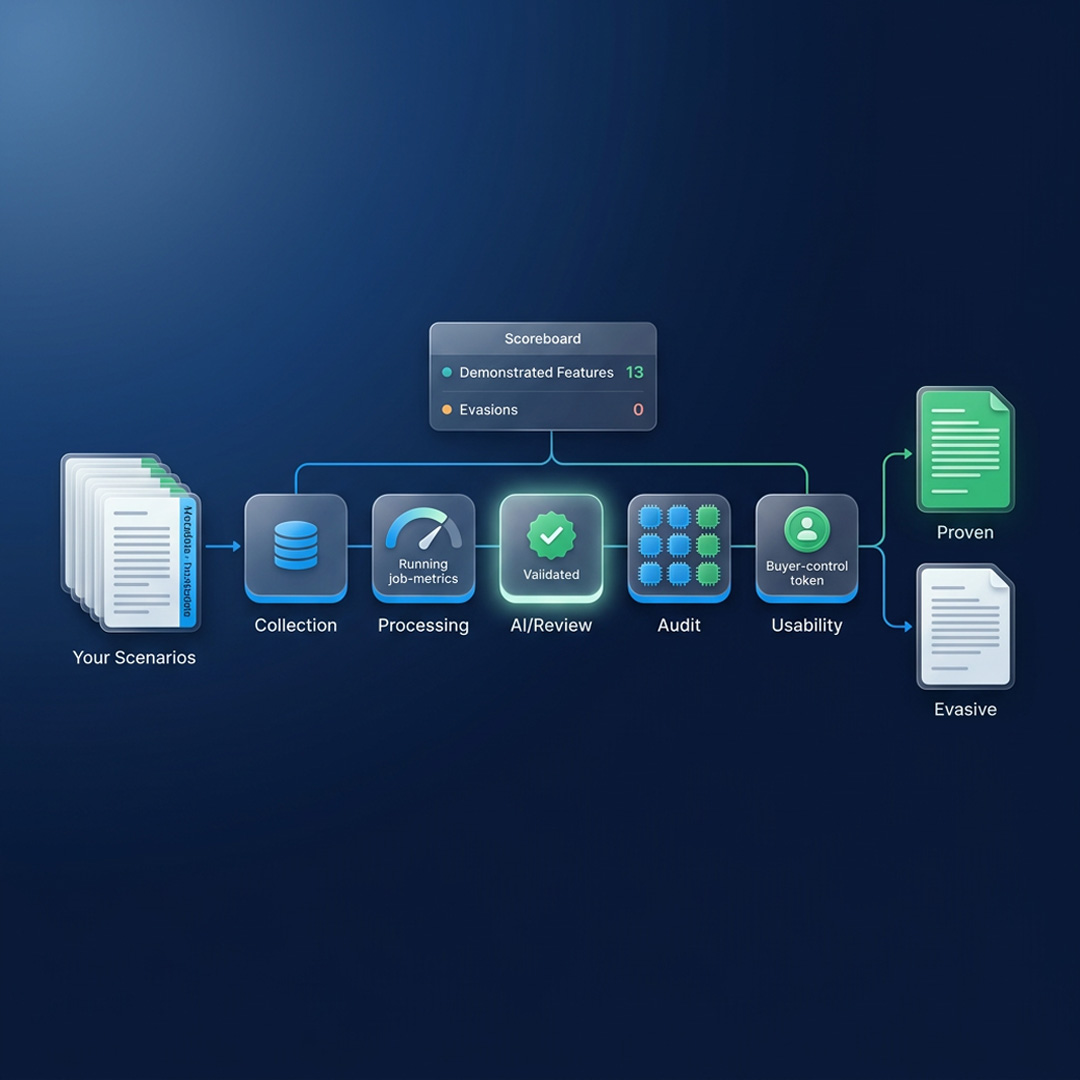
What to Ask in an eDiscovery Demo Before You Sign
Twenty questions that make an eDiscovery vendor prove processing, AI, security a
Read Article