Signs Your Current eDiscovery Tool is Failing Your Team

Ready to get started?
built for clarity, control, and scale.
Share
The pace, volume, and complexity of digital evidence have never been higher, and for many legal teams, the difference between a smooth review and an operational nightmare comes down to one thing: the eDiscovery tool they rely on.
But not all eDiscovery tools are built for today’s realities. Data isn’t just emails and PDFs anymore, it’s Slack threads, Teams channels, mobile exports, cloud repositories, multimedia, and rapidly evolving formats. If your current platform can’t keep up, the result is predictable: missed deadlines, ballooning costs, frustrated reviewers, and unnecessary risk.
The challenge isn’t simply having an eDiscovery platform, it’s knowing whether it’s the right one. The best eDiscovery tools should streamline workflows, reduce manual effort, support modern data types, and maintain defensibility without forcing your team to work around limitations or outdated processes.
If you’ve ever wondered whether your current eDiscovery software is truly supporting your team or quietly slowing everything down, then this guide will help you find the answer. Let’s break down the warning signs that it may be time to upgrade before the next case becomes more painful than it needs to be.
Key Warning Signs Your eDiscovery Tool Is Letting You Down
Even the best eDiscovery tools eventually fall behind if they can’t scale with modern data volumes, new formats, and faster litigation demands. If you’re starting to feel friction, confusion, or rising operational costs, it may not be your process rather, it may be your eDiscovery software holding you back.
These red flags signal that it’s time to rethink your current platform and explore more modern, future-ready eDiscovery tools.

1. Slow or Unpredictable Processing and Ingestion
If your eDiscovery software struggles to process large datasets or if indexing unpredictable data sources takes too long, deadlines and review cycles quickly become bottlenecked. Slow ingestion often means outdated architecture or a lack of automation, which makes even simple cases drag on unnecessarily.
2. Rising or Hidden Operational Costs
Per-GB storage fees, premium export charges, rigid licensing, or unpredictable billing show that your eDiscovery tool may not be built for scalable workflows. When teams dread adding users or uploading more data because of pricing uncertainty, the tool becomes a financial liability instead of a legal advantage.
3. Limited Support for Modern Data Types
Today’s investigations include Slack messages, Microsoft Teams chats, Zoom transcripts, cloud drives, WhatsApp communication, and mobile exports, not just emails and PDFs. If your eDiscovery software can’t handle modern communication and file types seamlessly, you’re working with incomplete or risky evidence.
4. Poor Collaboration and Rigid Permissions
The best eDiscovery tools allow flexible access controls, shared review environments, clear audit trails, and scalable user roles. If your team has to rely on manual handoffs, spreadsheets, or expensive add-on licenses just to collaborate, productivity drops, and case coordination becomes messy.
5. Weak Review Analytics or Outdated Search Capabilities
If searching feels slow, inaccurate, or inconsistent and if your platform lacks features like AI review, CAL/TAR, document clustering, or relevancy scoring, it means the tool is not leveraging intelligent review. Slow or shallow analytics make review labour-intensive rather than strategic.
6. Security, Compliance, or Audit Gaps
A modern eDiscovery tool must support defensibility, chain-of-custody tracking, legal holds, audit trails, and regulatory requirements such as GDPR or data residency laws. If your current platform requires manual exports, side systems, or unreliable logs, the risk of compliance failure increases significantly.
7. Difficult to Use or Dependent on Vendor Assistance
A steep learning curve, outdated UX, or constant reliance on support teams slows internal adoption. If onboarding takes too long or workflows feel complicated, your eDiscovery software is costing time, morale, and operational confidence.
8. Vendor Lock-In and Limited Export Freedom
If you cannot easily move data, switch hosting models, or export files without paying extra or involving the vendor, that’s a warning sign. Modern eDiscovery tools prioritize flexibility, not forced dependency.
What To Do When You Recognize These Signs
If you’ve identified even a few of these warning signals, it’s time to take a strategic approach rather than waiting for another stalled review, compliance concern, or unexpected invoice. Switching from an outdated eDiscovery tool to a modern, scalable platform doesn’t have to be overwhelming then the key is following a structured evaluation process.
Here’s how to move forward with clarity and confidence:
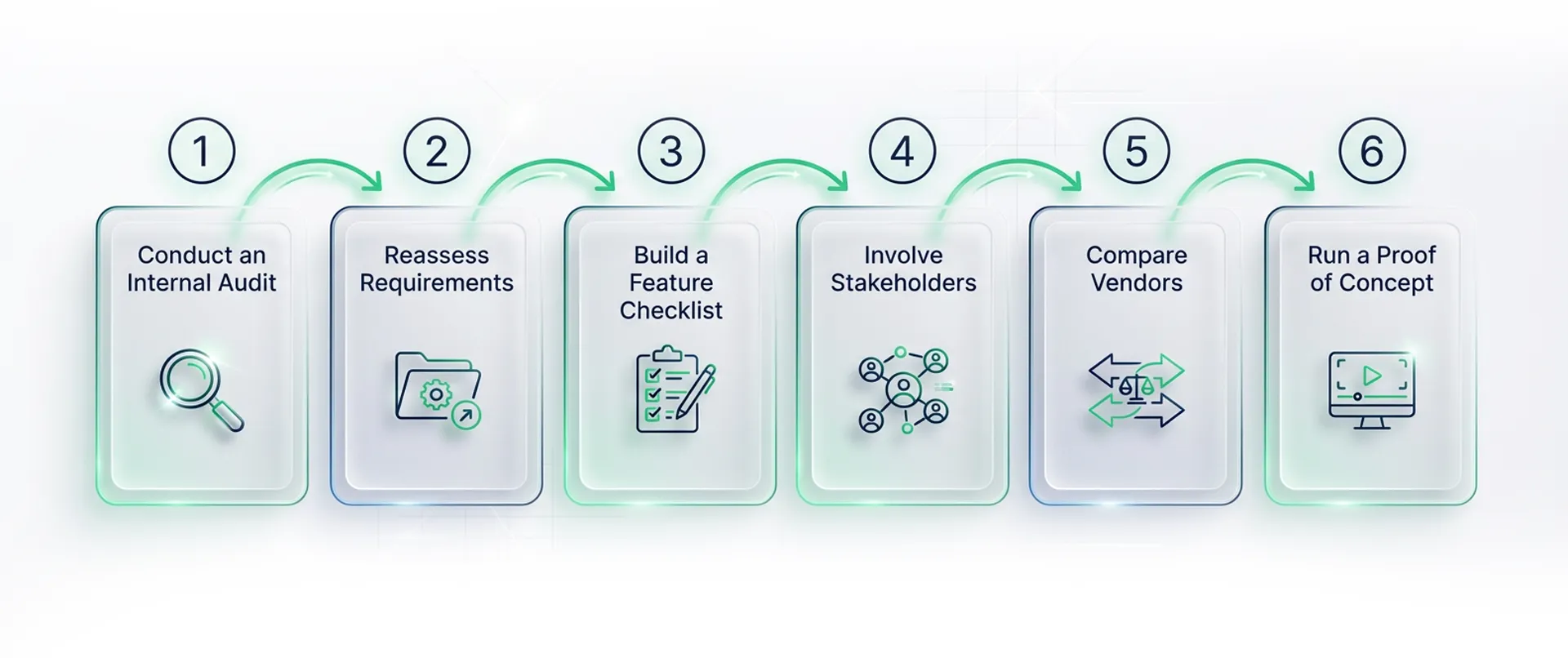
1. Conduct an Internal Audit
Begin by reviewing how your current eDiscovery software performs across core metrics: data volume, ingestion speed, review time, cost per matter, and accuracy of search results. This baseline will help quantify the impact of technology friction and justify change.
2. Reassess Your Requirements
Evaluate whether your current eDiscovery tool can support modern workflows, including cloud platforms, collaboration apps, mobile data, and AI-assisted review capabilities. Consider both today’s needs and future case demands.
3. Build a Strategic Feature Checklist
Create a clear list of must-have features: automation, advanced search, AI/CAL, flexible pricing, security compliance, intuitive UI, and export freedom. This helps prevent repeating past gaps and ensures any new eDiscovery software supports long-term efficiency.
4. Involve Key Stakeholders Early
Bring in legal ops, IT, compliance, data governance, and finance teams to capture cross-functional requirements. This alignment ensures the evaluation reflects compliance risks, cost structure, and operational usability and not just legal needs.
5. Shortlist and Compare Vendors
Look for eDiscovery tools that offer transparency, scalability, predictable pricing, cloud or hybrid deployment, and modern capabilities. Compare them not just on features, but on flexibility, training, security posture, and integration options.
6. Run a Controlled Proof of Concept
Before fully switching platforms, pilot the new eDiscovery software using a real case. Measuring speed, accuracy, ease of use, and collaboration in a live workflow ensures the solution performs under real-world pressure.
Ready to Stop Fighting Your Tools? Upgrade with Venio.
If your current eDiscovery tool is slowing your team down, creating unnecessary costs, or limiting your ability to manage modern data, it’s not just a software issue, it’s a risk. The right platform shouldn’t make workflows harder. It should make them faster, smarter, and predictable.
With Venio, you get modern, scalable eDiscovery software designed to eliminate bottlenecks, improve review speed, support emerging data sources, and future-proof your legal operations.
Contact us today and see the difference the right eDiscovery platform can make.
Related Articles
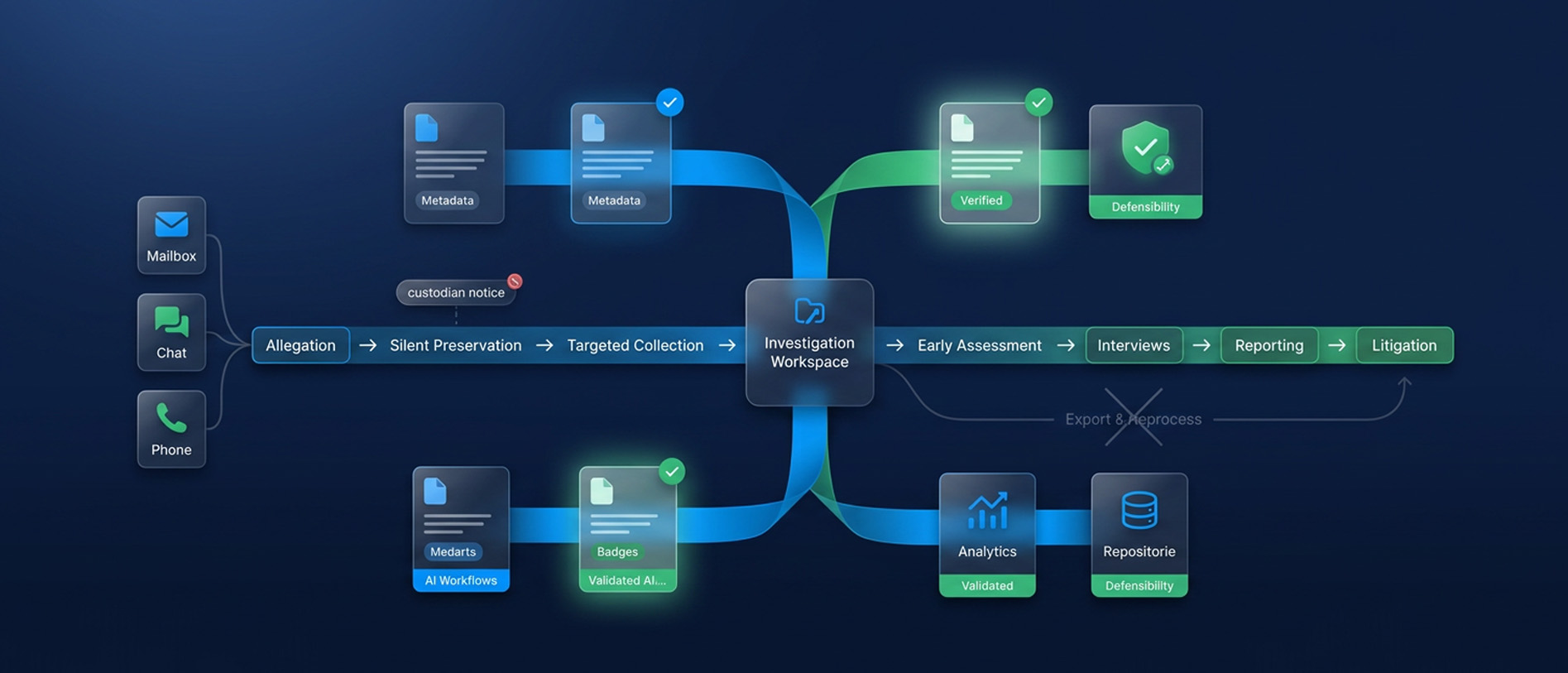
Internal Investigations: Getting the Facts Without Blowing the Matter Open
An internal investigation offers no court schedule and no second chance at prese
Read Article
eDiscovery Data Analytics & Visualization for Trial Preparation
Most litigation teams don’t lose at trial because they lack evidence. They lose
Read Article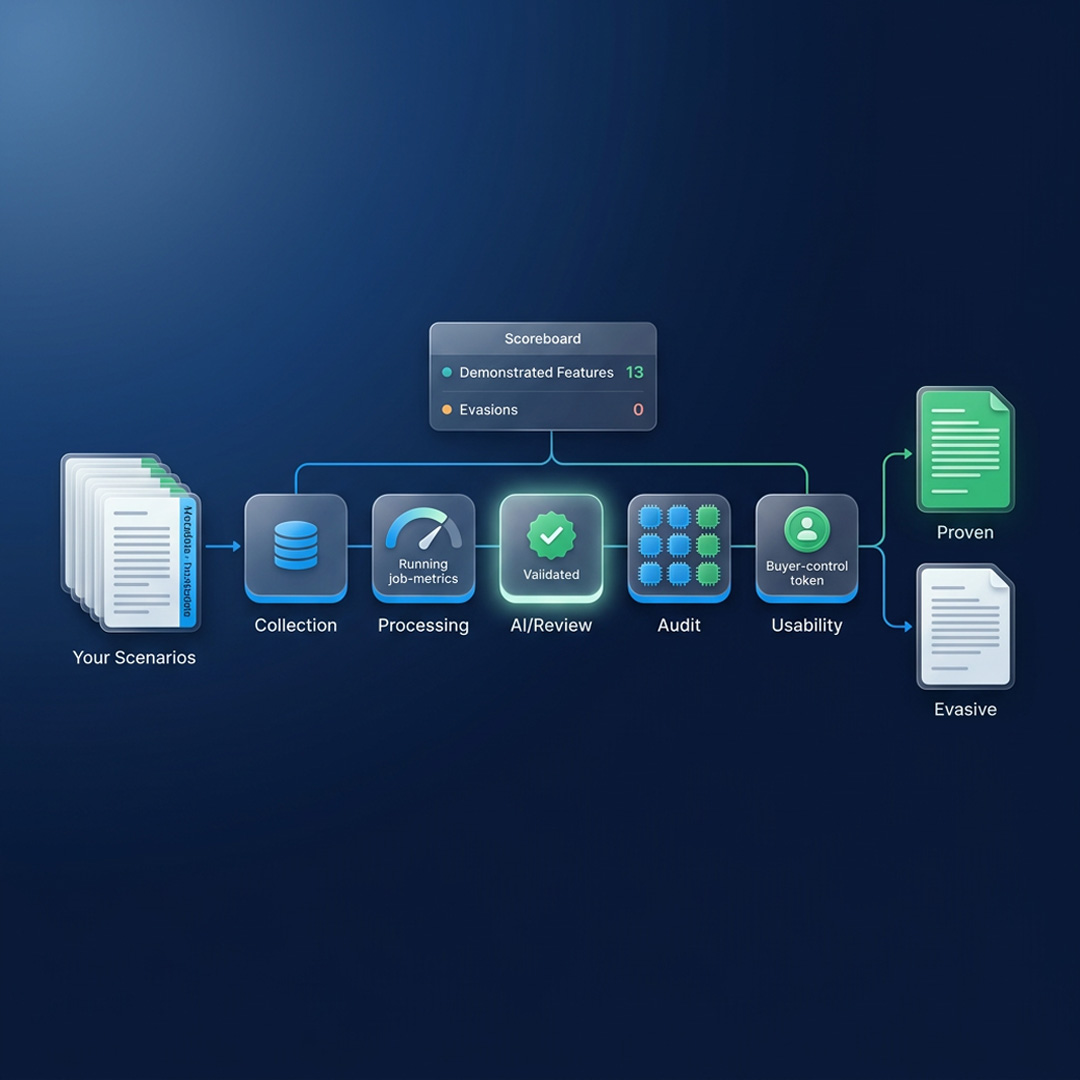
What to Ask in an eDiscovery Demo Before You Sign
Twenty questions that make an eDiscovery vendor prove processing, AI, security a
Read Article