Why eDiscovery for Healthcare Is Critical in Litigation

Ready to get started?
built for clarity, control, and scale.
Share
The healthcare eDiscovery market is projected to hit $2.1 billion in 2025 and climb to $3.7 billion by 2032 – a sign of just how critical discovery has become in this sector. This rapid growth reflects the sheer volume of sensitive data legal teams must manage and the mounting pressure to get it right.

Every piece of digital information -from electronic health records (EHRs) to billing logs and patient communications – can serve as vital evidence in healthcare litigation. But with data volumes exploding and regulations like HIPAA enforcing strict compliance, the stakes have never been higher.
That’s why eDiscovery has become the backbone of healthcare litigation strategy. In this blog, we’ll explore what healthcare eDiscovery means, why it’s vital, the unique challenges legal teams face, and the best practices to stay ahead with smarter solutions.
What is Healthcare Litigation?
eDiscovery in healthcare is the process of identifying, preserving, and producing electronically stored information (ESI) for litigation, investigations, or compliance audits.
What makes healthcare eDiscovery unique is the presence of sensitive patient data, including protected health information (PHI), which must be handled in strict alignment with HIPAA, GDPR, and other data privacy regulations.
For healthcare legal teams, eDiscovery isn’t just about document review. It’s about ensuring defensibility while safeguarding patient trust and managing the complexities of healthcare litigation support.
Why is eDiscovery Important in Healthcare?
Litigation and investigations are part of the daily reality in healthcare. Malpractice claims, payer-provider disputes, HIPAA violations, or an unexpected OCR inquiry; each one requires fast, defensible access to sensitive data scattered across EHRs, emails, billing systems, and more.

The challenge? Healthcare legal teams operate under a unique double bind: they must manage discovery with the same rigor as any other industry while also safeguarding protected health information (PHI) under HIPAA and other privacy regulations. A single slip in handling that data can bring not only courtroom setbacks but also regulatory penalties and reputational damage.
That’s why healthcare eDiscovery is more than just a box to check, it’s a frontline defense. By using the right processes and tools, legal teams can locate, preserve, and produce ESI efficiently while proving compliance every step of the way. In a field where timelines are tight and scrutiny is high, effective eDiscovery is what allows healthcare organizations to protect both their cases and their credibility.
How eDiscovery Solutions for Healthcare Work
At its core, eDiscovery in healthcare follows the same stages as any litigation support process: identification, preservation, collection, processing, review, and production. But in practice, it looks very different for healthcare legal teams.

For starters, the volume and variety of data are overwhelming. Beyond the usual emails and business records, you’re dealing with electronic health records (EHRs), claims data, lab results, imaging files, physician notes, and sometimes even IoT or wearable device data. Each of these systems stores information differently, often with strict access controls designed to protect patient privacy.
Then comes the regulatory overlay. Every step of the discovery process – from pulling records out of a hospital’s EHR system to sharing them with outside counsel – has to account for HIPAA, HITECH, and other privacy laws. That means encryption, audit trails, and role-based access controls aren’t “nice to have” features; they’re mandatory safeguards to ensure defensibility.
In short, healthcare eDiscovery isn’t just about gathering documents. It’s about navigating a high-stakes intersection of legal, clinical, and regulatory requirements all while moving quickly enough to keep cases on track.
Key Challenges in the Healthcare eDiscovery Market
eDiscovery for healthcare legal teams comes with a unique set of obstacles that go far beyond traditional litigation support. Each challenge reflects the complex mix of sensitive data, strict regulations, and high stakes that define healthcare litigation.
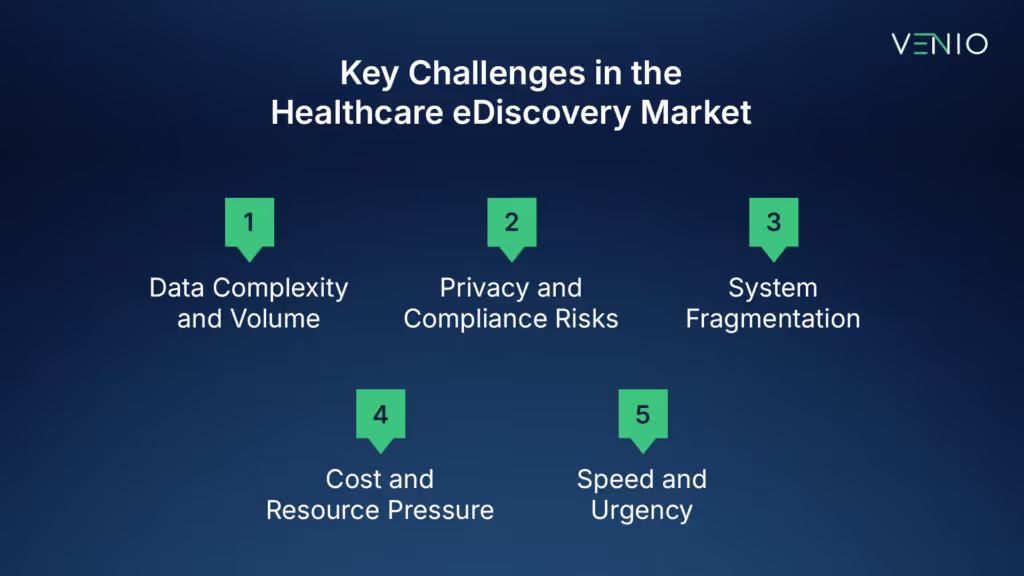
1. Data Complexity and Volume
Healthcare organizations generate massive amounts of data every single day. From EHR systems to insurance claims, lab reports, and medical imaging, the formats are diverse and often siloed. Collecting and normalizing this information for litigation is a constant uphill climb.
2. Privacy and Compliance Risks
Unlike other industries, healthcare data is deeply personal. HIPAA, HITECH, GDPR, and a growing wave of state-level privacy laws mean even the smallest misstep in handling PHI can trigger penalties and reputational harm. Compliance isn’t just a box to check, it’s the foundation of defensibility.
3. System Fragmentation
Hospitals, clinics, and insurers often operate with dozens of disconnected systems. Extracting relevant records from disparate platforms while preserving metadata and maintaining the chain of custody is both technically and legally challenging.
4. Cost and Resource Pressure
Healthcare litigation support requires specialized tools and expertise, but budgets don’t always scale with the complexity. Legal teams are expected to deliver fast, defensible results while keeping costs under control making efficiency a constant balancing act.
5. Speed and Urgency
Litigation deadlines don’t pause for regulatory reviews or IT bottlenecks. Healthcare legal teams must act fast while ensuring patient privacy and regulatory compliance are never compromised.
Best Practices for Healthcare Litigation Support
Staying ahead in healthcare litigation requires more than just technology, it demands disciplined processes, airtight compliance, and a future-ready mindset. Here’s how healthcare legal teams can strengthen their eDiscovery strategy.
1. Build Strong Data Governance
A solid data governance framework reduces risk before litigation even begins. Clear policies for data retention, PHI handling, and system access make it easier to respond quickly and defensibly when discovery requests arrive.
2. Partner Legal and IT Early
Too often, legal and IT work in silos. Bringing them together ensures smoother data collection, proper metadata preservation, and fewer delays when pulling from complex healthcare systems. Collaboration is a competitive advantage.
3. Leverage Specialized eDiscovery Solutions for Healthcare
Generic tools rarely handle the unique requirements of healthcare data. Solutions designed for healthcare litigation support streamline workflows, manage PHI securely, and comply with HIPAA and other regulations out of the box.
4. Prioritize Security and Privacy at Every Step
Encryption, granular access controls, and audit trails are foundational requirements in healthcare eDiscovery. So, legal teams must bake security into every stage of the eDiscovery lifecycle to protect patients and safeguard their organization’s reputation.
5. Train and Upskill Teams Continuously
Healthcare ediscovery is evolving fast. Ongoing training keeps legal staff, compliance officers, and litigation support teams current with new technologies, privacy standards, and court expectations.
6. Plan for Cost Control Without Cutting Corners
Efficiency is key. Early case assessment (ECA), analytics, and automation help reduce review costs while maintaining accuracy. The goal is smarter spending, not just smaller budgets.
Stay Ahead in Healthcare Litigation with Venio Systems
The complexities of healthcare litigation demand more than traditional discovery tools. You need a solution that can safeguard sensitive patient data, manage massive datasets, and deliver defensibility under the toughest scrutiny.
With Venio Systems, you can process data faster, stay compliant, and reduce costs all without sacrificing defensibility. Don’t wait for the next case to test your process. Partner with Venio today and lead with confidence
FAQs About eDiscovery for Healthcare
What is the Most Pressing Challenge in Healthcare Today?
Healthcare organizations struggle with managing vast amounts of patient data while meeting strict regulations like HIPAA and GDPR. For legal teams, ensuring security, accessibility, and compliance during litigation is the biggest hurdle.
What Does Healthcare Disparity Mean?
Healthcare disparities are differences in access, care quality, and outcomes across populations, often influenced by race, income, or geography. These inequities can directly impact litigation involving malpractice or systemic bias.
What are the Main Stages of Litigation in Healthcare?
Healthcare litigation typically involves three stages: discovery (gathering evidence and records), trial (presenting arguments and evidence), and post-trial resolution (appeals, settlements, or enforcement).
Related Articles
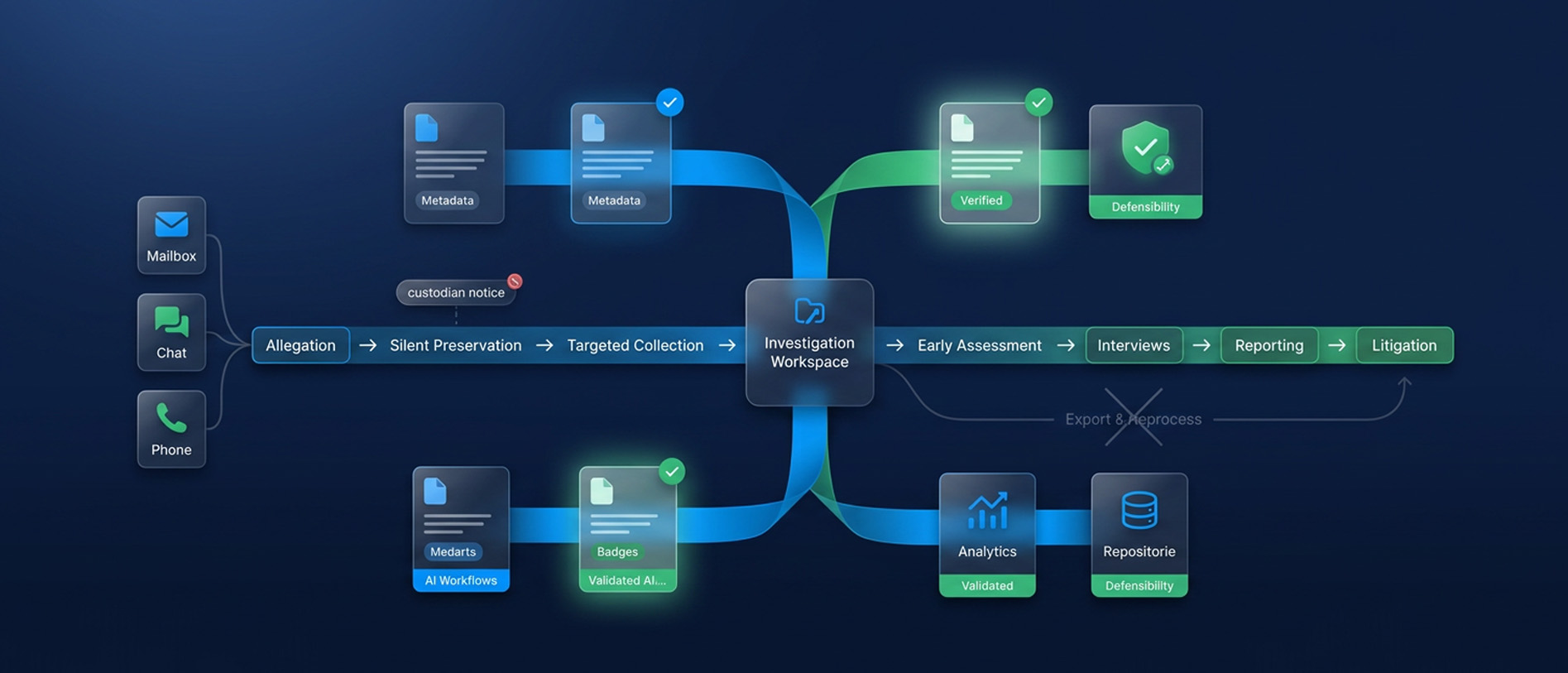
Internal Investigations: Getting the Facts Without Blowing the Matter Open
An internal investigation offers no court schedule and no second chance at prese
Read Article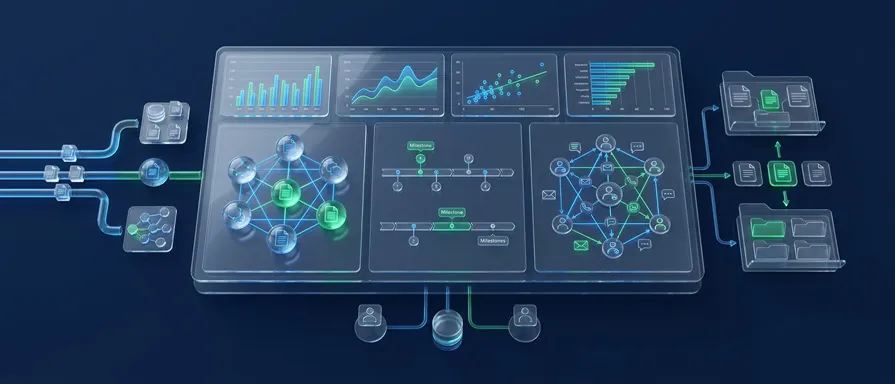
eDiscovery Data Analytics & Visualization for Trial Preparation
Most litigation teams don’t lose at trial because they lack evidence. They lose
Read Article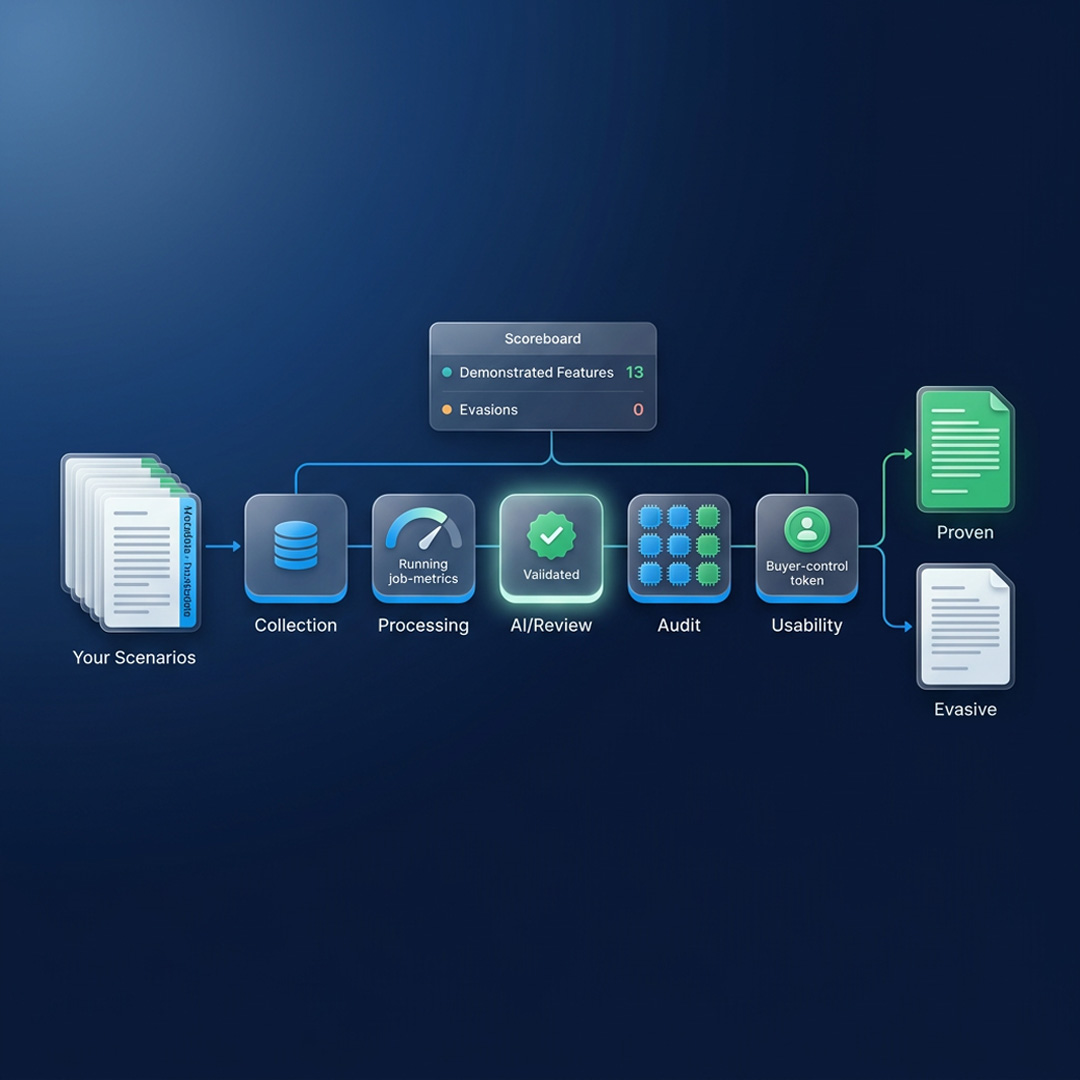
What to Ask in an eDiscovery Demo Before You Sign
Twenty questions that make an eDiscovery vendor prove processing, AI, security a
Read Article