Data Sovereignty: Why Control Matters More Than Ever

Ready to get started?
built for clarity, control, and scale.
Share
Picture this: your team gets hit with a cross-border matter, searches begin, legal holds are issued, and suddenly, outside counsel flags a roadblock; the data you need can’t legally leave its country of origin. Review stalls, deadlines tighten, and risk skyrockets.
That single moment is where data sovereignty stops being an IT buzzword and becomes a real eDiscovery problem.
At its core, what is data sovereignty? It’s the rule that data falls under the privacy and security laws of the nation/states where it physically resides. And for eDiscovery teams handling legal data across multiple geographies, that one rule reshapes how they preserve, collect, process, review, and produce information.
The rise of cross-border litigation means sovereignty is no longer a niche technical concern; it’s now one of the biggest variables affecting timelines, costs, defensibility, and even evidence accessibility.
Which is why legal departments are increasingly turning to data sovereignty solutions built specifically for eDiscovery, tools and workflows that respect regional boundaries while still keeping matters moving.
Because meeting data sovereignty requirements isn’t just about compliance. It’s about protecting the case, the client, and the integrity of the entire discovery process.
What Is Data Sovereignty in an eDiscovery Setting?
Most people define data sovereignty as the idea that data is governed by the laws of the country where it physically resides. That’s accurate, but in eDiscovery, it goes far deeper than location.
In a litigation or investigation workflow, eDiscovery data moves through multiple stages: preservation, legal hold, collection, processing, review, analysis, and production. Each time data moves or is even accessed remotely, it may trigger a different jurisdiction’s regulatory requirements. That means sovereignty can impact a case before a single document is reviewed.
In this context, what is data sovereignty really about? It’s about determining who can access the data, where it is allowed to be stored or processed, what metadata must remain intact, which systems can host it, and whether it can ever be exported across borders.

This is where the complexity begins. Some jurisdictions strictly prohibit exporting certain categories of legal data. Others allow cross-border transfer but only under specific conditions, like anonymization, consent, legal basis, or approved processing regions. And some require that copies of data never leave the country, even while review happens elsewhere.
Because of this, managing sovereignty in eDiscovery isn’t simply a privacy task, it’s a defensibility strategy. When sovereignty rules are followed, evidence remains admissible, audit trails remain intact, and risk remains under control. When they’re ignored, teams face stalled productions, penalties, or worst of all, evidence that becomes unusable.
Why Managing eDiscovery Data Has Become Harder Than Ever
The explosion of digital communication has dramatically reshaped how legal teams identify, preserve, and review evidence. What once felt manageable is now a maze of data sources, formats, and compliance expectations, making every matter more complex and time-sensitive.
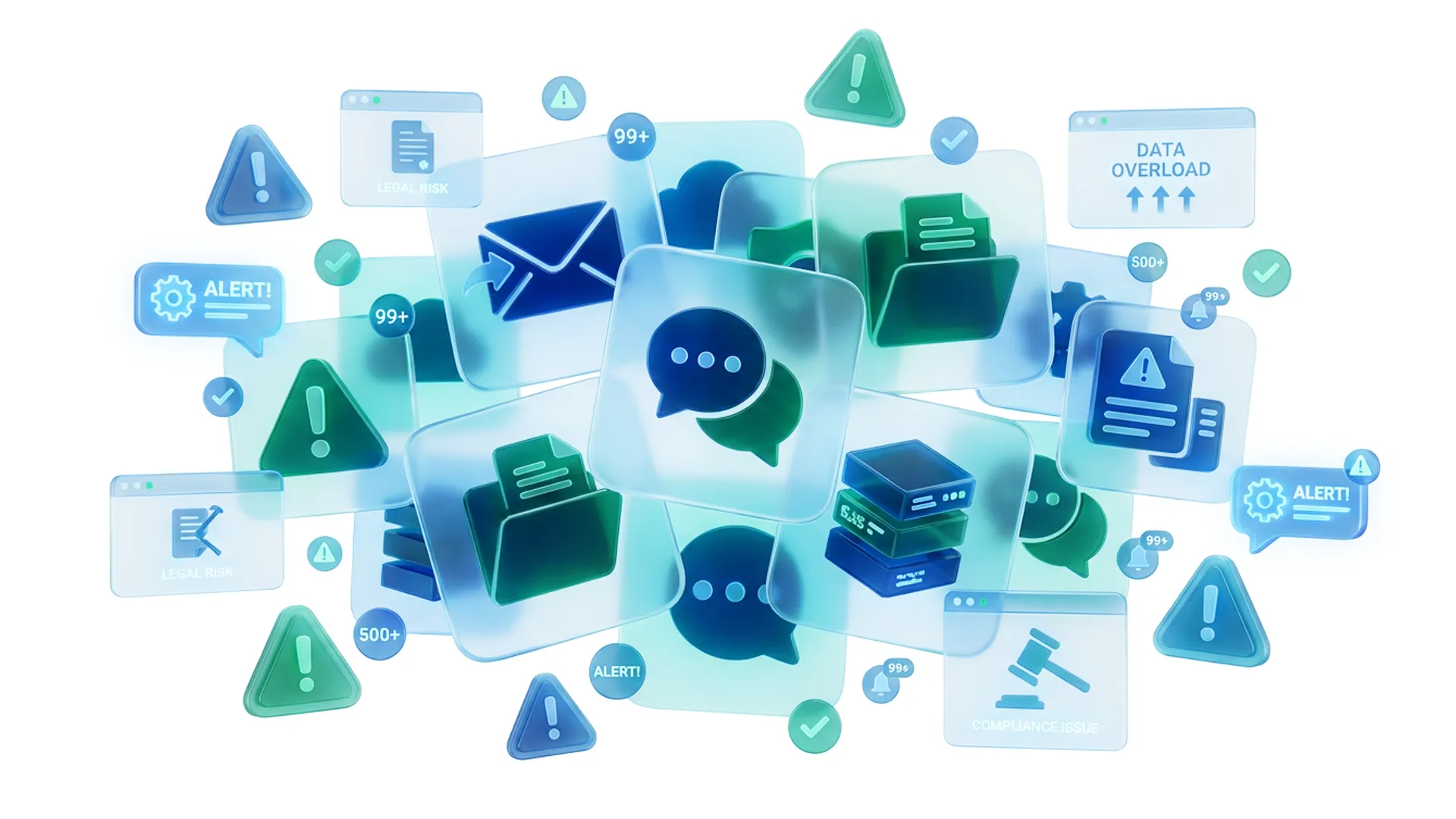
- Data Volume Overload: The size and spread of electronically stored information (ESI) are increasing faster than legal teams can process. With terabytes of emails, chats, documents, and media accumulating daily, identifying what’s relevant becomes a race against time.
- Fragmented Evidence Sources: Critical information now lives across multiple corporate systems: Slack, Teams, Google Workspace, Microsoft 365, mobile devices, cloud archives, and more. Pulling everything together without missing key evidence is a daunting and risky manual effort.
- Manual, Repetitive Legal Hold Administration: Tracking custodians, sending reminders, logging acknowledgments, and maintaining documentation often consume hours of valuable time per matter. These repetitive steps not only slow workflows but also introduce unnecessary room for human error.
- Audit & Compliance Pressure: Courts expect defensibility with complete tracking, proof of communication, and verifiable preservation actions. Without a centralized system of record, teams struggle to produce reliable audit trails under scrutiny.
- Custodian Accountability & Follow-Through: Even the most well-structured legal hold can fall apart if custodians don’t respond or follow instructions. Ensuring engagement across departments and locations becomes increasingly challenging without automation.
- Threat of Data Spoliation: Any gap, whether during identification, preservation, or follow-up can result in data being altered or deleted. The consequences range from case setbacks to financial penalties and reputational harm.
Key Data Sovereignty Challenges for eDiscovery
Even once teams understand what is data sovereignty and the reality of enforcing it across modern investigations is far more complicated. Legal departments and service providers face multiple barriers that slow cases, increase risk, and make handling legal data and eDiscovery data feel like a compliance minefield.
- Cross-Border Data Transfer Restrictions : Global matters often require data from multiple regions, each with its own privacy rules. Moving eDiscovery data across borders without violating data sovereignty requirements becomes a delicate balancing act that can stall timelines and create liability.
- Fragmented Storage Across Cloud & On-Prem Systems: Corporate data rarely lives in one place anymore. Email servers, collaboration tools, mobile devices, and third-party archives all introduce new custody and ownership issues that complicate secure data collection and review.
- Vendor Dependence & Limited Control: Some service providers host legal data in regions that conflict with an organization’s internal compliance framework. Without flexible hosting options, teams are stuck choosing between operational efficiency and sovereignty adherence.
- Rising Cybersecurity Exposure: Each data touchpoint increases breach risk. When personal or regulated information is involved, any misstep during collection, transfer, or hosting can escalate into legal and financial consequences even if the breach wasn’t caused by the organization.
- Slower Time-to-Review Due to Approval Bottlenecks: Multi-layer approval workflows, regional permissions, and strict monitoring requirements make it difficult to launch reviews quickly, especially when time is critical for litigation or regulatory response.
- Cost Inflation from Redundant Hosting and Data Segregation: To meet data sovereignty requirements, organizations often maintain separate infrastructures for different jurisdictions. This results in redundant systems, duplicate data copies, and ballooning storage and vendor costs.
Framework for eDiscovery Teams for Managing Sovereignty Risk
When the right controls are embedded into the eDiscovery lifecycle, compliance becomes a default outcome rather than a constant struggle. Below is a practical operating framework that high-performing legal and investigation teams use to manage sovereignty risk with confidence:
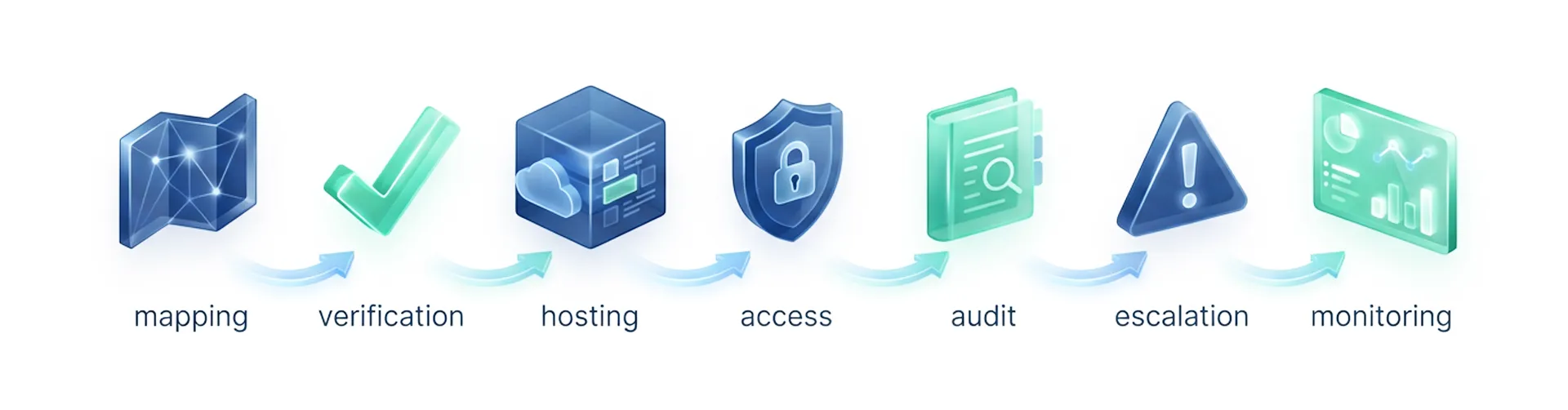
1. Map Data Locations Before Collection
The first step is knowing where all relevant data lives geographically and platform-wise. Mapping reduces risk during early litigation prep and ensures that teams don’t unknowingly violate data sovereignty requirements by triggering unauthorized transfers.
2. Verify Jurisdictional Rules per Data Source
Different countries and sometimes individual states impose different rules on how ediscovery data can be accessed, reviewed, or stored. Building a jurisdiction matrix helps eliminate guesswork and ensures every decision aligns with regulatory expectations.
3. Select Platforms with Flexible Hosting Models
Not all data sovereignty solutions are equal. Platforms that offer regional hosting, private cloud, or on-premise deployments allow organizations to keep sensitive information inside authorized borders without slowing down review or case timelines.
4. Enforce Role-Based Access Controls
Access should be granted strictly on a “need-to-know” basis. Fine-grained permissions help maintain sovereignty and reduce exposure by ensuring only approved personnel can view or export legal data.
5. Build Audit Trails Across the Entire Workflow
From ingestion to production, every interaction with ediscovery data should be logged. This protects the organization defensively and provides a provable chain of custody during regulatory inquiries or litigation challenges.
6. Standardize Cross-Border Escalation Protocols
When data must move across jurisdictions, teams should follow a predefined decision tree, including legal review, management approvals, and vendor checks to avoid delays and reduce last-minute compliance risks.
7. Continuously Monitor Regulatory Shifts
Because what is data sovereignty is constantly evolving across global and regional policies, regulatory intelligence must be ongoing. Teams that treat sovereignty as a static requirement will always be one step behind risk.
How Venio Is Built for Data Sovereignty
When the stakes involve legal data, cross-border regulations, and strict data sovereignty requirements, the wrong platform can expose organizations to massive risk. The right one, however, turns compliance into a competitive advantage, enabling fast, defensible discovery without compromising control.
This is exactly where Venio distinguishes itself.
Venio’s architecture was purpose-built for investigations and litigation teams that need to manage eDiscovery data within complex jurisdictions. Rather than forcing organizations into rigid hosting models, Venio adapts to sovereignty by ensuring the platform fits the legal landscape, not the other way around.
Here’s what makes Venio one of the strongest data sovereignty solutions available today:
- Flexible Hosting Options – Your Data, Where You Need It: Whether you require on-premise, private cloud, or region-specific hosting, Venio keeps legal data exactly where compliance demands it. No forced transfers, no vendor lock-in, no sovereignty blind spots.
- Zero-Compromise Performance Across Regions: Many platforms slow down when sovereignty controls are added. Venio delivers high-speed processing and review even with geographically restricted eDiscovery data, so compliance never becomes a bottleneck.
- Built-In Governance & Access Control: Granular permissions, audit trails, chain-of-custody logging, and protected export workflows ensure every action stays compliant without adding manual oversight.
- Secure Collaboration Without Risky Data Movement: Venio enables multiple teams, internal or external, to collaborate without breaching data sovereignty or moving sensitive information across borders.
- Automated Workflows That Reduce Human Error: Sovereignty compliance shouldn’t depend on people remembering steps. Venio’s guided workflows embed legal safeguards directly into the process, reducing the risk of unauthorized access, transfer, or retention.
Your Data, Your Borders, Your Control: Powered by Venio
Data sovereignty has become one of the defining challenges of modern litigation, and organizations can no longer afford uncertainty around where legal data lives, who can access it, and how it moves across borders.
Venio gives legal teams the confidence to meet strict data sovereignty requirements without slowing down review or sacrificing performance, a balance many traditional platforms simply can’t deliver. If you’re ready to simplify compliance while gaining full speed, visibility, and control over your eDiscovery data, Venio is built for you.
Book a personalized demo and experience how an eDiscovery platform designed for sovereignty transforms investigations from high-risk to high-efficiency.
Related Articles
What is eDiscovery Software?
In a world where business communication is overwhelmingly digital, these trails
Read Article
4 Proven Ways to Control eDiscovery Costs in Any Legal Case
eDiscovery continues to rank among the top cost drivers for legal departments,
Read Article
Discovery Objections: A Comprehensive List and How to Succeed
During the discovery process, an attorney attempts to obtain
Read Article