A Detailed Guide on Second Requests

Ready to get started?
built for clarity, control, and scale.
Share
Most eDiscovery workflows revolve around litigation, but in the world of mergers and acquisitions, things work a little differently. When regulatory scrutiny intensifies, companies often face a far more demanding process: the Second Request.
Under the Hart-Scott-Rodino Antitrust Improvements Act (HSR Act), organizations must notify the FTC and DOJ before finalizing certain deals. As part of that review, regulators may issue a Second Request, requiring an extensive deep dive into company data. This is where eDiscovery for second requests becomes mission-critical.
Unlike routine litigation searches, a Second Request eDiscovery process is broader, faster-paced, and often far more complex. Teams must quickly locate relevant data, ensure compliance, and manage massive document sets, all while maintaining accuracy under strict deadlines.
In this guide, you’ll learn what a Second Request is, how Second Request document review works, and the strategies organizations can use to streamline the process and confidently navigate FTC Second Requests.
What is a Second Request in eDiscovery?
A Second Request is a formal, in-depth demand for information issued by the FTC or DOJ during a merger or acquisition review. It typically follows an initial voluntary request.
For example, in June 2022, regulators issued a Second Request for UnitedHealth Group’s $5B acquisition of LHC Group after concerns surfaced from a related shareholder lawsuit. This illustrates how quickly a Second Request eDiscovery process can escalate when regulators need deeper insight.
When a company notifies the FTC and DOJ of a pending deal under the HSR Act, the agencies have 30 days to conduct an initial review. During this period, organizations may voluntarily submit data, market details, competitive information, or deal-related materials to streamline the process.
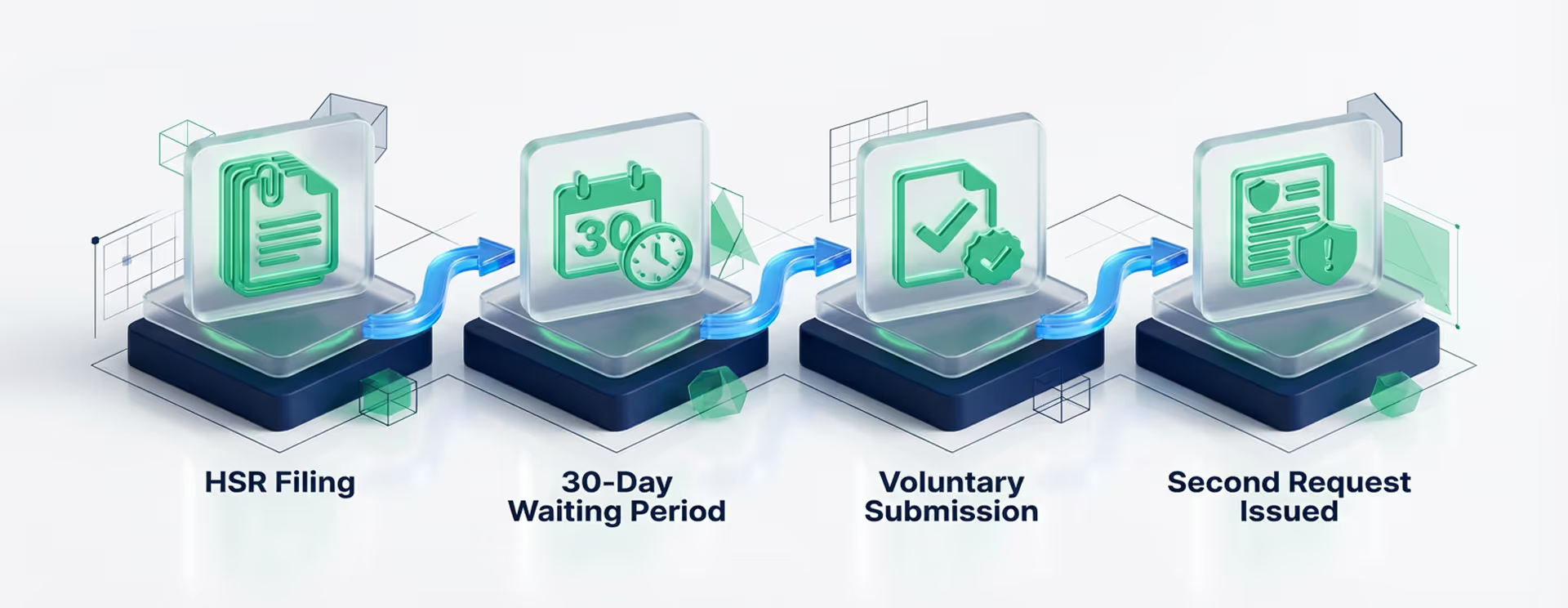
In straightforward cases, regulators may allow the transaction to move forward based on voluntary disclosures alone. But in more complex or high-impact mergers, the agencies may require significantly more documentation, triggering a Second Request. This step signals that regulators need a comprehensive, data-heavy review before approving the deal.
Second Request investigations vary widely depending on the industry, company size, and market dynamics. While simple reviews may wrap up quickly, full-scale Second Request document review can take anywhere from three months to over a year, making efficient, well-structured eDiscovery essential.
What is the Current Threshold for eDiscovery Second Requests?
When thinking about second requests under the Hart-Scott-Rodino (HSR) Act, the key question is whether a proposed merger or acquisition meets the reporting thresholds that trigger FTC and DOJ review. These thresholds determine when companies must file a notice and potentially undergo a Second Request document review.
For 2025, the FTC adjusted the HSR notification thresholds based on changes in the U.S. gross national product. The minimum “size of transaction” threshold, historically rooted in the original $50 million base, will be $126.4 million for deals that close on or after February 21, 2025.
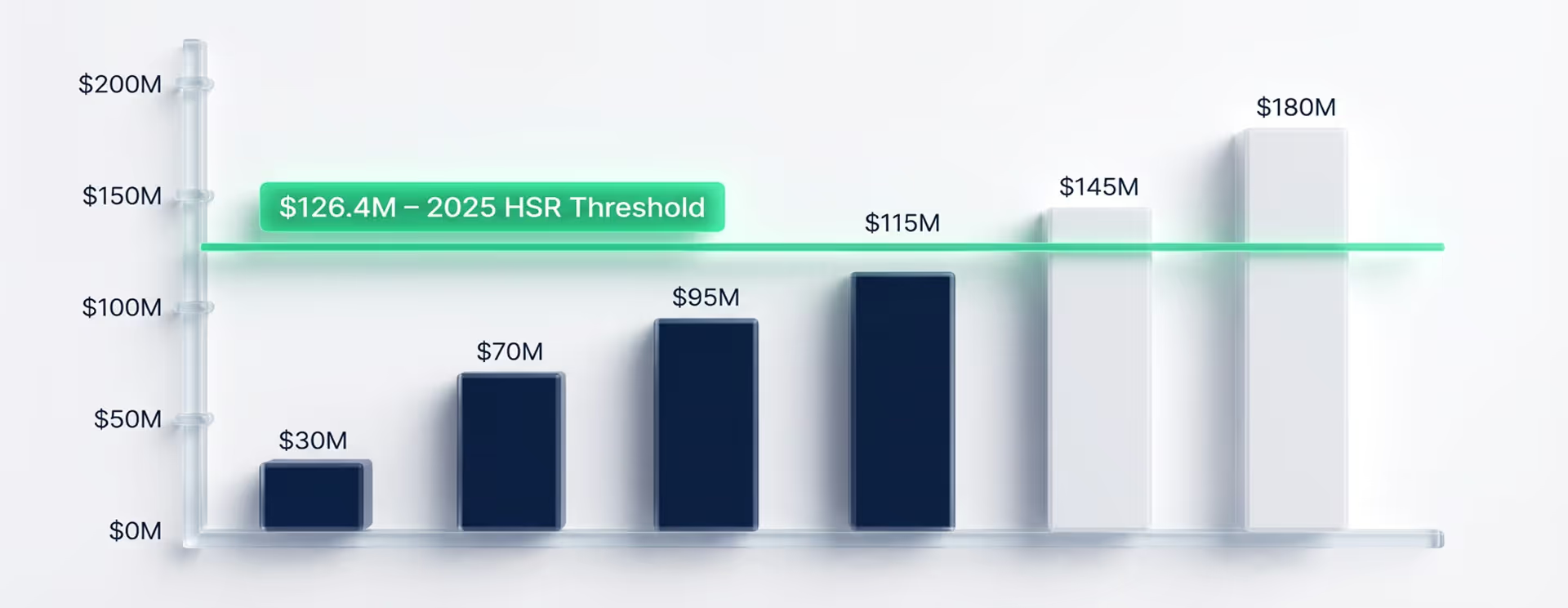
That means transactions valued above $126.4 million generally must be reported to regulators, and those reports could lead to an FTC Second Request requiring detailed eDiscovery and document production. Smaller deals below this floor typically aren’t reportable unless other tests are met.
These updated thresholds ensure that eDiscovery for Second Requests focuses on larger transactions where regulators are more likely to seek deeper insight into competitive effects and potential antitrust concerns. Staying on top of current HSR thresholds helps legal teams prepare for compliance and avoid costly delays.
Who Issues a Second Request?
A Second Request is issued by either the Federal Trade Commission (FTC) or the U.S. Department of Justice (DOJ) under the Hart-Scott-Rodino (HSR) Act. These agencies assess whether a proposed merger or acquisition could limit competition or raise antitrust concerns.
Under HSR, the FTC or the Assistant Attorney General may request additional information during the review process. This Second Request can be issued during the standard 30-day waiting period, or during a shortened 15-day waiting period in the case of a cash tender offer.
Once issued, an FTC Second Request triggers a detailed Second Request eDiscovery process. Organizations must respond with large volumes of documents and data, making structured eDiscovery for Second Requests critical to staying compliant and avoiding costly delays.
Why is a Second Request Urgent?
A Second Request demands immediate attention because it can directly influence whether a merger or acquisition moves forward. Delays in responding can slow the review process, increase costs, and put deal timelines at risk.
While a Second Request FTC review does not automatically signal rejection, it does mean regulators need more information before making a decision. Failing to act quickly or manage Second Request eDiscovery effectively may raise concerns and could ultimately lead to a denial by the FTC or DOJ.
What are the Key Documents in a Second Request?
A Second Request is far more detailed and expansive than an initial voluntary submission. It requires organizations to produce a wide range of documents and data that go well beyond standard merger disclosures, making Second Request document review significantly more complex.
For context, the FTC’s voluntary submission guidance includes eight requests for information, while the DOJ’s includes nine. In contrast, the FTC Second Request and the DOJ Second Request models expand dramatically, calling for approximately 29 and 39 requests, respectively. This jump highlights the scale of Second Request eDiscovery.

The scope of requested materials varies by agency. FTC second requests often focus on products, facilities, customers, sales, competitors, and market entry. DOJ second requests, on the other hand, may emphasize marketing strategy, pricing decisions, and structured datasets or databases.
In addition to traditional documents, agencies frequently request electronically stored information (ESI). This can include emails, chat messages, text messages, social media posts, presentations, images, and even audio files, making eDiscovery for Second Requests a data-intensive effort.
It’s also important to note that enforcement priorities shift over time. The FTC and DOJ have tightened HSR scrutiny, leading to more Second Requests, particularly in heavily regulated industries like healthcare. With record HSR filings in recent years, regulatory reviews are broader, deeper, and more frequent than ever.
How to Handle a Second Request?
A Second Request can be one of the most stressful moments in a merger or acquisition. The scope, urgency, and complexity of Second Request eDiscovery mean that mistakes can delay or even block a deal.
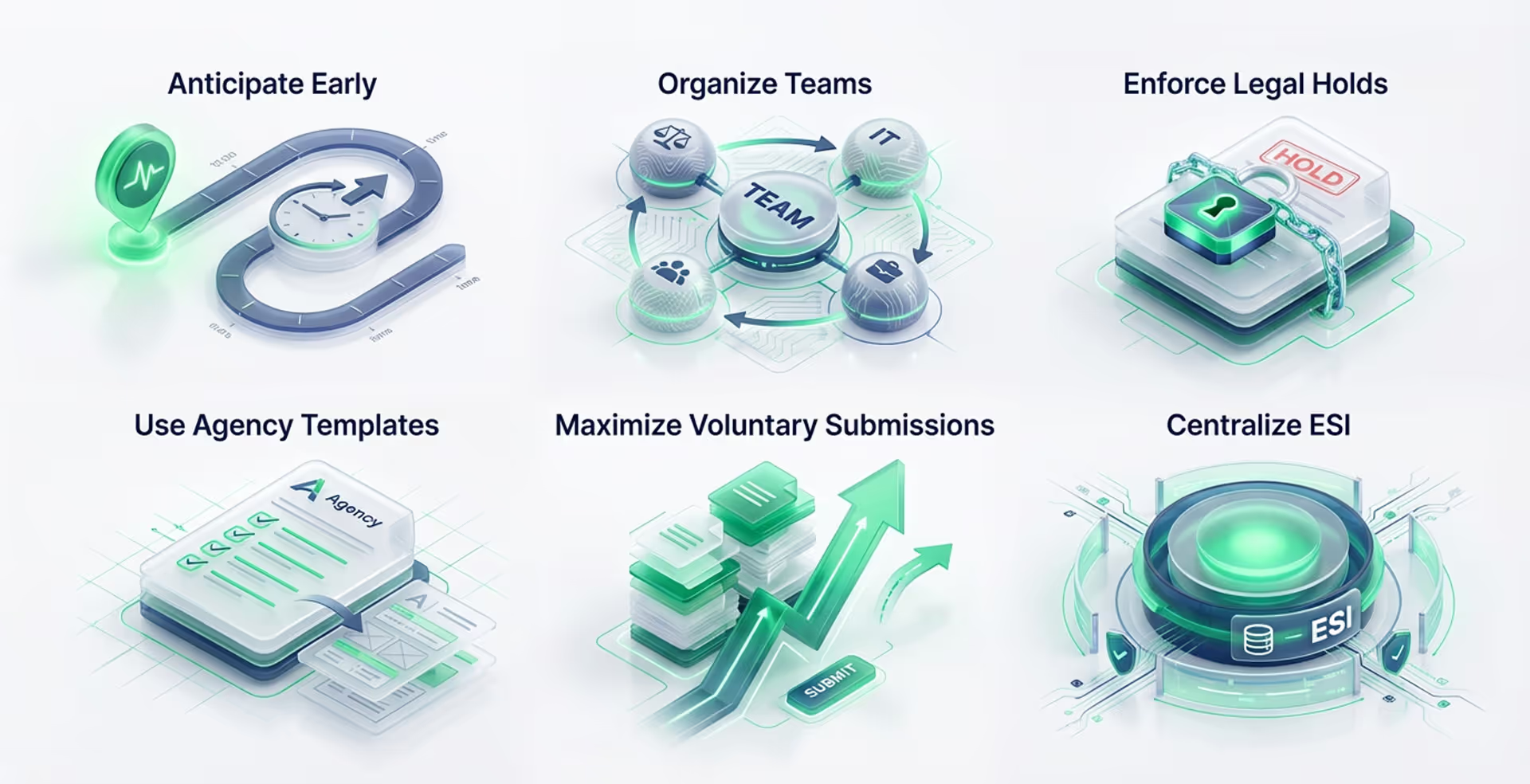
To manage risk and stay compliant, organizations need a structured approach. Below are proven strategies for handling a Second Request FTC review efficiently and defensibly.
1. Always Anticipate a Second Review
Preparation should begin well before filing for a merger or acquisition. Anticipating a Second Request allows teams to organize documents early and avoid scrambling under regulatory deadlines.
Early planning also helps identify potential antitrust or data-related issues. Addressing these risks in advance can reduce friction during Second Request document review.
2. Organize Your Team
A successful Second Request eDiscovery response requires coordination across legal, IT, compliance, and external partners. Everyone involved should clearly understand their roles and responsibilities.
This is the time to validate workflows, close resource gaps, and ensure sufficient staffing for data extraction, processing, review, and analysis under tight timelines.
3. Enforce Legal Holds Immediately
Second Requests often require access to sensitive communications and internal documents. Issuing legal holds as early as possible is essential to preserving relevant data.
Failure to enforce legal holds can lead to compliance issues and credibility concerns. Clear communication and consistent enforcement across the organization are critical during FTC Second Request reviews.
4. Use Agency Templates
The FTC and DOJ provide standardized templates to guide Second Request responses. Always request the latest versions and apply them consistently throughout the review.
Using agency-approved templates streamlines production, reduces errors, and helps teams stay aligned with Second Request eDiscovery expectations.
5. Maximize the Voluntary Submission Opportunity
While not every deal avoids a Second Request, strong voluntary submissions can reduce the likelihood or scope of one. This phase allows companies to proactively address regulatory concerns.
Providing clear, comprehensive documentation upfront gives the FTC and DOJ greater confidence and may help shorten review timelines or prevent delays.
6. Centralize ESI Management
Organization is essential when working with regulators, but managing large datasets across teams can be difficult. Dispersed data slows review and increases compliance risk.
Centralizing ESI in a purpose-built platform like Venio Systems enables secure access, consistent workflows, and defensible reporting, making eDiscovery for Second Requests faster, cleaner, and more reliable.
Venio: Built for the Complexity of Second Request eDiscovery
Second Requests leave little room for error. Tight deadlines, massive data volumes, and regulatory scrutiny demand an eDiscovery platform that’s built for speed, accuracy, and defensibility.
Venio helps legal teams centralize ESI, streamline Second Request document review, and respond to FTC Second Requests with confidence. If your organization is preparing for or navigating a Second Request, Venio gives you the clarity and control needed to keep deals moving forward.
Contact us and learn how Venio can support your Second Request eDiscovery process.
Related Articles
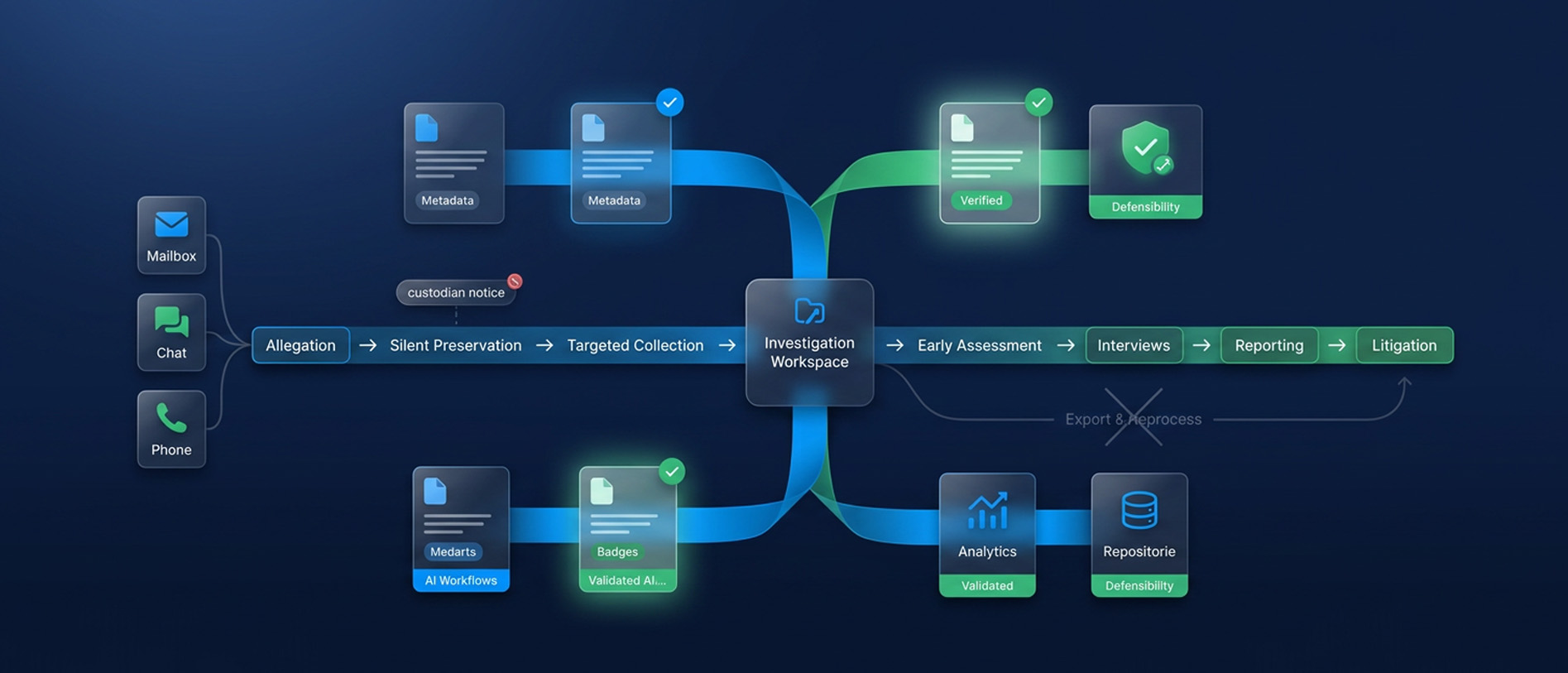
Internal Investigations: Getting the Facts Without Blowing the Matter Open
An internal investigation offers no court schedule and no second chance at prese
Read Article
eDiscovery Data Analytics & Visualization for Trial Preparation
Most litigation teams don’t lose at trial because they lack evidence. They lose
Read Article
What to Ask in an eDiscovery Demo Before You Sign
Twenty questions that make an eDiscovery vendor prove processing, AI, security a
Read Article