What Are Litigation Searches? A Complete Guide

Ready to get started?
built for clarity, control, and scale.
Share
Litigation can leave a long trail and litigation searches are how smart legal teams follow it. Whether you’re uncovering past disputes, validating claims, or gathering critical evidence, a well-executed litigation search helps legal teams surface relevant information that could otherwise stay hidden in vast databases of public records and court filings.
From civil litigation search efforts to more focused federal litigation search activities, these searches reveal a party’s litigation history, uncover patterns of behavior, and expose key insights that inform case strategy. A comprehensive litigation search report becomes invaluable and not just for litigation teams but also for due diligence reviews and risk mitigation before major transactions or corporate partnerships.
In this guide, we’ll break down what litigation searches are, how they work, and why professionals rely on them for everything from routine disputes to high-stakes investigations and due diligence litigation search processes. By understanding how to identify the most relevant data, you’ll be better equipped to shape effective legal outcomes.
What is eDiscovery?
At its core, eDiscovery (short for electronic discovery) is the process of locating, preserving, collecting, reviewing, and producing electronically stored information (ESI) for use in legal or regulatory matters.
Think of it as the digital counterpart to the discovery phase in traditional litigation – only now, instead of filing cabinets, the evidence lives in emails, text messages, collaboration platforms, databases, and cloud storage.
What sets legal electronic discovery apart is both its volume and complexity. A single lawsuit may involve terabytes of data scattered across dozens of systems, from Slack conversations to server logs.
The challenge isn’t just accessing this information, but rather doing so in a way that’s defensible in court, proportional to the case, and aligned with strict legal frameworks like the Federal Rules of Civil Procedure (FRCP) and evolving electronic discovery laws worldwide.
What is Relevant Data?
Every case tells a different story, which means every dispute has its own definition of relevant data. Since no two matters share the exact same facts or claims, legal teams performing litigation searches must set clear parameters to determine what information actually matters. These parameters typically include:

- Time Frame:
Only data that was created, shared, or modified during a specific period is considered. Anything outside that window is usually excluded from the litigation search report. - Author:
If a dispute is between Person A and Person B, data belonging to unrelated individuals is not part of the civil litigation search or federal litigation search, unless specifically requested. - Keywords:
Strategic, case-specific keywords help narrow huge datasets and pinpoint the most relevant data tied to the dispute.
Many legal teams initially err on the side of caution, instructing clients to preserve “everything” – every file, message, and byte. But sorting through such massive collections during a litigation search can be overwhelming and inefficient. That’s why eDiscovery professionals define relevance parameters early, especially for high-volume matters or due diligence litigation searches.
Relevant data can live on any device within an individual’s control, whether it’s laptops, phones, tablets, and as well as within their communications during the specified time frame. Once practitioners apply the time, author, and keyword parameters and remove unrelated information, the remaining refined dataset becomes the relevant data that drives case strategy and litigation outcomes.
What are Litigation Searches?
Now that we’ve covered how eDiscovery works and how teams identify relevant data, it becomes easier to see where litigation searches fit in. In any dispute, whether a simple claim or a complex civil litigation search, multiple parties can quickly get involved. Plaintiffs file claims, defendants respond, and those defendants may bring in third parties, expanding a small case into a much larger one.
Construction litigation is a common example of this complexity. Contractors, subcontractors, engineers, and independent contractors may all become part of the same dispute. Cases like the Surfside Condominium collapse in South Florida show how quickly litigation can widen.
This is where litigation searches become invaluable. A search uncovers all prior and ongoing cases involving a party, whether through a federal litigation search, civil litigation search, or a full litigation search report. These searches reveal patterns, past sanctions, prior disputes, and other matters containing relevant data that can influence your strategy, especially during investigations or due diligence litigation search processes.
How do Litigation Searches Work?
Imagine a group of plaintiffs suing your client along with several co-defendants. Some of those defendants may then bring in additional third parties, expanding the case. Once pleadings are finalized and challenges are resolved, legal teams meet to determine what relevant data exists and where it resides. At this stage, counsel typically begins conducting litigation searches to understand the background of every party involved.

Because lawsuits are public records, they often contain valuable information for your litigation search report. Legal teams can use free or paid tools to search past cases, along with broader internet research to uncover a party’s litigation history. While each case is decided on its own facts, insights from past disputes revealed through civil litigation searches or federal litigation searches can still prove useful.
In eDiscovery, these searches help determine whether an opposing party was involved in similar disputes with overlapping data. They can also reveal how that party behaved in other cases, whether they faced sanctions, or whether patterns exist, critical details that support a stronger strategy and more efficient due diligence litigation searches.
Understanding Litigation Search with an Example
Imagine your client, Person A, entered contract negotiations with Person B between March 1 and September 1, 2025 to open an ice cream shop. To identify relevant data, experts set parameters: documents created, shared, or modified during that time, sent or received by Persons A and B, and related to their ice cream store that is focused specifically on chocolate, vanilla, and strawberry flavors.
Using these criteria, you select keywords like ice cream, chocolate, vanilla, and strawberry for your search. You request all data matching these parameters from Person B, but they respond, claiming no such documents exist. At this point, many teams would stop, but you continue with a litigation search.

Your litigation search report reveals Person B is involved in an ongoing contract dispute with an ice cream supplier. Those case filings show Person B was required to produce ESI from November 1, 2019 to April 15, 2025 related to those same ice cream flavors. This leaves two possibilities: either such documents clearly exist, or a judge previously ordered Person B to produce them, and they complied.
This scenario highlights two outcomes:
- Person B may be hiding documents because they support your client’s claims.
- Person B may have deleted them wrongfully, even though they produced them in another case, potentially leading to sanctions or penalties.
This example illustrates how a well-executed litigation search can uncover critical information quickly, supporting everything from dispute strategy to due dilgence litigation searches.
See How Better Search Leads to Better Outcomes
Litigation searches can reveal what traditional eDiscovery might miss, uncovering patterns, inconsistencies, and crucial data that can reshape your case strategy. When opposing parties deny having relevant information, these searches offer a fast, low-effort way to validate those claims and surface discrepancies.
To perform this effectively, you need an eDiscovery platform built for speed, accuracy, and defensibility. Venio brings all of that together with advanced search capabilities, automated workflows, and transparent review tools and helping legal teams stay one step ahead.
If you’re ready to make smarter, faster, and more reliable eDiscovery decisions, contact us today and explore what Venio can do for you.
Related Articles
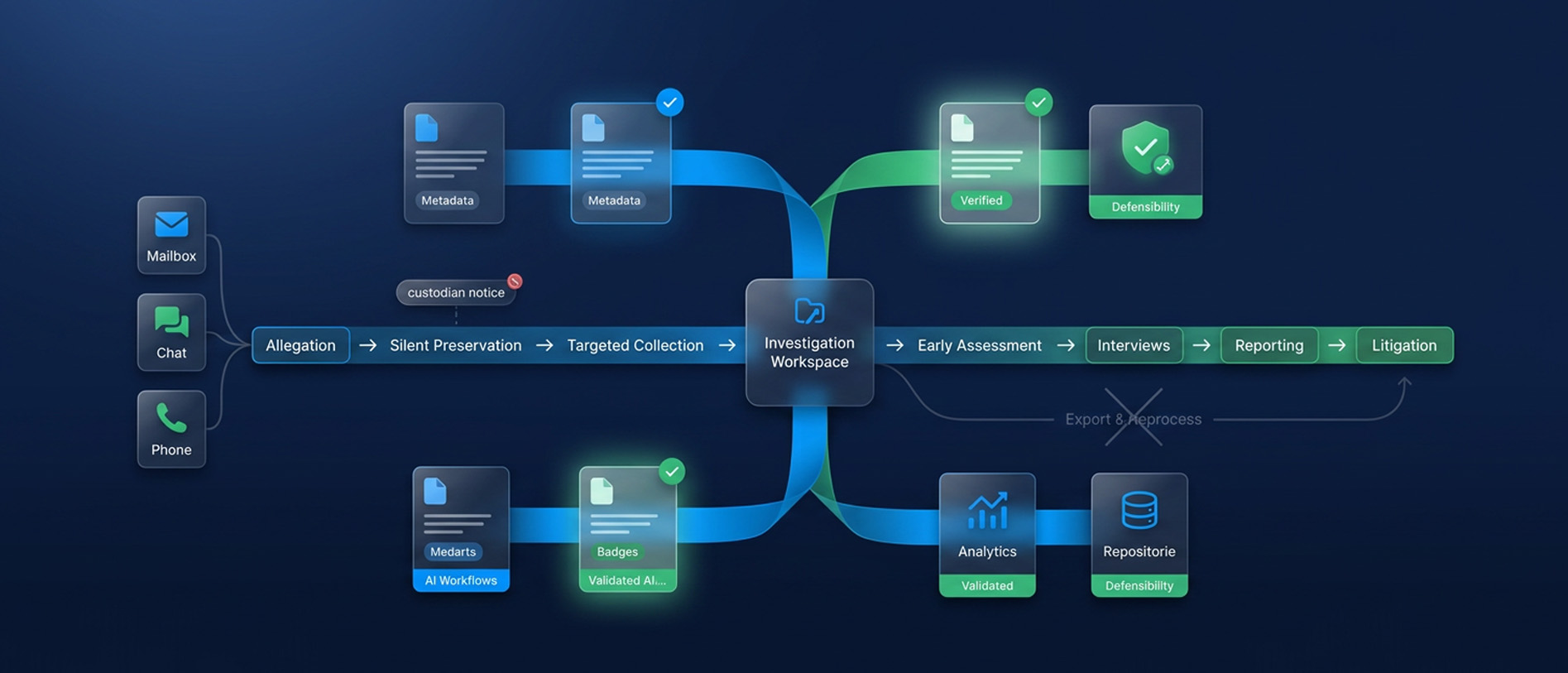
Internal Investigations: Getting the Facts Without Blowing the Matter Open
An internal investigation offers no court schedule and no second chance at prese
Read Article
eDiscovery Data Analytics & Visualization for Trial Preparation
Most litigation teams don’t lose at trial because they lack evidence. They lose
Read Article
What to Ask in an eDiscovery Demo Before You Sign
Twenty questions that make an eDiscovery vendor prove processing, AI, security a
Read Article