What Happens If the Chain of Custody Is Broken?

Ready to get started?
built for clarity, control, and scale.
Share
A broken chain of custody can get evidence excluded, stripped of weight, or used to support sanctions, even when the evidence itself is genuine. Once you can't prove how data was handled, the argument stops being about what the evidence says and starts being about whether anyone can trust it.
Here is exactly what happens when the chain breaks, why it matters even for authentic evidence, and how to keep it from happening on your matter.
What “Breaking the Chain” Actually Means
The chain breaks whenever you can no longer account for how a piece of evidence was handled from collection to production. That doesn't require tampering. A missing log entry, an untracked file transfer, altered metadata, or an unverified copy is enough to create a gap, and a gap is all opposing counsel needs.
In eDiscovery, the most common causes are self-collection by custodians, file transfers over personal email or consumer cloud storage, handling files outside a controlled workflow, and simple documentation lapses. For the full list, see where the chain breaks in our complete guide.
What Happens Next: Five Consequences
- The evidence can be excluded. Under Federal Rule of Evidence 901, you must show that the evidence is what you claim it is. If you can't authenticate it, the court can keep it out entirely.
- Its weight gets reduced. Even if the evidence comes in, a judge or jury may give it less credit once its handling is in doubt, a decisive document can land with a fraction of its intended force.
- Judicial scrutiny rises across your whole production. One broken chain invites the court and opposing counsel to question everything else you produced.
- Spoliation sanctions become possible. If the break involves lost or altered ESI that should have been preserved, FRCP 37(e) allows remedies ranging from adverse inference instructions to monetary sanctions.
- Costs spike. Teams often must re-collect data, reconstruct handling histories, and retain forensic experts, spending the case budget on process failures instead of the merits.
Why Does it Happen Even When the Evidence is Real
This is the part teams underestimate. Authenticity and provability are not the same thing. An email can be 100% genuine and still be unusable if you can't show it wasn't altered between the custodian's inbox and the courtroom. See a step-by-step example of how this unfolds.
Can a Broken Chain of Custody be Fixed?
Sometimes, partially. You may be able to re-collect the data forensically, document the gap honestly, and provide testimony or hash verification to rebuild confidence. But re-collection isn't always possible as data may have changed or disappeared, and a documented gap never fully goes away. Prevention is far cheaper than repair.
How to Prevent a Broken Chain of Custody
- Hash at collection and re-verify the value at every later step.
- Collect forensically using a qualified person, never self-collection.
- Move data through secure, logged channels, never personal email or consumer cloud.
- Document continuously, not from memory.
- Minimize handoffs between disconnected tools, where breaks most often occur.
The most reliable safeguard is a unified platform that records custody automatically. When legal hold, processing, review, and production share one system, there are no tool-to-tool handoffs to break. Learn more about defensible legal hold software here.
Don't Leave Chain of Custody to Manual Processes
Every manual handoff, disconnected tool, and undocumented transfer creates another opportunity for the chain of custody to break. The easiest way to defend your evidence is to make custody part of the workflow itself, not something you reconstruct after the fact.
Venio provides a unified eDiscovery platform where collection, processing, review, and production happen in one controlled environment, with every action captured in a complete audit trail. That means fewer custody gaps, stronger defensibility, and greater confidence when your evidence is challenged.
Contact Venio to learn more.
Related Articles
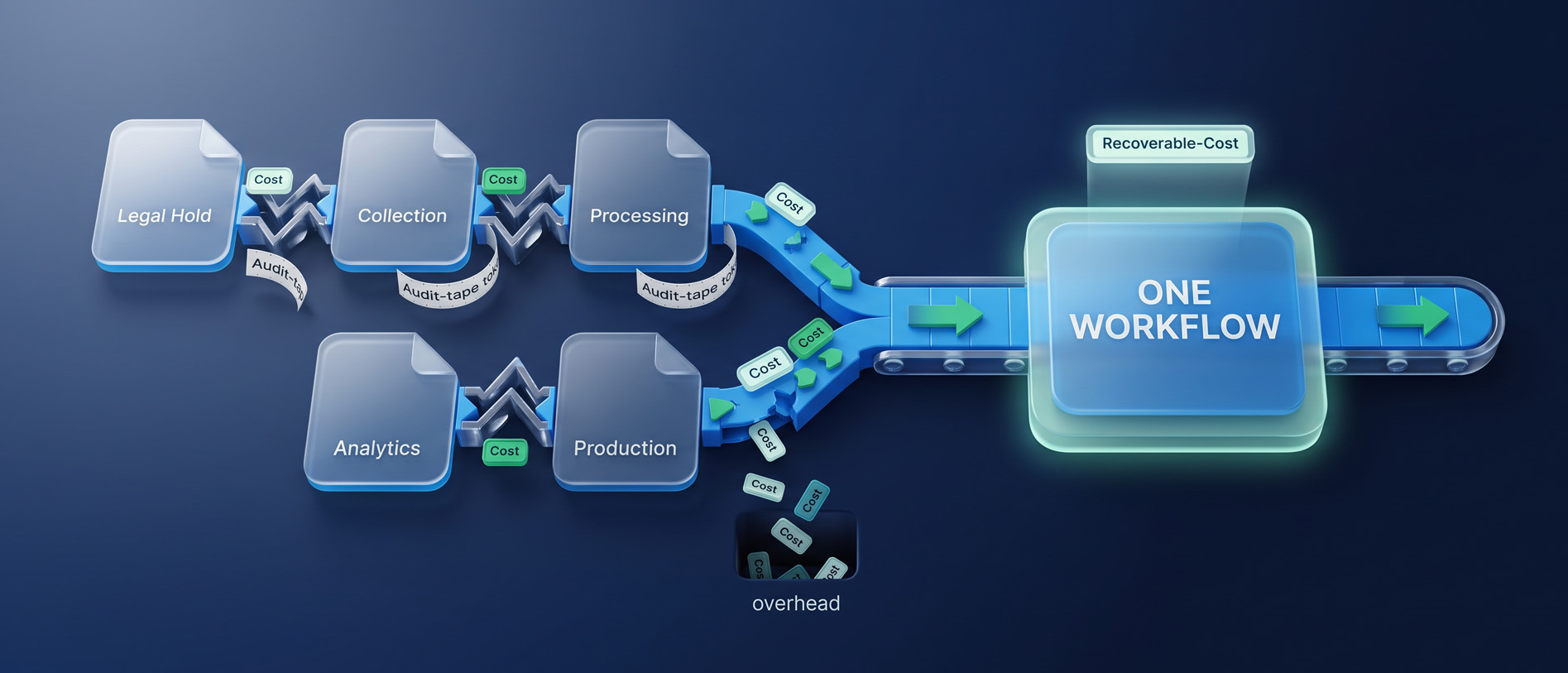
Consolidating Your eDiscovery Stack Without Disrupting Active Matters
How to consolidate eDiscovery tools without disrupting live matters, and why a f
Read Article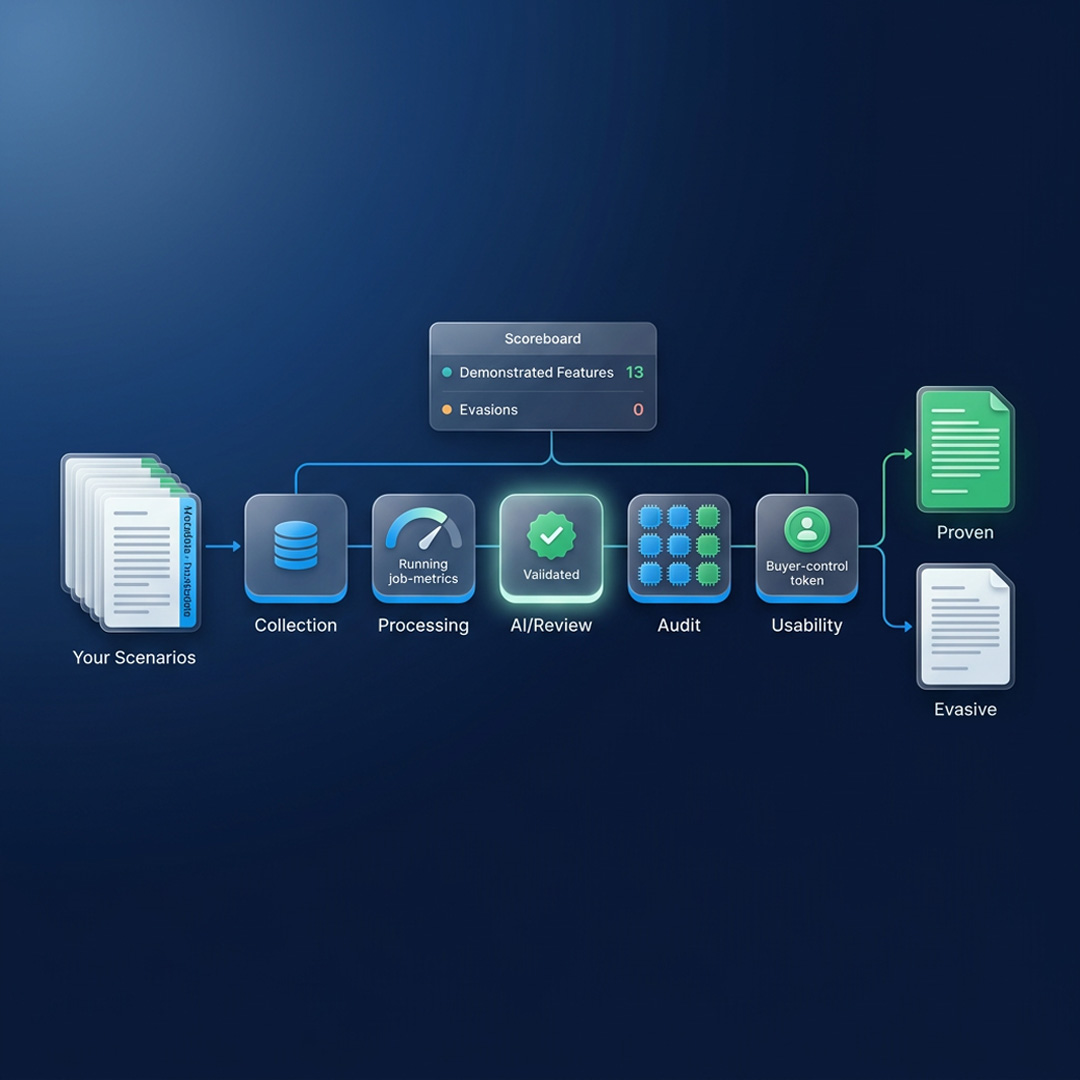
What to Ask in an eDiscovery Demo Before You Sign
Twenty questions that make an eDiscovery vendor prove processing, AI, security a
Read Article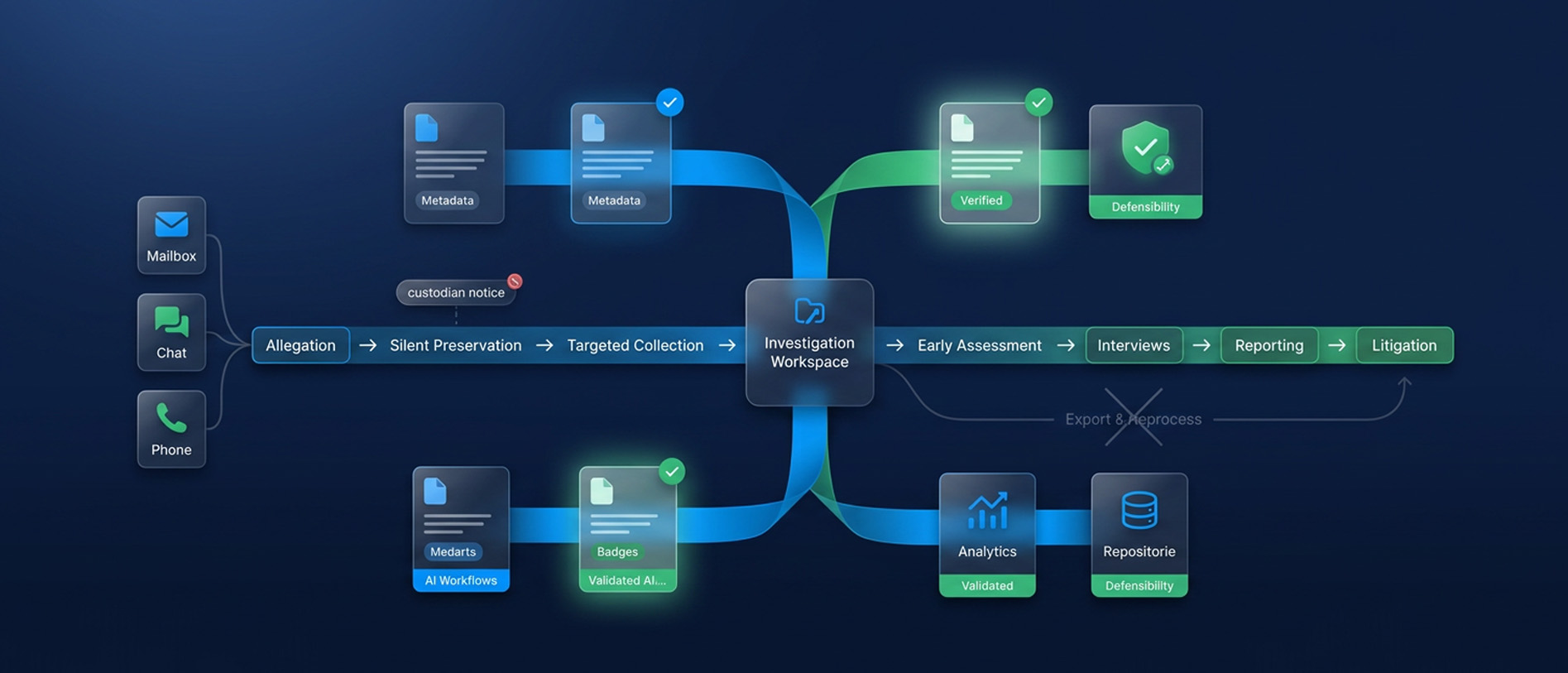
Internal Investigations: Getting the Facts Without Blowing the Matter Open
An internal investigation offers no court schedule and no second chance at prese
Read Article