Preview:
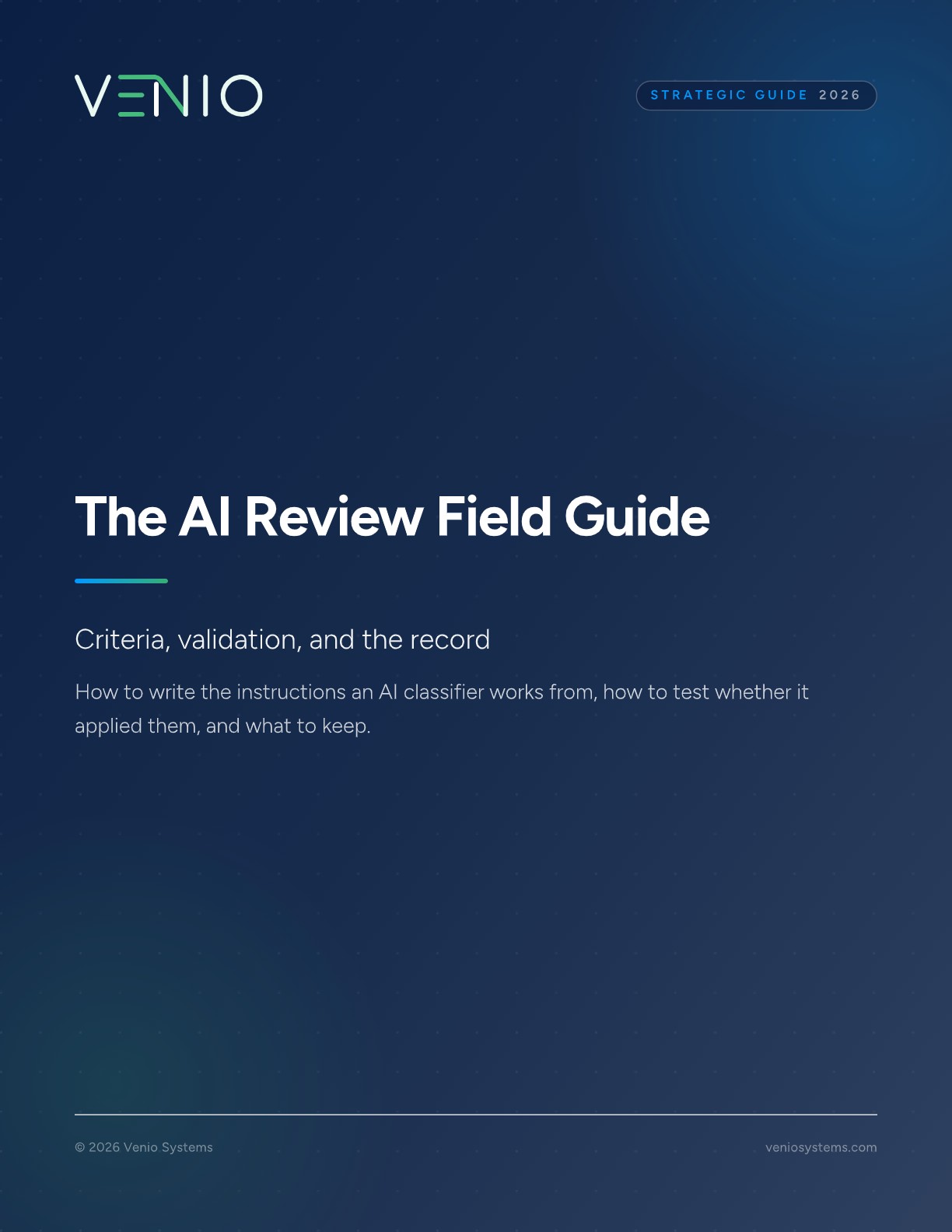
The AI Review Field Guide
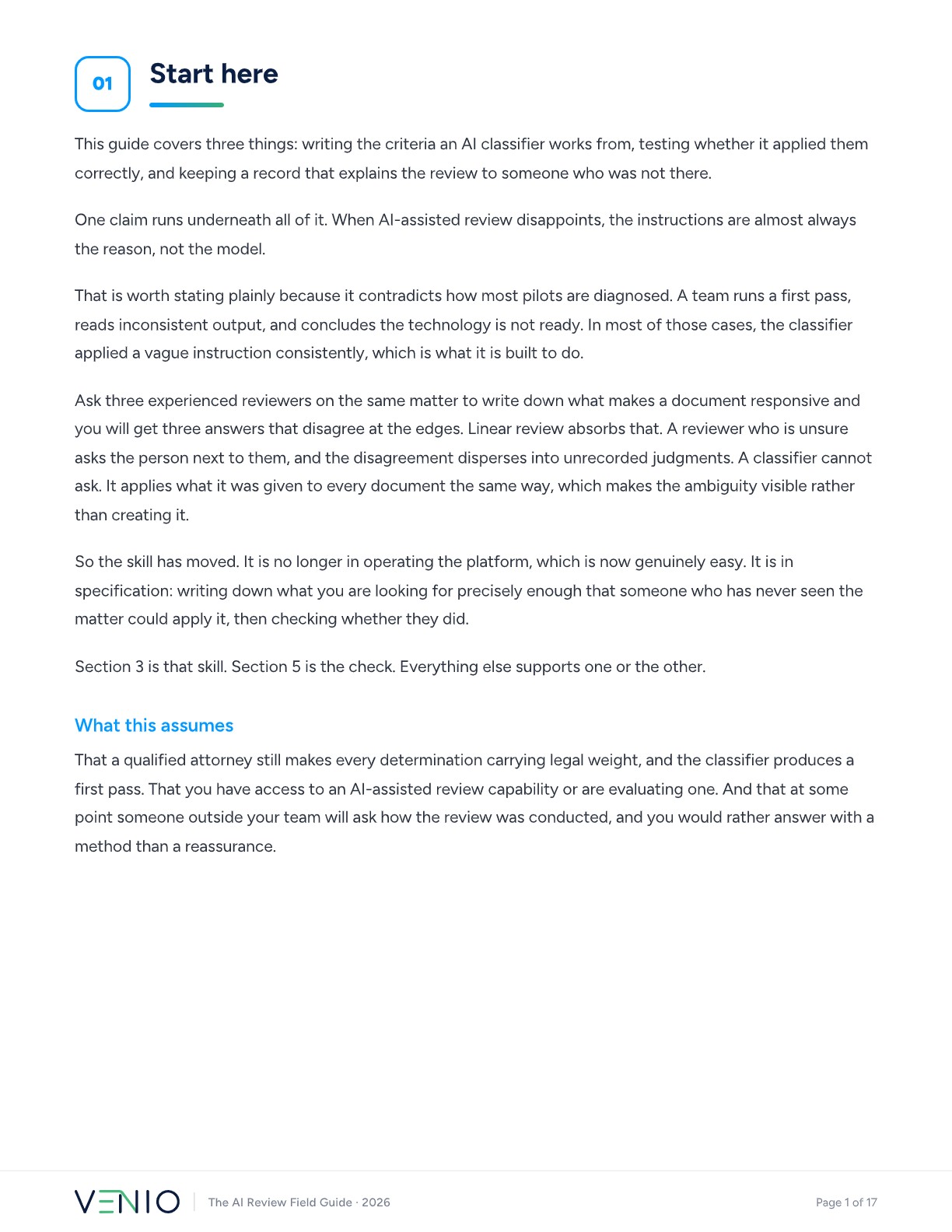
Pages 1 and 2. The full printable PDF is free.
More pages in the full checklist
Proofs 10 to 20, the evasion tells, the walk-away red flags and the side-by-side sheet for scoring three finalists out of 40.
The AI Review Field Guide
When AI review disappoints, the instructions are usually the cause. This field guide covers writing criteria, validating what the classifier produced and keeping a record you can explain later.
Legal ops
Lit support
eDiscovery teams
In-house counsel
What's inside
- 7 criteria-writing rules each with a weak and a strong version
- 3 privilege additions including how to build the attorney list
- A control set rule that decides whether validation measures anything
- A 5-step diagnosis for when results come back badly
- 16 vendor questions on model, privilege, validation and cost
- A 30-day rollout run on a closed matter where you know the answers

Frequently Asked Questions
Everything you need to know about Venio's eDiscovery platform
1. Who Is This Guide For?
Legal operations leaders, litigation support managers, eDiscovery professionals, and in-house counsel who are running AI-assisted review or evaluating it. It also suits anyone who has to explain a completed review to someone outside the team.
2. Do I Need a Particular Platform to Use It?
No. Sections 1 through 6 are platform-neutral. Criteria writing, validation procedure, and record keeping apply wherever the classification is happening. Venio Review capabilities are named only where a section describes what the output contains.
3. What Are the Seven Rules Actually About?
Writing instructions precisely enough that someone who has never seen the matter could apply them. Defining the tag rather than the goal, stating exclusions, naming actors and date ranges, replacing terms of art with operational definitions, splitting compound tags, and testing the draft against edge cases the team already argued about.
4. Does the Guide Tell Me What Sample Sizes to Use?
No, deliberately. Sample sizes, confidence levels, and acceptance targets are matter-specific and should be set with someone qualified to set them before the first validation round runs. The guide covers how to run a round, not what numbers should come out of it.
5. Why Does It Say to Sample the Documents You Set Aside?
Because the responsive set is the part you have already looked at. What you have not opened is where the exposure sits, and a validation round that only examines the documents you kept tells you the least useful thing.
6. What Is the Thirty-Day Rollout?
Run the process on a closed matter your team already reviewed conventionally. You have the coding decisions and the arguments, so you have a basis for comparison no demonstration on sample data can give you. Four weeks, one tag, three rounds at most.
7. Is This Legal Advice or a Standard?
No. The guide is general guidance and an educational resource, and it says so in a closing note. The rules and procedures in it are practical recommendations, not requirements any authority has set. What is defensible in a given matter depends on your obligations, your jurisdiction, and your facts, and those questions belong with counsel.
Discover the Power of Venio Cloud
Ready for enterprise speed without the infrastructure overhead? Launch your Venio Cloud environment today.