Back to eBook
    eBook

    What Automated Legal Hold Looks Like in Practice

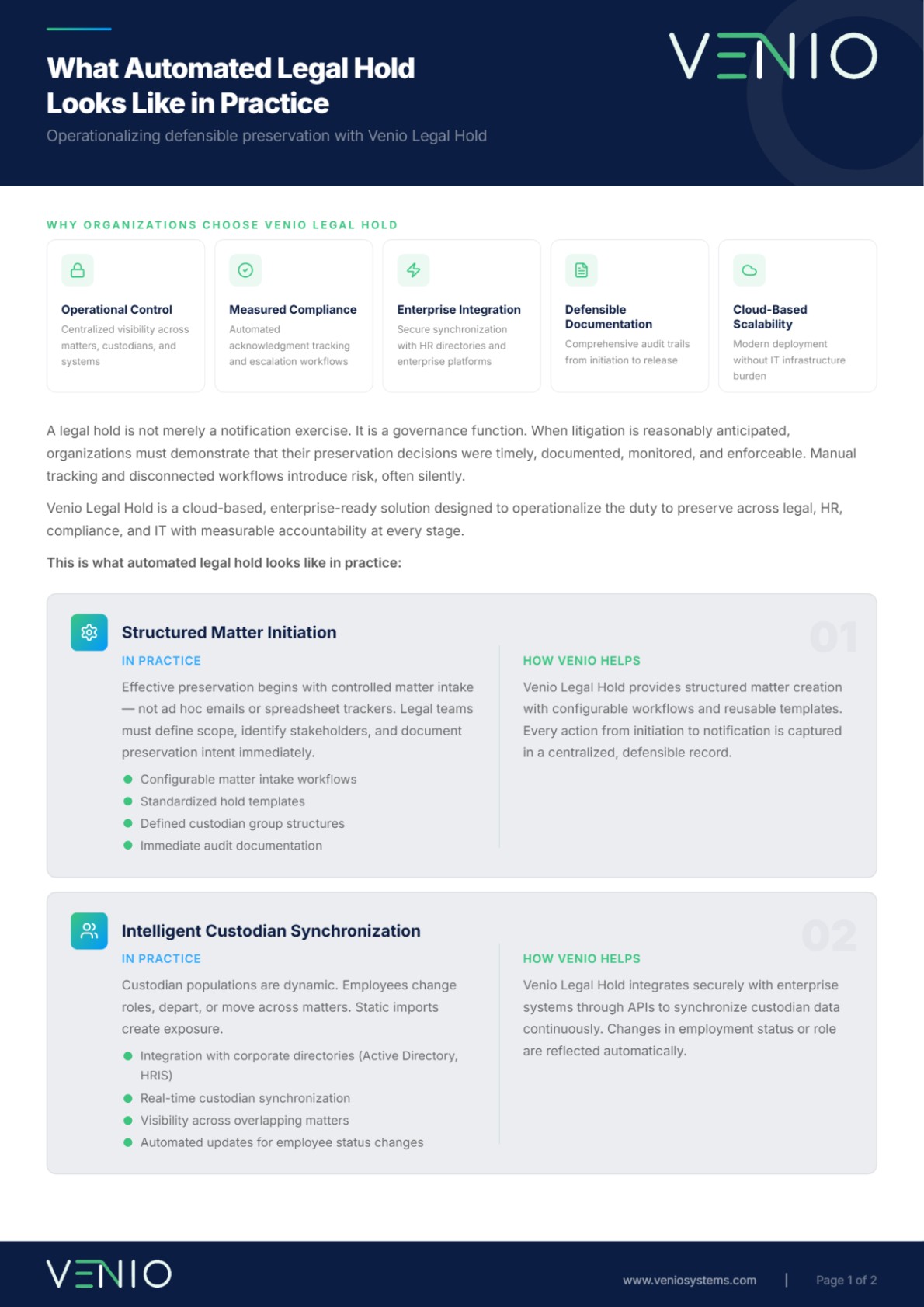
    A practical guide to defensible, automated preservation Download this short guide to understand what modern automated legal hold looks like in practice, and how mature workflows reduce risk across legal, compliance, and IT.

    What You’ll Learn

    This guide will provide an overview of best practices for automated legal hold workflows and how Venio Legal Hold adheres to them.
    • How structured matter intake reduces ambiguity
    • Why real-time custodian synchronization prevents gaps
    • How automated acknowledgment tracking strengthens compliance
    • What coordinated IT preservation looks like
    • Why continuous monitoring and controlled release matter
    Pages PDF
    Expert Verified

    Get your free copy

    PDF 
    Expert Verified 
    Instant download
    Oops! Something went wrong while submitting the form.

    Instant, 100% confidential download. Your information is never shared, and you can unsubscribe anytime.

    By downloading, you agree to Venio's Privacy Policy.

    Why It Matters

    Assess Your Legal Hold Maturity:

    Understand whether your current process is structured, monitored, and defensible, or dependent on manual oversight.

    Identify Hidden Preservation Gaps:

    Spot risks in custodian tracking, escalation workflows, and IT coordination before they become exposure.

    Benchmark Against Modern Standards:

    See what automated legal hold looks like in practice and compare it to your existing workflows.

    Strengthen Defensibility:

    Learn how audit trails, acknowledgment tracking, and controlled release protect your organization under scrutiny.

    Frequently Asked Questions

    Everything you need to know about Venio's eDiscovery platform

    1. Who is this Guide for?

    This resource is designed for legal operations leaders, in-house and corporate legal teams, information governance professionals, IT and infrastructure leaders, security and compliance teams, and anyone responsible for eDiscovery cost, readiness, or vendor decisions at a data-intensive company, whether you run discovery today or expect to.

    2. Do I Need to Already Use eDiscovery Software to Benefit?

    No. If you already run eDiscovery, the guide shows where volume pricing compounds and how to flatten it. If you don't yet, relying on outside counsel or ad hoc IT collection, it shows the cost and risk curve building beneath the surface, and how to meet it on your own terms instead of under a deadline.

    3. Where Does the 35% Figure Come From?

    It reflects ComplexDiscovery's reconciled market model, which projects enterprise-held data, the slice most relevant to discovery, growing from roughly 54 zettabytes in 2025 to about 243 by 2030, a rate near 35% a year. The guide explains what that growth does to discovery cost under different pricing models.

    4. Is this a Pricing Pitch?

    No. The guide is a framework for understanding eDiscovery cost structure, the three metered stages, the collaboration-data multiplier, and the levers that change the math. The pricing model is one of those levers, but the goal is to help you read your own curve, whatever platform you use.

    5. Will this Help Us Evaluate eDiscovery Technology?

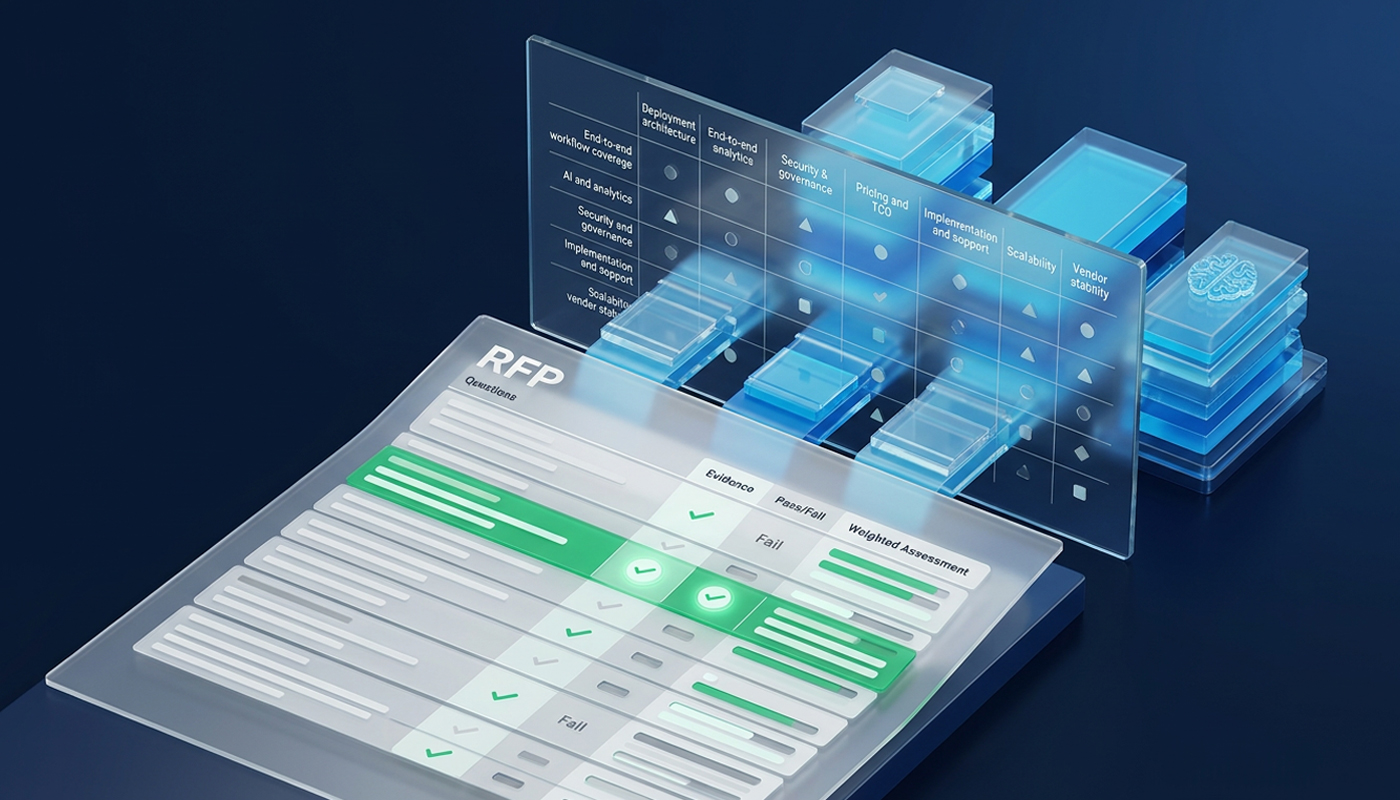
    Yes. The guide outlines the capabilities that actually move discovery cost and readiness for technology teams, including defensible AI-assisted review (TAR, CAL, clustering with humans in control), native handling of Slack and Teams, flexible deployment across cloud, on-premises, and air-gapped environments, and predictable flat-rate pricing.

    Discover the Power of Venio Cloud

    Ready for enterprise speed without the infrastructure overhead? Launch your Venio Cloud environment today.