What to Do When You Get Sued: A 9-Step Guide to Getting It Right

Ready to get started?
built for clarity, control, and scale.
Share
A company got served on a Tuesday and had counsel, insurance, and a hold notice out by Thursday. Its case still ended in a sanctions motion. Nobody could ever prove that the data behind it was actually protected.
An estimated 12 million lawsuits are filed against small businesses in the United States each year. Widely cited estimates suggest nine in ten companies will face one at some point. Most survive the lawsuit itself yet get hurt somewhere else entirely.
When a company gets sued, the clock starts the moment the papers arrive. What happens next depends on more than the legal filing, since the eDiscovery workflow quietly shapes the outcome. Knowing what to do when you get sued means planning the legal steps and the data steps together.
Most guides cover the legal basics yet skip the eDiscovery steps that follow service. Those steps decide how much the matter costs and how exposed the company becomes. The nine below cover both sides, in the order that actually matters right now.
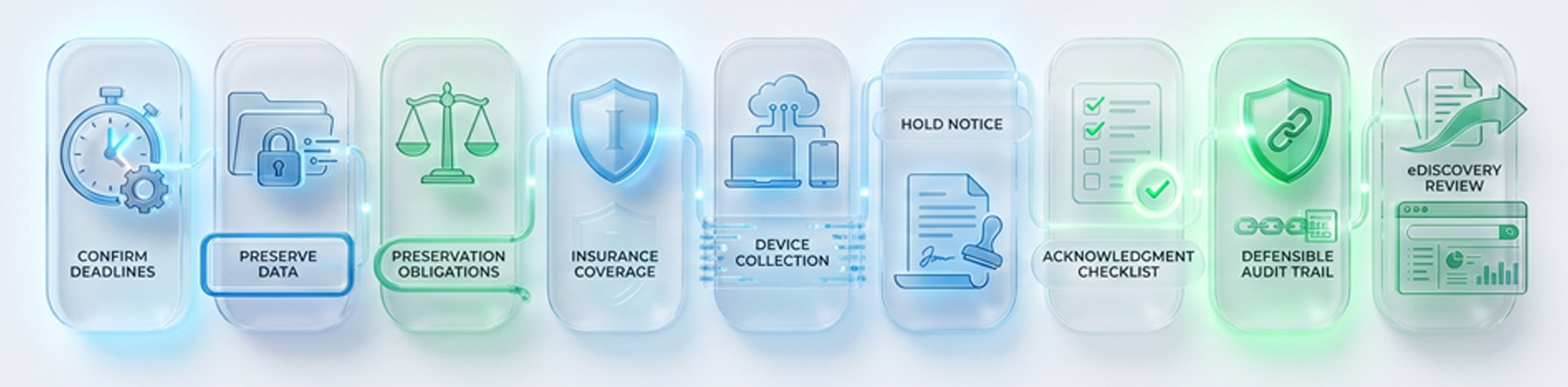
1. Confirm the Clock Is Already Running
The first move is confirming exactly how much time remains, since panic makes that number feel shorter. Under Federal Rule of Civil Procedure 12(a)(1)(A), a defendant generally has 21 days to respond after being served. State courts often set different windows, so confirm the applicable deadline before planning anything else.
A few details are worth verifying first:
- The exact date of service, not the date someone noticed the papers
- Which court and case number are listed on the complaint
- Whether the state deadline is 21 days, 30 days, or something else
- Whether the case has been, or could be, removed to federal court
Removal to federal court resets the clock to 21 days from the notice of removal.
2. Resist the Urge to Clean Up Anything
Many teams react to a lawsuit by tidying up, archiving old emails, and deleting drafts that feel embarrassing. That instinct is understandable, but once litigation is reasonably anticipated, it can look exactly like spoliation to a court. The safest approach is to leave anything tied to the dispute untouched until the legal hold is in place.
In Epic Games v. Google, a federal court found that employees routinely turned off chat history on Google Chat. That single setting triggered automatic deletion of relevant messages, and the court treated it as intentional spoliation. A quiet setting, not a dramatic decision, was enough to justify sanctions against one of the world's largest companies.
Draft emails, calendar entries, chat history, and personal phones all count as evidence once litigation is anticipated. Auto delete and retention settings behave exactly like deletion, even when nobody removes anything by hand. All of it stays off limits until the hold notice is confirmed and acknowledged.
3. Understand That "I Didn't Know" Is Not a Defense Courts Accept
Courts rarely ask whether a company meant to lose evidence. They ask whether it took reasonable steps to preserve that evidence. That standard comes from Federal Rule of Civil Procedure 37(e), which applies a three-part test.
- Whether the company had a duty to preserve the information in the first place
- Whether the company failed to take reasonable steps to preserve it
- Whether the loss caused prejudice, or was done with intent to deprive the other side of its use
Only the third factor requires intent, and courts increasingly find that intent through patterns of neglect.
4. Loop In Insurance Before Assuming Coverage
Insurance carriers should hear from the company early, since many policies require notice within a defined window. Missing that window can quietly forfeit coverage for the entire matter. Many cyber policies also require a preapproved vendor panel, and skipping it can void reimbursement.
Policies worth checking before assuming coverage:
- General liability
- Professional liability or errors and omissions
- Directors and officers
- Cyber liability, including any panel vendor requirements
A broker can confirm whether an existing eDiscovery vendor risks denial of reimbursement.
5. The Data Footprint Is Bigger Than It Looks
Most companies underestimate how much of their data now lives outside email. That gap becomes obvious fast once litigation begins and preservation duties attach. All of it becomes eDiscovery data the moment a matter starts, so the real footprint is worth mapping early.
Slack threads, Teams messages, and work phones now carry conversations that once lived entirely inside email. Cloud storage, mobile chat apps, and even AI chatbot logs can all become discoverable evidence in the right matter. Courts have grown far less forgiving of ephemeral messaging apps, treating auto delete as a failure by itself.

6. The One Document That Protects a Company Most
A litigation hold notice is the single most protective document a company can issue. It tells every custodian to stop deleting anything tied to the matter, creating a record of good faith. Nearly every sanctions case traces back to a hold that was late, incomplete, or missing entirely.
A hold notice actually needs to include:
- Every custodian who might hold relevant information, named specifically rather than by department
- A plain language description of what the matter involves and why the hold applies
- Explicit instructions to suspend auto delete, retention schedules, and routine archiving
- A clear acknowledgment mechanism, not just a request to reply with questions
- A scheduled review date, since holds nobody revisits become holds nobody trusts
7. Why Manual Hold Tracking Falls Apart Under Real Pressure
Most companies still run holds through spreadsheets, email chains, and reminders passed between departments. That approach holds up until a custodian leaves or a new data source appears. It also breaks the moment one person forgets to reply and nobody notices.
Signs the tracking has already started to fail:
- Uncertainty on the acknowledgements of the legal hold notice
- Reminders go out only when someone remembers, so follow-up quietly lapses
- New custodians and data sources join the matter but never get added to the hold
- The entire hold lives in one inbox, with no record if that person leaves
By the time anyone notices the gap, the missing acknowledgment is already the detail opposing counsel finds first.
8. What a Defensible Legal Hold Actually Looks Like
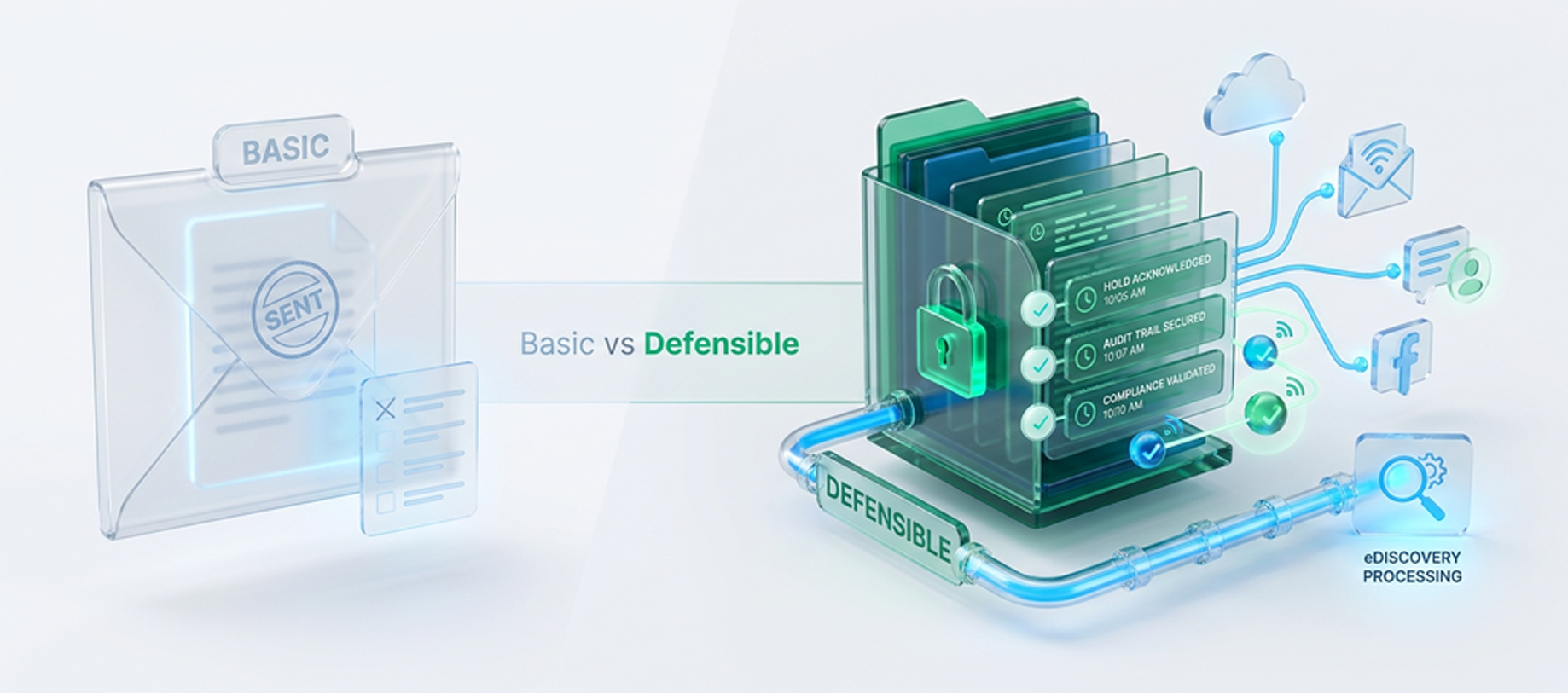
A defensible litigation hold looks different from a hold that simply went out on time. The difference shows up in what can be proven later, not just what was sent. Each of those elements is what turns a hold into evidence of good faith.
- Proof of when the duty attached and when the hold issued
- A complete audit trail the other side can test without finding gaps
- Documented, repeatable steps that look the same across every matter
- Scope decisions that show why each custodian and source was included or left out
9. How Venio Turns This Into One Connected Process
Venio's eDiscovery platform builds every one of those elements directly into the hold. It runs from notice to acknowledgment to release, with each step tracked automatically. The same platform then carries the matter into collection, eDiscovery processing, and review, so nothing gets rebuilt.
That connected eDiscovery workflow keeps the data intact as it moves between stages. Custody, coding, and productions all run inside one eDiscovery review platform rather than scattered tools. A single eDiscovery processing workflow means the record that started with the hold survives to production.
What changes once the process is connected:
- The same data flows into eDiscovery data processing and review with no second collection
- One connected record spans the matter, so stages never have to be reconciled
- Custody stays intact from the first hold notice through final production
Getting the Next Few Weeks Right
The choices a company makes in the first few weeks tend to follow the case to its end. A strong legal hold, backed by a real platform, turns a stressful moment into a controlled one. Venio's team can help get that hold right the first time, so contact us today to talk it through.
Frequently Asked Questions
1. What is the first thing to do after being served with a lawsuit?
Confirm the response deadline and read the complaint carefully. Defendants generally have 21 days to respond under Federal Rule of Civil Procedure 12(a)(1)(A), though state court deadlines vary.
2. Do I need a lawyer immediately after being sued?
Yes. Engage counsel and notify the insurance carrier as soon as possible, since many policies require prompt reporting to preserve coverage.
3. When does the duty to preserve evidence begin?
The duty begins once litigation is reasonably anticipated, which is often well before a complaint is formally filed, not after service occurs.
Related Articles

What is eDiscovery Software?
In a world where business communication is overwhelmingly digital, these trails
Read Article
4 Proven Ways to Control eDiscovery Costs in Any Legal Case
eDiscovery continues to rank among the top cost drivers for legal departments,
Read Article
Discovery Objections: A Comprehensive List and How to Succeed
During the discovery process, an attorney attempts to obtain
Read Article