Everlaw vs Relativity: A Better Third Choice
Ready to get started?
built for clarity, control, and scale.
Share
Choosing the wrong eDiscovery platform does more than dent a budget. It slows review, complicates productions, and can put the defensibility of an entire matter at risk. That is why the Everlaw vs Relativity question surfaces in nearly every platform evaluation legal teams run.
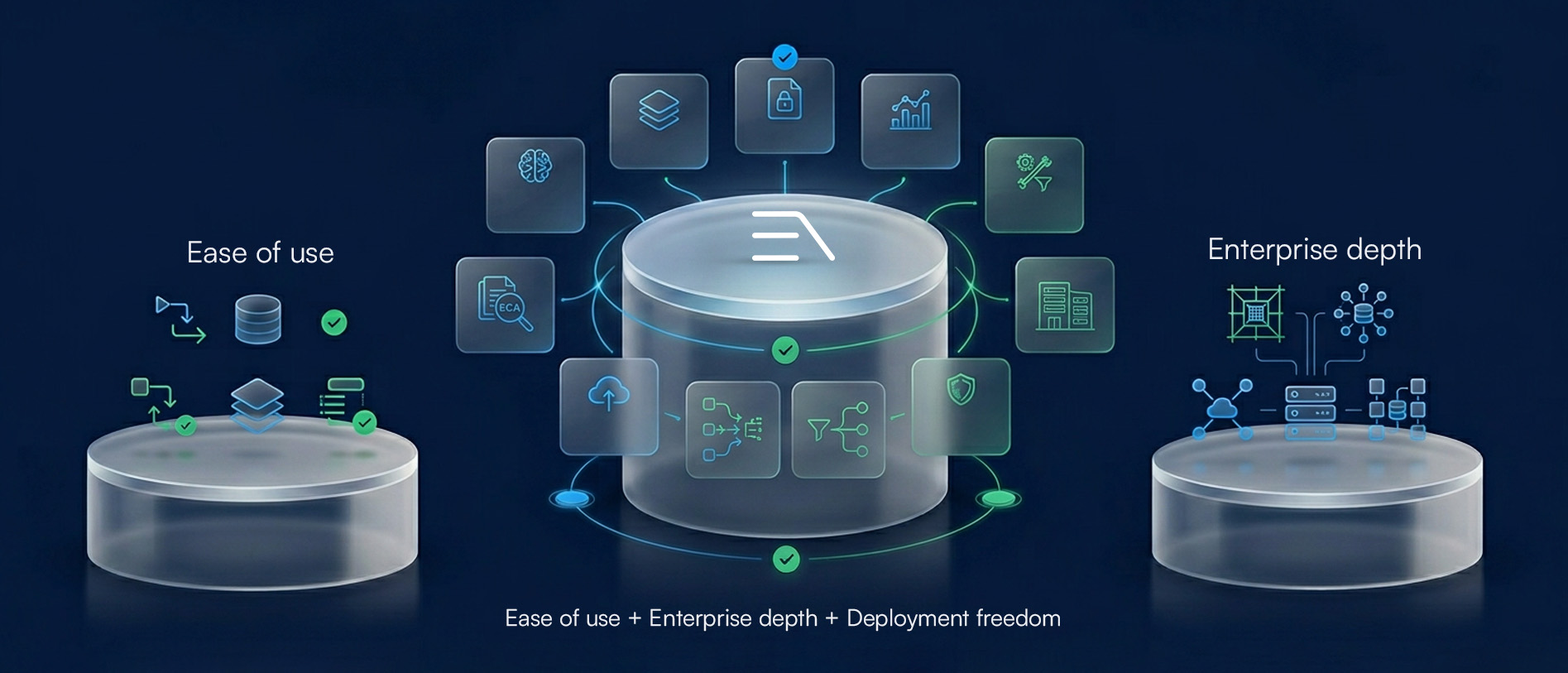
For years, the answer has sounded simple. Everlaw for teams that want speed and a gentle learning curve. Relativity for enterprises that need depth and scale. Clean, tidy, and incomplete.
This guide compares Everlaw vs Relativity honestly, covering where each platform genuinely leads and where each forces a trade-off you may not want to make. Then it introduces a third option, Venio Systems, built so that legal teams no longer have to choose between usability and control.
If you are shortlisting platforms, read past the marketing and focus on one question: which tool gives your team speed, defensibility, and deployment freedom in a single environment?
Everlaw vs Relativity at a Glance
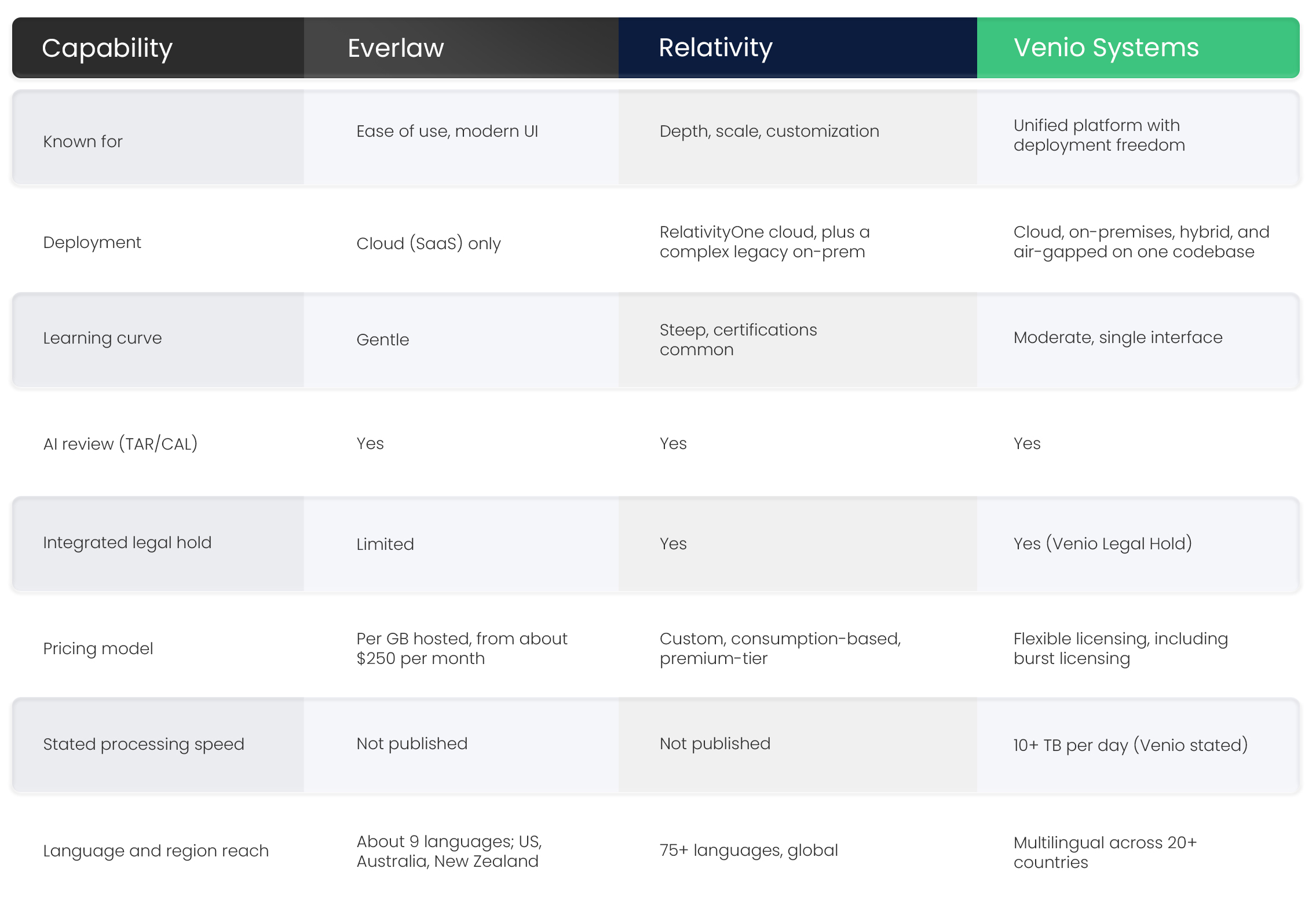
Both platforms are credible, well-reviewed, and widely deployed. On user review sites, they sit close together, with Everlaw rated 4.7 out of 5 and Relativity 4.6 out of 5 on G2.
The differences that matter to a buyer are not the star ratings. They are deployment, cost structure, and the level of complexity a team is willing to absorb. The table below includes Venio in the comparison so you can see the full picture rather than a binary view.
Everlaw: Strengths and Trade-offs
Everlaw is a cloud-native litigation platform built for speed and collaboration. Its calling card is approachability. Teams can ingest data, run searches, and start review without weeks of training.
Its EverlawAI suite supports predictive coding and natural-language search, and the Storybuilder feature lets teams shape evidence into a case narrative. For boutique firms and lean in-house teams, that combination is genuinely strong.
The trade-offs appear when needs grow. Everlaw runs only in the cloud, with no real on-premises option, which is a problem for regulated clients and data-sovereignty mandates. According to Software Advice, it is offered only in the United States, Australia, and New Zealand, and pricing starts at around $250 per month, depending on the amount of data hosted.
For a single jurisdiction with modest data, Everlaw fits. For cross-border, classified, or air-gapped matters, the cloud-only model becomes a ceiling. This is why "Everlaw alternatives" is a common next search for teams that outgrow it.
Relativity: Strengths and Trade-offs
Relativity is the established heavyweight, with more than two decades in the market and one of the largest install bases in eDiscovery. Its RelativityOne platform handles the most complex, high-volume matters and offers deep customization through a large partner ecosystem.
When the comparison is framed as relativity vs everlaw, Relativity wins on raw power and configurability. Its aiR for Review tools surface high-impact documents with explanations, and few competitors match its enterprise depth.
That power has a cost. Relativity carries a steep learning curve, and advanced roles often expect formal certifications. Buyers frequently describe its pricing as premium and its consumption model as hard to predict, which is why "relativity alternative" is a recurring query among teams watching their budgets.
Relativity rewards organizations with dedicated specialists and large matters. Teams without that overhead often pay for capabilities they cannot fully use.
Why Everlaw vs Relativity Is a False Choice
Here is the original insight that most comparisons miss. The Everlaw vs Relativity debate quietly forces you to pick a trade-off, not a winner.
Choose Everlaw, and you get ease of use, but you accept cloud-only deployment and limited regional and language reach. Choose Relativity, and you get depth and scale, but you accept complexity, certification overhead, and premium, consumption-based pricing.
Notice what neither option gives you: a single platform that is easy to use and deployable wherever your data must live, at a cost you can forecast. Both leading options are fundamentally cloud-first. That is fine until a matter demands on-premises control, an air-gapped environment, or a hybrid setup where sensitive data stays in-house while large reviews scale to the cloud.
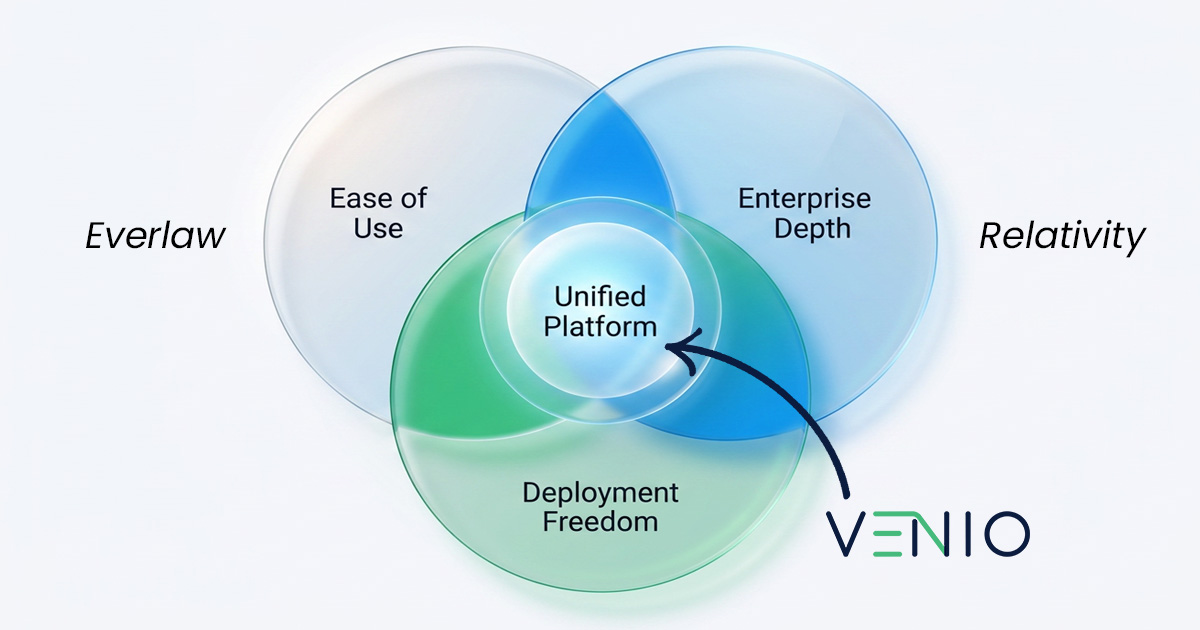
This is the deployment trap. The market has trained buyers to argue about interface and AI features, while the harder questions of where data lives and how costs behave get pushed aside. For litigation support and legal ops teams, those are exactly the questions that drive defensibility and budget.
A defensible process under FRCP Rule 37(e) and Sedona-grade standards depends on control and consistency across the entire workflow, not just a friendly review screen. The right question is not "Everlaw or Relativity." It is "which platform removes the trade-off entirely?"
Venio Systems: The Unified Alternative to Both
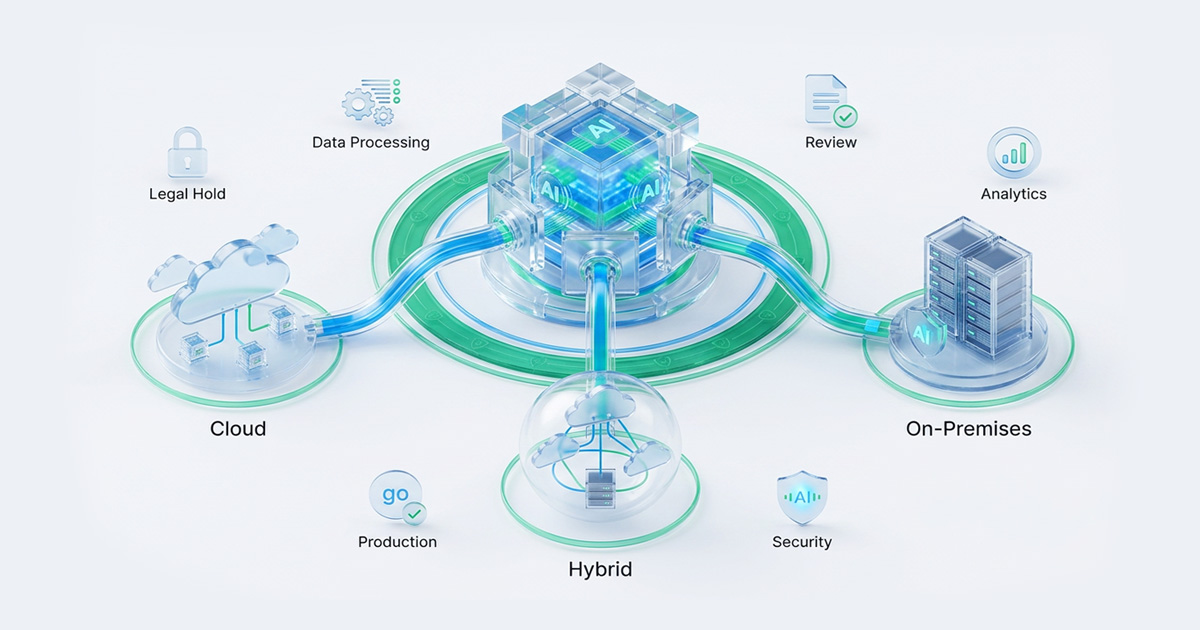
Venio Systems was built to collapse that trade-off. It is a unified, end-to-end eDiscovery platform that runs every phase, processing, early case assessment, review, production, and legal hold, on a single data layer rather than a stack of stitched-together tools.
Deployment freedom is the headline difference. Venio runs as cloud SaaS, on-premises, hybrid, or air-gapped, and the on-premises deployment uses the same codebase, AI models, and workflows as the cloud. Sensitive matters can stay behind your firewall while high-volume reviews burst to the cloud during data surges, all in one ecosystem. Neither Everlaw nor Relativity offers that range cleanly.
Performance is engineered for scale. Venio states processing speeds of more than 10 terabytes per day, alongside a job-prioritization queue that lets teams sequence multiple matters by urgency.
Cost is built to be predictable. Burst licensing lets teams scale capacity for a data surge without committing to permanent enterprise pricing, which directly answers the unpredictable-spend concern that drives buyers toward a Relativity alternative.
Defensibility is integrated, not bolted on. Venio Legal Hold automates custodian notifications, tracking, and questionnaires from day one, so preservation is consistent and auditable across every deployment model.
The result that matters most is operational. One Venio customer reported a 300% increase in data volume handled while reducing the personnel needed to support processing by 30%, according to Venio's platform overview. That is the upside of removing the trade-off rather than living with it.
How to Evaluate a Relativity Alternative or Everlaw Alternative
If you are searching for Everlaw alternatives or a Relativity alternative, judge candidates against the criteria that actually move risk and cost, not the demo polish.
- Deployment fit. Can it run where your most sensitive data must live, including on-premises or air-gapped, without a separate product?
- Single unified database. Does processing, ECA, review, production, and legal hold live in one environment, or are you integrating several tools?
- Predictable cost. Are consumption spikes and certification requirements disclosed up front, and can you flex capacity for a surge?
- Defensibility. Does the platform support a consistent, auditable, FRCP-aligned workflow end to end?
- Proof on your data. Will the vendor run a pilot on your actual data, not curated demo files?
A platform that passes all five removes the trade-off that the Everlaw vs Relativity framing forces on you. That is the bar Venio is built to clear.
Stop Choosing Between Simplicity and Control
Most eDiscovery evaluations force a compromise. Everlaw offers ease of use. Relativity offers depth and customization. But if your matters require deployment flexibility, predictable costs, and a unified workflow, neither may be the right fit.
See Venio on your own data. Book a Venio demo and watch processing, review, and legal hold run on one platform, deployed exactly as your matters require.
Frequently Asked Questions
1. Is Everlaw better than Relativity?
Neither is universally better. Everlaw leads on ease of use and fast onboarding, while Relativity leads on depth, customization, and handling very large or complex matters. The better question is whether either solves your deployment and cost requirements, or whether a unified alternative fits better.
2. What is the main difference in Relativity vs. Everlaw?
Relativity is the powerful, highly configurable enterprise option with a steep learning curve and premium pricing. Everlaw is the modern, easy-to-learn, cloud-only option suited to smaller teams. Both are cloud-first, which is the constraint many buyers discover too late.
3. What are the best Everlaw alternatives for teams that need on-premises control?
Everlaw runs only in the cloud, so teams with data-sovereignty, air-gap, or hybrid needs look elsewhere. Venio is a strong Everlaw alternative because it runs the same platform on-premises, hybrid, or in the cloud, with integrated legal hold and defensible workflows.
4. Is there a good Relativity alternative that costs less to run?
Yes. Buyers seeking a Relativity alternative usually want to avoid certification overhead and unpredictable consumption costs. Venio offers a unified platform with flexible and burst licensing, so you scale for a surge without locking into permanent enterprise pricing.
5. Does Venio replace Everlaw and Relativity or work alongside them?
Venio is a full eDiscovery platform, so it replaces them rather than supplementing them. It covers processing, ECA, review, production, and legal hold in one environment, which removes the need to run multiple tools.
6. Which option is best for regulated industries and data sovereignty?
Regulated, government, and security-conscious teams typically need on-premises or air-gapped deployment. That favors a platform like Venio, which keeps the full workflow inside your infrastructure while still allowing cloud scaling when policy permits.
Related Articles
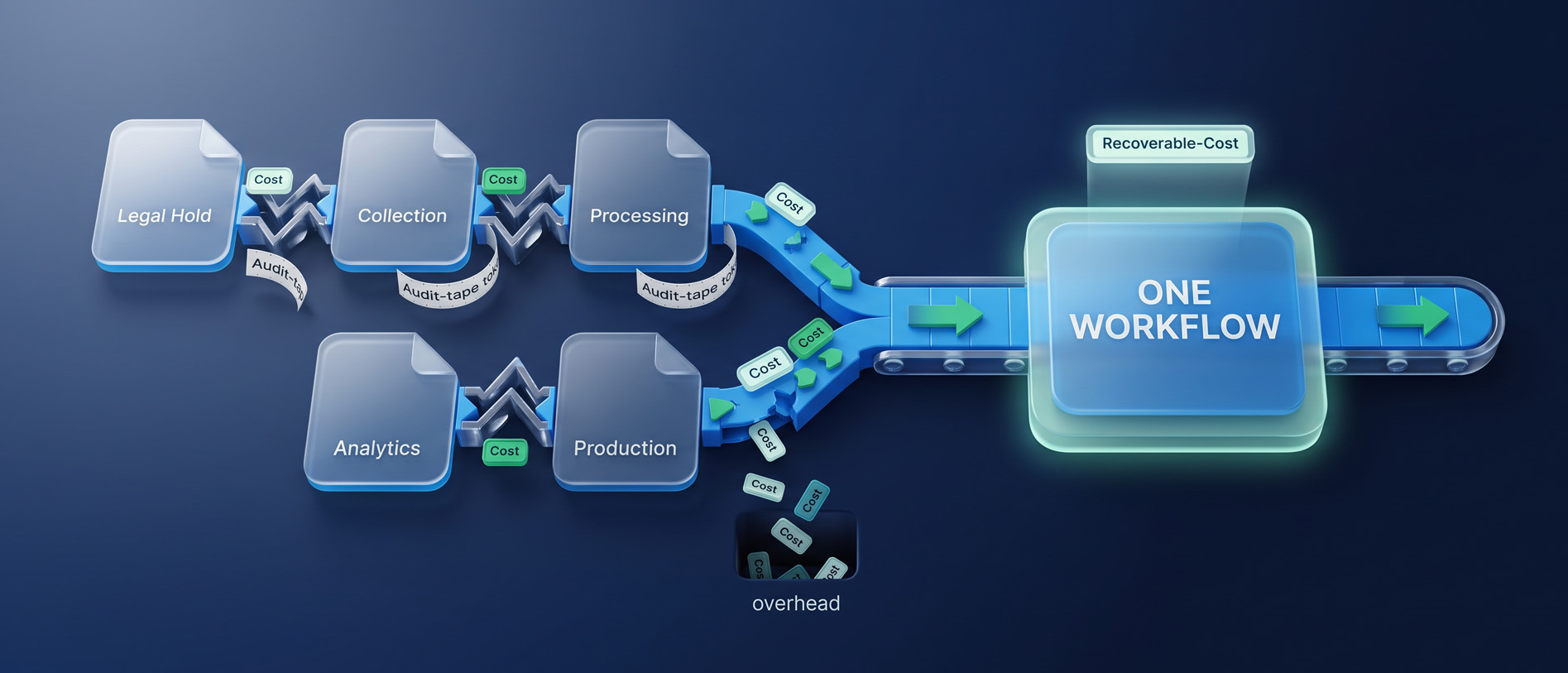
Consolidating Your eDiscovery Stack Without Disrupting Active Matters
How to consolidate eDiscovery tools without disrupting live matters, and why a f
Read Article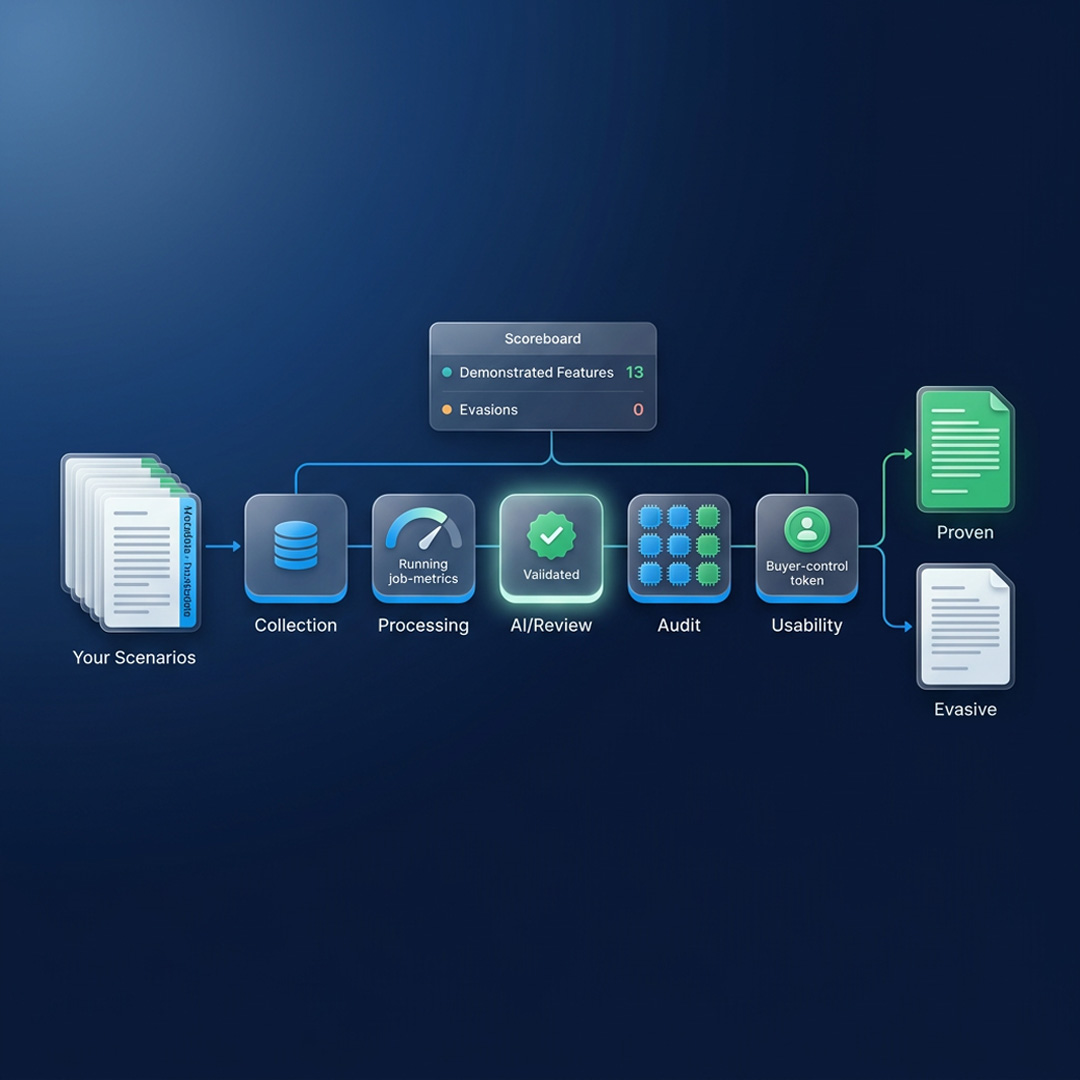
What to Ask in an eDiscovery Demo Before You Sign
Twenty questions that make an eDiscovery vendor prove processing, AI, security a
Read Article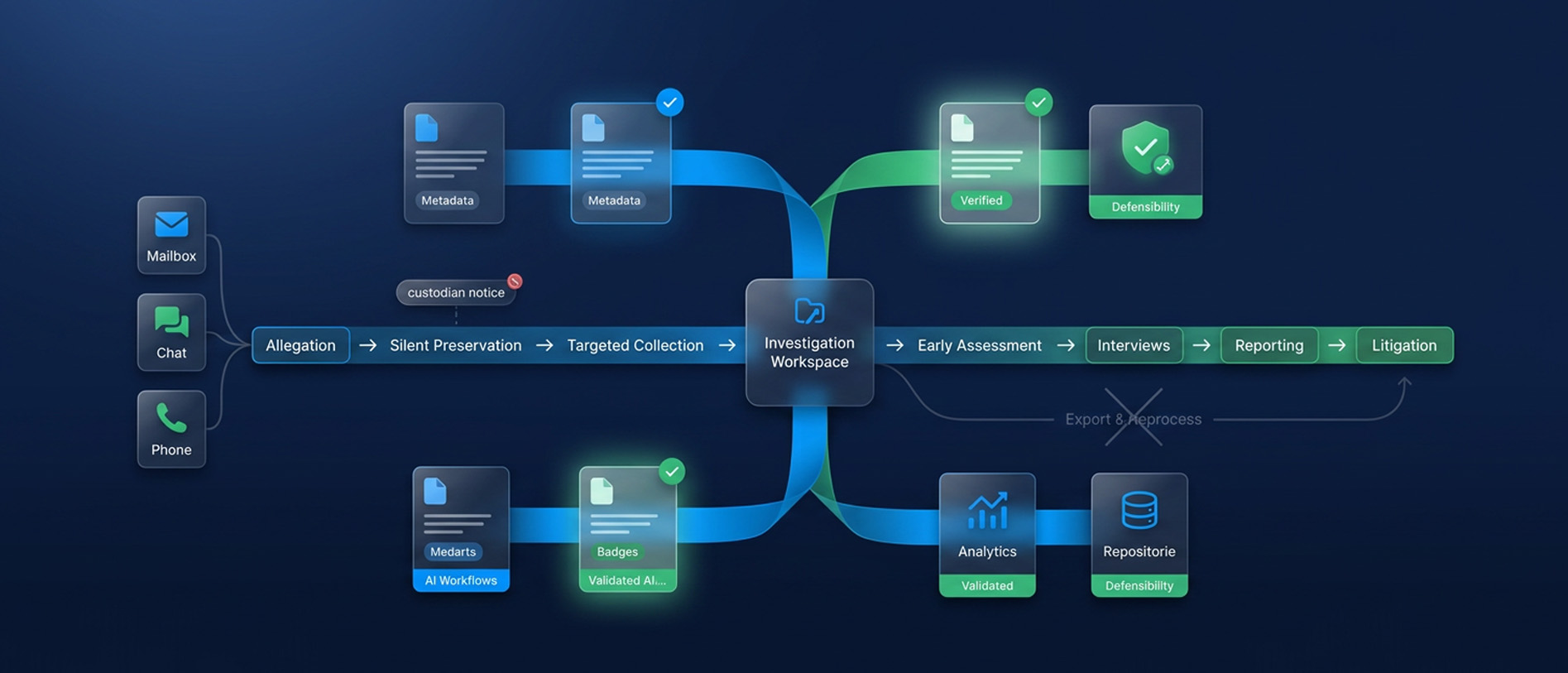
Internal Investigations: Getting the Facts Without Blowing the Matter Open
An internal investigation offers no court schedule and no second chance at prese
Read Article