A Buyer’s Guide to Government eDiscovery Security
Ready to get started?
built for clarity, control, and scale.
Share
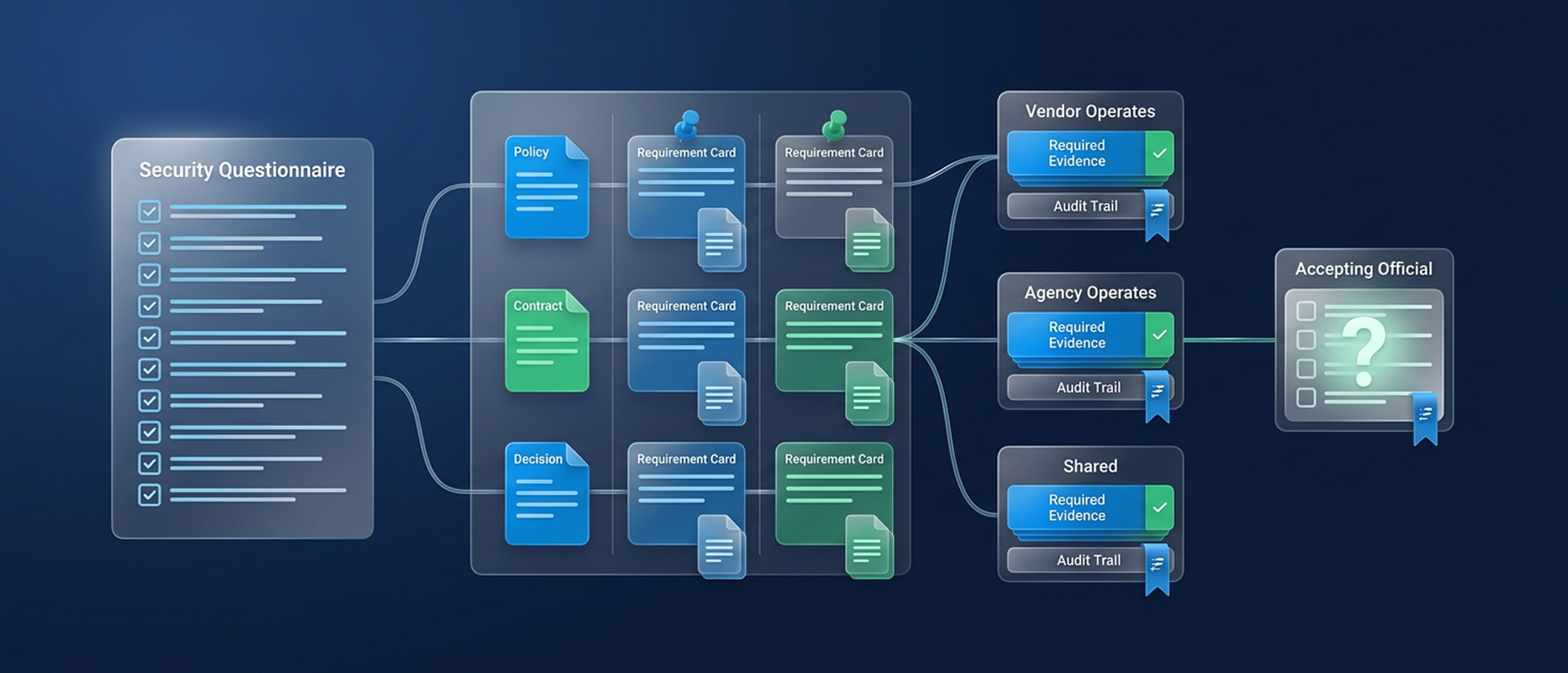
A completed security questionnaire can make an eDiscovery platform look ready for approval. Yet questions about who operates each control and who accepts the remaining risk may remain unanswered. Without those answers, even a promising deployment can stall.
That gap can emerge when legal and IT evaluate the platform at different stages. Legal may focus on matter workflows before IT has assessed hosting, security controls, and operating responsibilities.
This guide explains how to evaluate eDiscovery software for government agencies before those questions become delays, covering which requirements apply to your deployment, what changed in 2026, and what evidence establishes eDiscovery security rather than asserts it.
Start With What Could Block Approval
A general security questionnaire can produce reassuring answers without ever resolving the agency's most important concern, so start instead by identifying the information the platform will receive and the restrictions that travel with it.
An enforcement matter might contain personal information, privileged communications and Controlled Unclassified Information, or CUI, while a criminal justice workflow may introduce Criminal Justice Information, or CJI, and those categories can create different obligations inside a single collection.
Before comparing features, have legal and IT agree on three things.
- Information Categories: The data types the proposed environment must support, including any that carry handling obligations of their own.
- Mandatory Requirements: Record each applicable requirement alongside the law, regulation, policy, contract, or authorized agency decision that makes it mandatory.
- Accepting Official: The person responsible for accepting the proposed deployment and the risks that remain once it is configured.
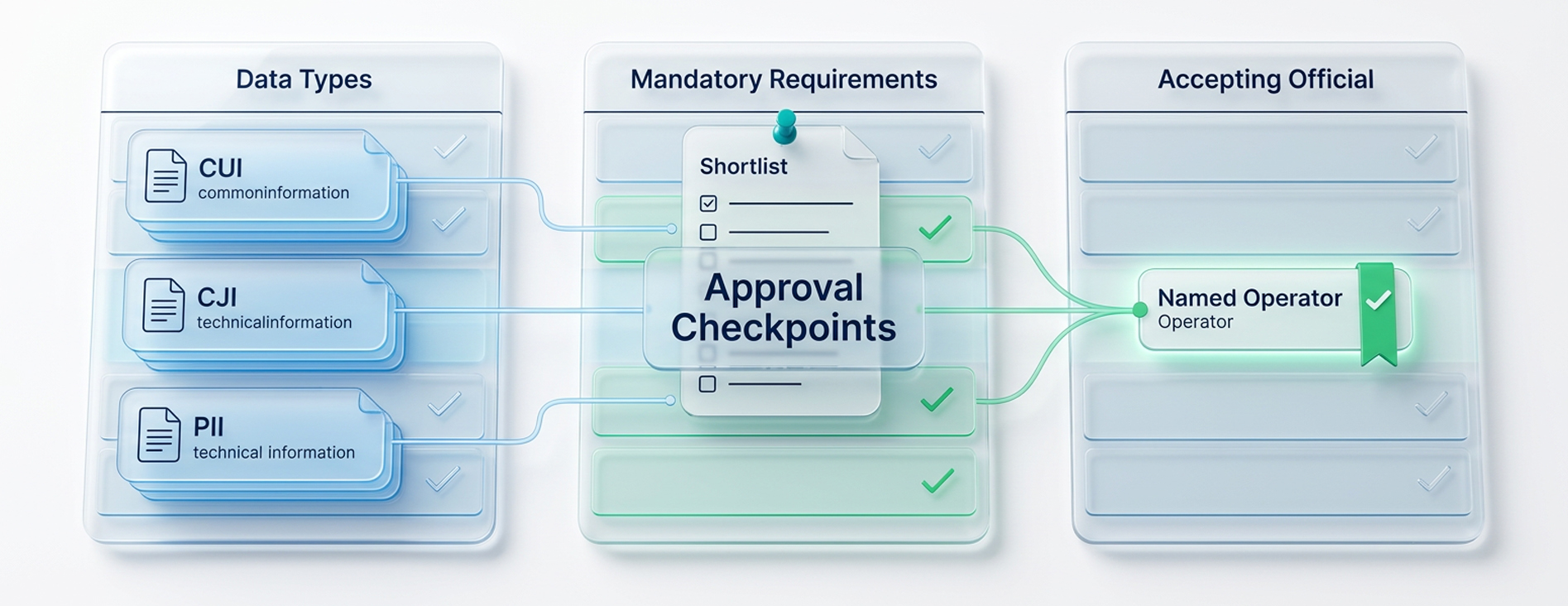
Record the law, regulation, policy, contract, or authorized agency decision behind each mandatory requirement. This helps distinguish binding obligations from preferences that could unnecessarily restrict the shortlist.
The resulting list should separate disqualifying gaps from issues a supported configuration can resolve. An unapproved external processing service may stop the proposed workflow outright, while an unset access restriction simply needs configuration and verification.
That distinction is what makes public sector eDiscovery evaluation useful, because your shortlist then begins with environments that can actually support the matter and your team already knows which unresolved questions deserve attention first.
FISMA vs FedRAMP, and Who Proves What
FISMA establishes federal information security responsibilities while FedRAMP provides a standardized way to assess in-scope cloud services, so the two address related parts of an agency's security program and neither one replaces the other.
FISMA sets an agency-wide approach to managing information security, and buying a cloud service does not transfer those responsibilities to the provider. Under current FedRAMP guidance, the agency still authorizes its own information system and accepts risk for its particular use, with its chosen configuration, integrations and agency-operated controls forming part of that decision.
For a buyer weighing FISMA vs FedRAMP, then, the practical question is never which programme is stricter but rather who supplies which evidence and who operates each control once the platform is live.
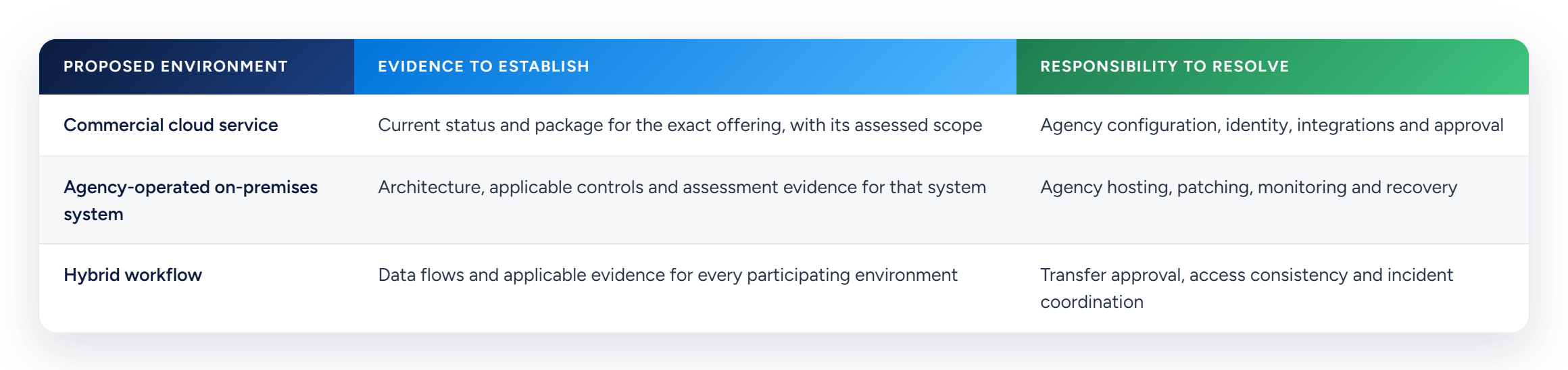
An agency-operated on-premises application is not itself a commercial cloud service, although that distinction removes neither the agency's own FISMA obligations nor the need to assess connected services, and the FedRAMP exclusions covering certain cloud arrangements carry their own scope conditions.
Venio's deployment options cover cloud, on-premises and hybrid environments, which gives an agency room to move when infrastructure requirements would otherwise rule out a proposed workflow, so evaluate the exact configuration and the operating responsibilities attached to each before choosing between them.
Which NIST 800-53 and 800-171 Rules Apply
NIST 800-53 compliance and NIST 800-171 compliance are not interchangeable purchasing requirements, so establish which system relationship and information category a requirement addresses before asking any vendor to demonstrate it.
NIST SP 800-53 provides a catalog of security and privacy controls that agencies select and tailor through their own risk management processes, which means an assertion of NIST 800-53 compliance only carries weight alongside an identified system, the applicable controls and evidence of implementation.
Ask for the relevant control implementation statements and assessment results rather than a list of control numbers, because a list tells you nothing about whether the vendor, the hosting provider or your own agency performs the work behind each one.
NIST SP 800-171 addresses protection of CUI in qualifying nonfederal systems and organizations, and Revision 3 was published in May 2024, although the revision required for any particular engagement still depends on the applicable rules and the contract in front of you.
For NIST 800-171 compliance, first establish whether the system is nonfederal or operated on the agency's behalf, since that single distinction can change the applicable requirements, and then identify the information, contractual obligations and assessment evidence that the environment needs.
Getting this order right prevents a common evaluation mistake, because a vendor can answer a broad compliance question entirely accurately while your proposed use sits outside the evidence they supplied.
StateRAMP vs FedRAMP for State Buyers
State and local buyers have a further comparison to make, since StateRAMP vs FedRAMP concerns two separate assurance programmes and the purchasing authority is what determines which evidence will be accepted.
StateRAMP announced its GovRAMP operating name in February 2025, so check the solicitation and the applicable jurisdictional policy for the required status and any accepted alternatives, keeping in mind that neither programme automatically resolves every local requirement.
Data-specific obligations may apply on top of that. For CJI, consult the FBI's CJIS Security Policy Version 6.1, dated June 25, 2026, because a general government security claim does not establish suitability for that particular workload.
What Changed in 2026 and What to Ask
An old security checklist can send procurement in the wrong direction even when everyone follows it carefully, and three developments from this year deserve attention during any current evaluation.
What FedRAMP 20x Changes for Buyers
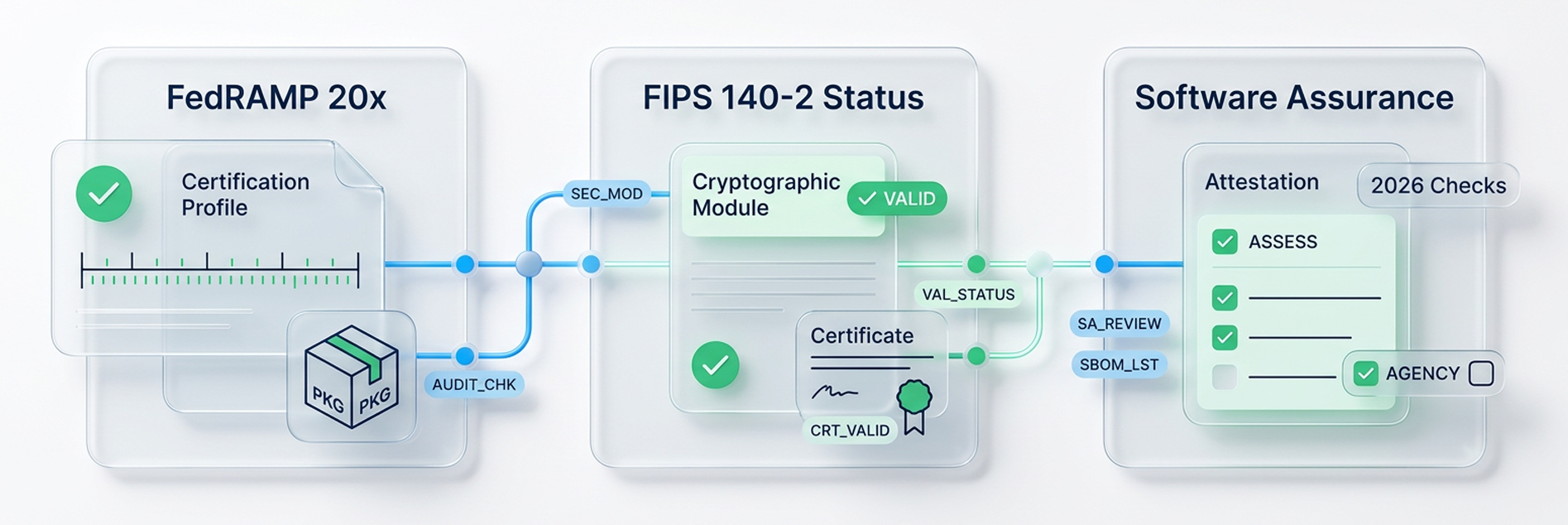
FedRAMP 20x puts the emphasis on measured security outcomes, and the 2026 Consolidated Rules introduce updated certification terminology and classes, although those classes describe assurance and do not stand in for the agency's own system impact categorization.
The published transition timetable identifies January 1, 2027 for mandatory adoption, subject to specific applicability and effective dates, while new FedRAMP Ready submissions ended on July 28, 2026.
When discussing FedRAMP 20x with a vendor, ask which rules and transition dates apply to the offering under consideration and request its current listing, certification profile and supporting package, because a dated badge on a proposal cannot establish any of those details.
Encryption Needs More Than AES-256
NIST’s timetable allowed FIPS 140-2 validations to remain active through September 21, 2026. From September 22, only FIPS 140-3 validations remained on the active list. Historical modules may still serve existing systems, subject to applicable agency requirements.
Ask which validated cryptographic modules the proposed configuration actually uses and how their certificate status affects your purchase, since an answer naming AES-256 alone establishes nothing about module validation.
Software Checks Now Vary by Agency
OMB's January 2026 memorandum M-26-05 rescinded the earlier standardized software assurance memoranda, so agencies now develop assurance processes matched to their own risks and missions, although they may still use attestation forms and require a software bill of materials through contract terms.
Ask the purchasing agency which assurance evidence it requires now rather than assuming the old standard applies, and treat this as a priority when your team will install updates and maintain the deployment itself.
Trace Where Your Data Actually Goes
Once the applicable requirements are clear, trace a representative record through the proposed workflow and include collection, processing, review, AI services, production and support access, because the picture only becomes useful when it covers every stage.
A matter can sit inside one user interface while an integration quietly sends extracted text somewhere else, and a review environment can enforce permissions correctly while an exported copy lands in a far less controlled location.
Ask the vendor to show where native files, extracted text, indexes and generated outputs are processed and retained, including temporary files, backups and diagnostic data where relevant, so that every destination ends up with an identified purpose and a responsible operator.
This is the point at which workflow design becomes a buying consideration, because if your current process repeatedly exports documents into separate tools then each of those transfers needs its own controls and its own verification.
The Venio eDiscovery platform connects processing, early case assessment, review and production, and that architecture can reduce the transfers between separate applications, so ask which transfers it would remove from your workflow and which source collections or external services would still remain.
For AI specifically, request a feature-level explanation of the proposed workflow. Venio describes its eDiscovery AI integration as using secure REST APIs, with results delivered within the platform. Ask what information each feature transmits, where processing occurs, and what retention terms apply to your deployment.
Integration can simplify daily review, while data-flow evidence helps establish whether the proposed workflow fits your agency’s requirements. Venio’s federal agency case study describes a shared document collection supporting FOIA and litigation, with role-based access and redaction tools. The case study reports reduced duplication across those workflows.
Check What a Limited User Can Reach
A security demonstration should include an account with limited permissions, because watching an administrator complete the workflow tells you very little about what an outside reviewer would be able to reach.
Use an agency-approved sample containing a restricted document, a related attachment and text intended for redaction, then have the vendor show the expected behaviour across search, preview, downloads and production.
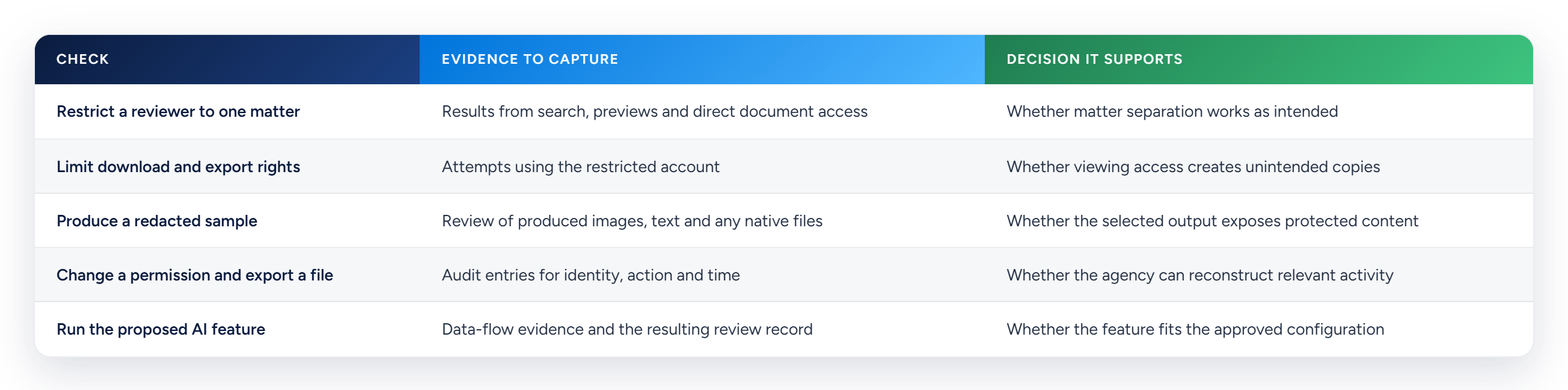
These are evaluation scenarios rather than a substitute for a formal security assessment, since the demonstration checks behaviour while documentation and assessment evidence are what establish broader control assurance.
Venio uses project groups, global roles and granular permissions to manage access, and its connected review and production workflow gives you a practical place to check those permissions alongside the resulting output, so you can measure whether the controls reduce manual work without leaving gaps your team has to manage somewhere else.
Decide Who Runs What After You Buy
A successful evaluation can still leave an agency holding more operational work than it expected, so before contracting, identify who patches the application, who reviews alerts, who restores data and who responds when access goes wrong.
For each of those responsibilities, record the operator, the evidence, the escalation route and the contractual expectations, and include support access and the treatment of subcontractors, because vague shared ownership leaves both sides waiting for the other to move.
For recovery, request evidence that the relevant information can be restored within agreed objectives, which depending on the workflow may mean metadata, permissions and audit history alongside the documents themselves.
At contract exit, establish how the agency retrieves required records and how residual copies are handled, remembering that ending a matter or a subscription does not itself authorize destruction and that preservation obligations and approved records disposition still guide that decision.
The commercial question underneath all of this is what your agency will have to operate once onboarding finishes, so compare that effort against your current process, because fewer application transfers are only valuable where they remove reconciliation, access administration or troubleshooting you can actually name.
Where Venio Fits in Your Evaluation
The next step in choosing eDiscovery software for government agencies is to put legal and IT into the same evaluation and hand them a defined workflow, the requirements that genuinely apply and a short list of decisions still waiting on an answer.
Venio earns a place on that shortlist when your current tools create repeated transfers or when your agency needs a deployment model its infrastructure requirements can actually accommodate, and its connected processing, early case assessment, review and production capabilities let you examine both issues inside a single platform conversation.
Walk the demo through a representative matter instead of a feature tour, asking the team to show the deployment, the reviewer permissions and the production workflow, then name the evidence your security reviewers will need to see before approval.
For public sector eDiscovery teams, that turns the demo into something useful well before a purchase decision, because you leave it knowing where Venio fits, what work it could remove and which questions still require technical validation.
If the approval questions in this guide are the ones holding your evaluation up, Book a Demo and spend the session on your own workflow and eDiscovery security requirements rather than on a slide deck.
Frequently Asked Questions
What Security Rules Apply to Government eDiscovery?
Requirements depend on the agency, the information involved and the deployment model, so public sector eDiscovery buyers should establish applicability before treating any vendor credential as sufficient. Federal buyers must address their applicable agency security obligations alongside FedRAMP for in-scope cloud services, while CUI, criminal justice information and other regulated categories can each add further eDiscovery security requirements on top of those.
Does FedRAMP 20x Replace Agency Approval?
No, because FedRAMP 20x changes how cloud service assurance is established and maintained rather than removing the agency's own responsibility for the decision. Agencies still assess their intended use and authorize their own information systems, so meeting the programme's requirements does not resolve every configuration, integration or operational responsibility that a particular deployment creates.
Which NIST Standard Applies to an eDiscovery Platform?
For federal information systems, agencies select and tailor applicable controls from NIST SP 800-53. NIST SP 800-171 addresses protection of CUI in qualifying nonfederal systems and organizations. Establish the system relationship and governing requirements before requesting evidence of NIST 800-53 compliance or NIST 800-171 compliance.
How Do Buyers Compare StateRAMP vs FedRAMP?
FedRAMP addresses in-scope federal cloud use, while GovRAMP, formerly branded StateRAMP, serves a broader public sector assurance role that includes state and local buyers. When weighing StateRAMP vs FedRAMP, check the purchasing authority's stated requirements and accepted evidence, because a status held under one programme does not automatically satisfy a solicitation that references the other.
Related Articles
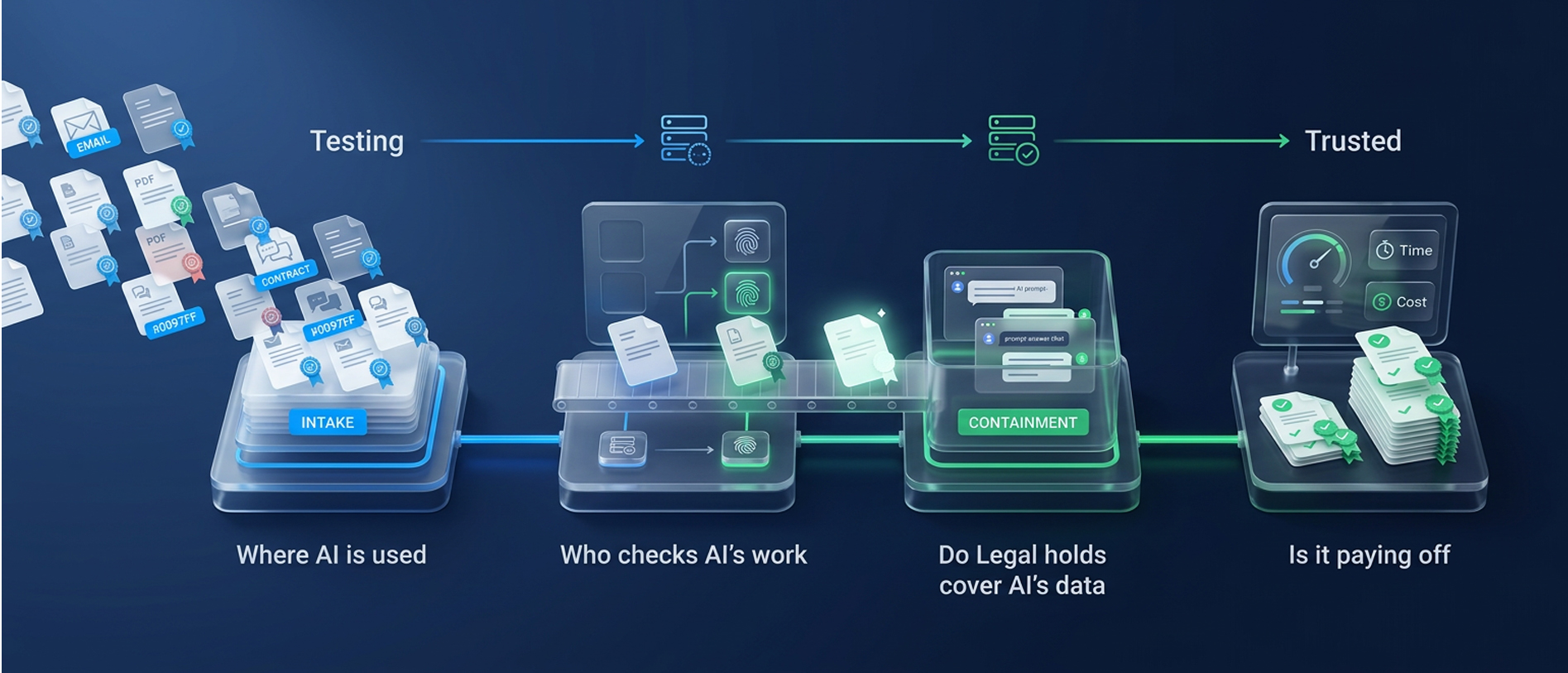
From Testing to Trusted: The Open Questions on AI in eDiscovery
Where is AI used, who checks its work, do legal holds cover AI data, and is it p
Read Article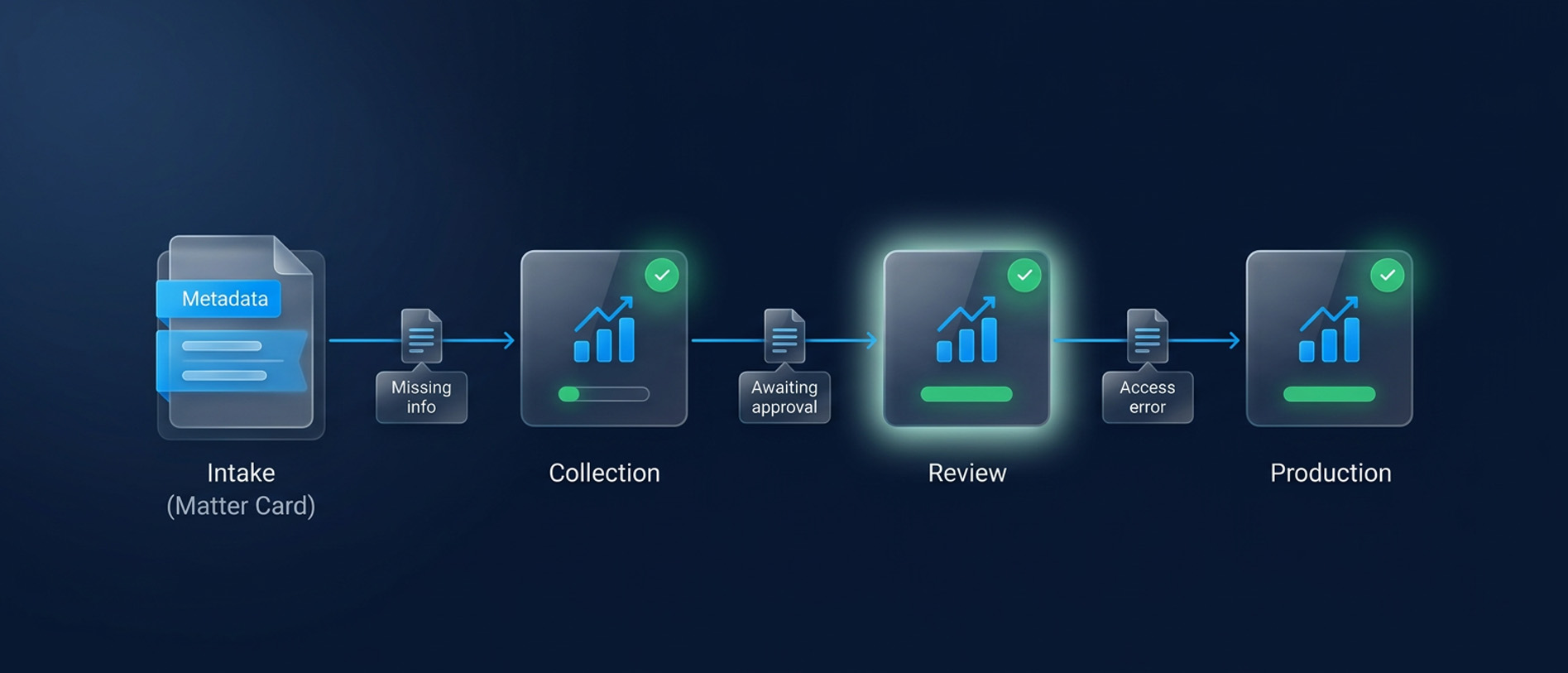
Legal Workflow Automation for Faster eDiscovery
Reduce discovery delays with legal workflow automation. Clarify ownership, resol
Read Article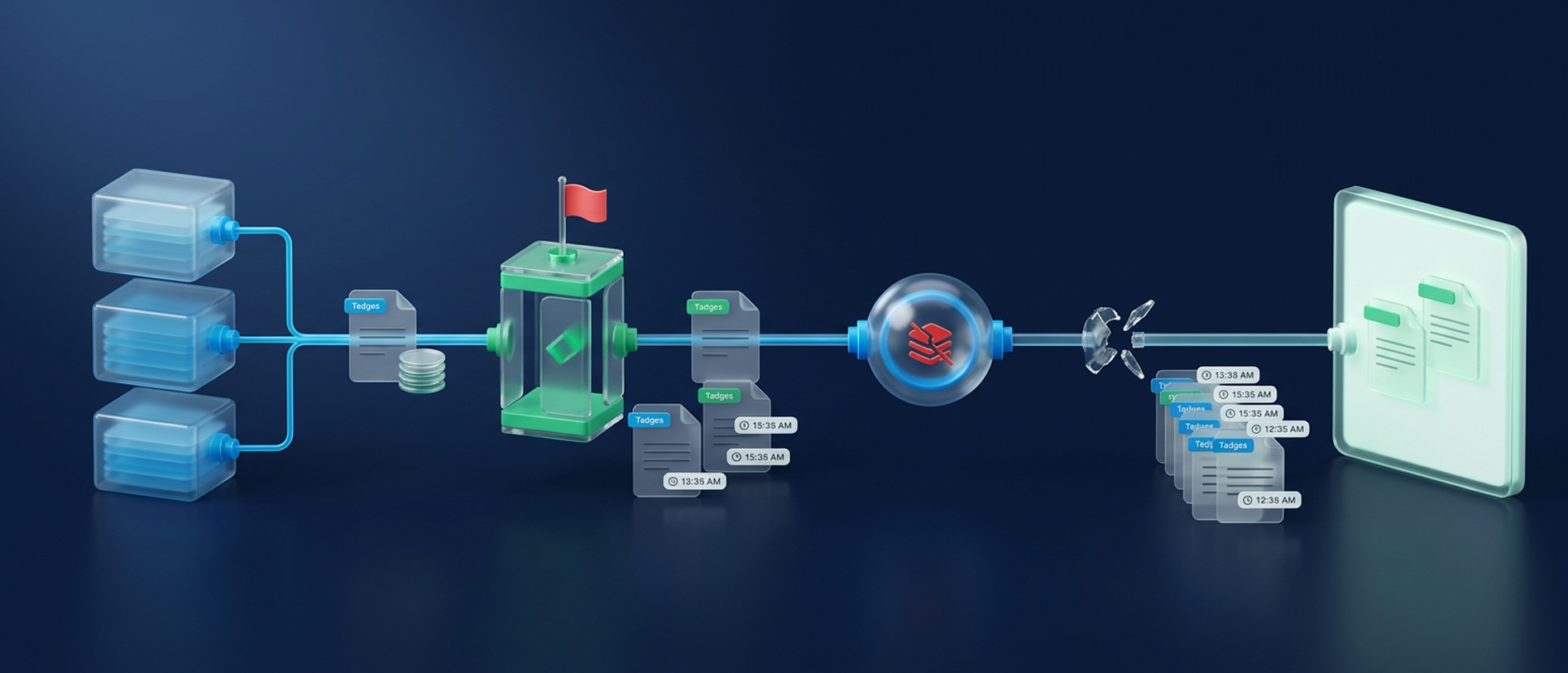
Information Governance and eDiscovery Readiness
Find the gaps between retained data and reviewable evidence. Assess information
Read Article