The Relativity Server 2028 Sunset: Hard Facts, Policy Explanation, and Top eDiscovery Alternatives
Ready to get started?
built for clarity, control, and scale.
Share
The Relativity Server Sunset 2028: Hard Facts, Policy Explanation, and Top eDiscovery Alternatives
Is Relativity Server support reaching its end in 2028? For law firms, eDiscovery vendors, and corporate legal teams, the 2028 policy is one of the most pressing transitions in the legal technology landscape.
Effective January 1, 2028, Relativity is implementing a major change to its Server support policy. But what exactly will change for teams managing active litigation on the platform? What will happen to existing data, what must you plan for, and what on-premises and hybrid options are available?
Here are the direct answers to your most critical questions.
The Relativity Server 2028 Policy Explanation
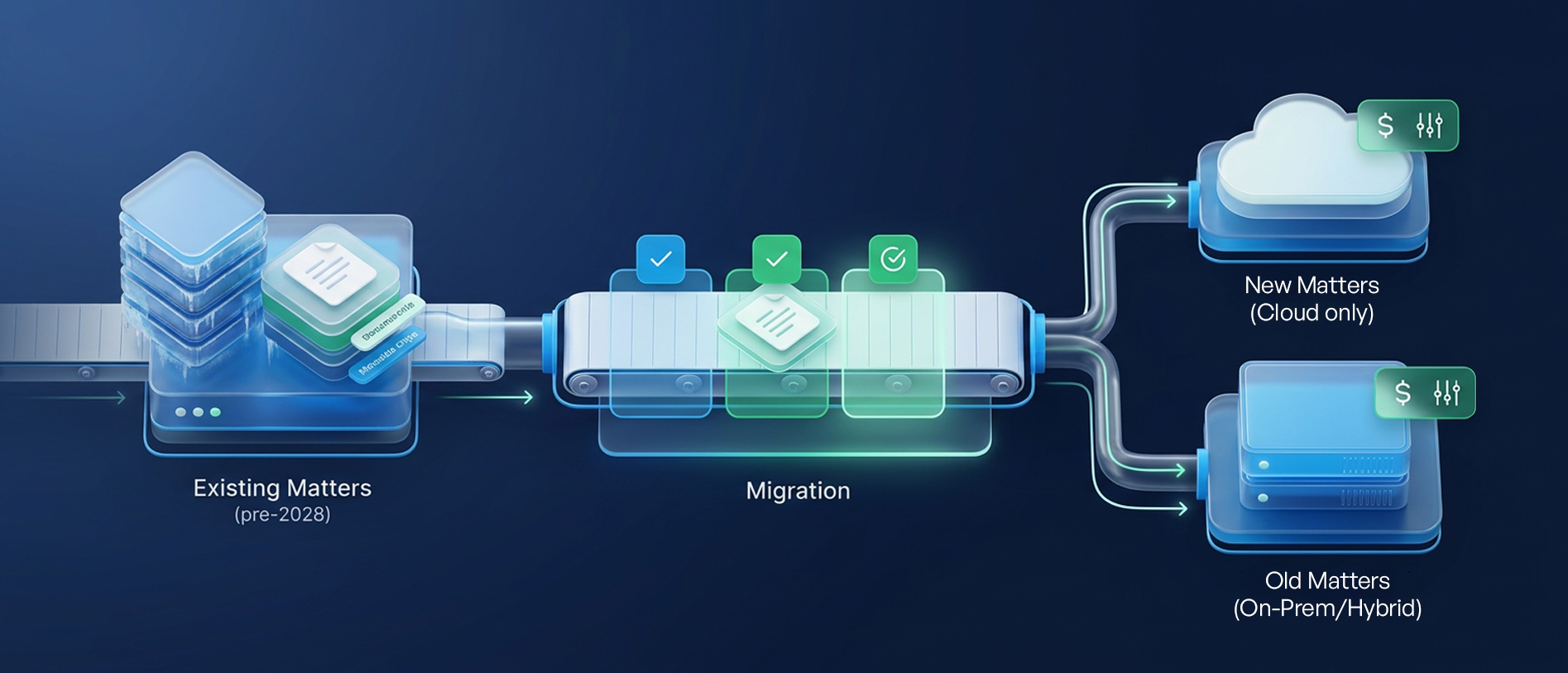
As of January 1, 2028, users will no longer be able to create new matters or workspaces in Relativity Server (with new on-premises matters prohibited after December 31, 2027). Relativity is not shutting down or completely discontinuing the software product itself. It is shifting its focus entirely to its cloud-based offering, Relativity aiR (formerly RelativityOne).
What "Relativity Server End of Support" Actually Means:
Existing Relativity Server matters created on or before December 31, 2027, will not be shut down. They will continue to receive maintenance updates and critical security patches. However, Relativity Server will receive no new feature deliveries or AI capabilities.
What Happens to New Matters and Workspaces?
Beginning January 1, 2028, all brand-new matters must be hosted in the cloud (Relativity aiR). Setting up new workspaces on-premises via Relativity Server will be entirely blocked.
Relativity Server Version-Specific Deadlines
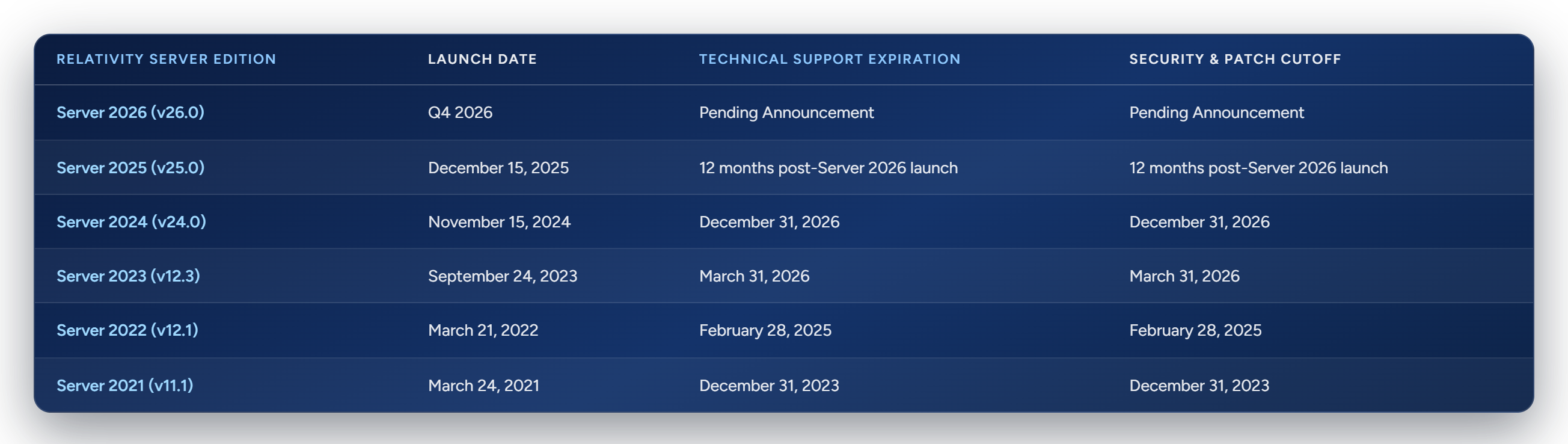
To receive ongoing maintenance for legacy or active cases, all instances must be upgraded to the then-current version of Relativity Server by January 1, 2028.
Refer to the table below for the specific support and maintenance cutoff dates for each major release:
Limited Exceptions:
Relativity allows very rare exceptions, primarily in geographic regions (like Saudi Arabia/Riyadh) where native Relativity cloud infrastructure is not locally available. Most commercial users must follow the mandate.
What This Policy Means for Law Firms and Legal Teams?
1. Mandatory Cloud Migration for New Work
If a law firm or regulated legal team lands a brand new client or case on January 2, 2028, they cannot host it on their own hardware using Relativity Server. Unless an alternative on-premises platform is secured, all new work must be spun up in the cloud.
2. Shift in Pricing Models
For decades, many organizations built their eDiscovery profitability around a capital-expense (CapEx) model which involves purchasing and running their own servers while charging clients for hosting. The forced migration to Relativity aiR shifts this to an operating-expense (OpEx) model, requiring organizations to pay the cloud vendor per gigabyte or per user, which fundamentally alters profit margins and internal billing structures.
3. Immediate Access (and Dependency) on Generative AI
The transition marks a hard line for advanced legal technology. Relativity is reserving its cutting-edge generative AI suite, Relativity aiR, and other modern tools exclusively for cloud environments. Firms that stay on legacy Server infrastructure will be structurally locked out of tools like aiR for Case Strategy (deposition preparation and narrative building) and aiR for Review.
4. The Burden of "Dual-Environment" Management
Because existing matters created before December 31, 2027, can remain on Relativity Server with ongoing support, many firms will default to keeping old cases where they are. This will create a fragmented operational ecosystem, forcing litigation teams to manage, secure, and pay for both legacy on-premises hardware and the cloud.
5. Urgent data governance and “cold storage” strategy
Unlike on-premises environments where data hosting carries minimal cost, cloud platforms like Relativity aiR bill organizations for every gigabyte of active data. To avoid astronomical hosting fees, firms must conduct rigorous database audits before migration. Legal teams will also need to implement aggressive data lifecycle policies and cold-storage workflows to offload dormant cases efficiently.
6. Client disruption and cybersecurity audits
A shift to the cloud means law firms will need to renegotiate or update service-level agreements (SLAs) with clients with strict data-residency requirements. A shift to the cloud means law firms will have to renegotiate or update service-level agreements (SLAs) with clients who have strict data-residency requirements.
Why 2026/2027 is the Execution Window?
Waiting until late 2027 turns a strategic infrastructure plan into a forced, high-risk operational march. Initiating this transition in 2026 or 2027 provides the critical runway needed to thoroughly evaluate competitive eDiscovery alternatives rather than defaulting to Relativity's cloud ecosystem. An early migration phase gives your team time to vet other eDiscovery platforms, defensibly move terabytes of sensitive data, and avoid unplanned downtime during active litigation deadlines.
What Are Your Options as an Existing Relativity Server User?
Option 1: Migrate to the Cloud with RelativityOne
The most direct path is adopting Relativity's proprietary SaaS platform, RelativityOne.
Pros : Familiar interface for existing reviewers, access to the latest generative AI tools (aiR), and elimination of internal server maintenance.
Cons : Loss of infrastructure control, rising OpEx costs, and vendor lock-in & migration friction. Furthermore, moving to a multi-tenant cloud environment creates data sovereignty roadblocks, potentially disqualifying firms from taking on clients with strict on-premises or federal mandates.
Option 2: Shift to an On-Premises Alternative
If strict security protocols, client mandates, or data sovereignty laws require that your data stay in-house, migrating to an alternative platform that supports local infrastructure is the best path. These are some of the best on-premises eDiscovery platforms you can consider:
- Venio Systems
Venio offers a unified, AI-powered on-premises eDiscovery solution for teams looking to maximize their CapEx infrastructure investments. The software eliminates the unpredictable hosting fees and data transfer costs associated with the cloud.
Designed for sensitive litigation matters, Venio provides unmatched, granular control over sensitive data by consolidating processing, early case assessment (ECA), advanced analytics, legal hold, review, and production into a single, seamless interface.
By removing the need to move data between disparate tools, Venio significantly reduces data security risks, accelerates time-to-insight, and delivers the defense-grade security that modern legal teams and corporations trust behind their own firewalls.
- QuikData
A modern, AI-powered on-premises option offering flexible deployment across physical data centers or private clouds. It gives service providers control over security and cost structure, alongside "Bring Your Own LLM" integration for advanced workflows.
- OpenText eDiscovery
OpenText supports end-to-end discovery workflows with flexible deployment models, including on-premises, cloud, and hybrid options, featuring AI-driven review tools and deep data-source connectors.
- Nuix Workstation
Geared toward complex, investigation-heavy matters, Nuix offers specialized processing capabilities designed to ingest and normalize unstructured data at scale. However, the platform is hardware-intensive and often requires distinct, specialized modules to manage the full lifecycle from processing to review.
Evaluating the On-Premises Model
- Pros: Guarantees complete data control to satisfy strict sovereignty laws and federal mandates. It preserves predictable CapEx profit margins by eliminating usage-based (OpEx) per-gigabyte cloud hosting fees and retains full backend SQL access for custom integrations.
- Cons: Requires dedicated internal IT resources for physical server upkeep, hardware scaling, and security patching.
Option 3: Choose a Hybrid Option
A hybrid model offers the best of both worlds: the strict data control of an on-premises footprint paired with the cloud's agile scalability. Firms can keep highly sensitive, regulated data securely behind local firewalls to satisfy strict client mandates. Meanwhile, firms can offload non-sensitive workflows, historical archives, or sudden processing spikes to the cloud to optimize storage costs and prevent hardware bottlenecks.
Several eDiscovery platforms offer a hybrid deployment option, such as Venio. Engineered to bridge local hardware investments with an elite, secure cloud architecture, Venio offers hybrid-environment flexibility. Legal teams can securely host core infrastructure locally while utilizing secure cloud bursts to process massive, unexpected document volumes or handle cross-border review pools without localized lag.
Beyond Venio, platforms like OpenText eDiscovery and Nuix also support robust hybrid environments. Alternatively, organizations can leverage enterprise IT frameworks like Azure Arc to extend unified governance and security across physical data centers and multi-cloud operations.
Evaluating the Hybrid Model
Pros: Delivers maximum flexibility and optimized cost management. You can tailor data storage per client requirement, keeping sensitive data locally secure while scaling compute power infinitely in the cloud for large-scale processing.
Cons: Managing two distinct environments requires careful internal governance and sophisticated IT orchestration to ensure data seamlessly and securely passes between local servers and the cloud.
Option 4: Work With a Managed eDiscovery Service Provider
For organizations that no longer want to manage software licenses or complex IT infrastructure, outsourcing the entire lifecycle to a Managed Service Provider (MSP) is a viable route.
Leading providers, including Consilio, KLDiscovery, and Epiq, manage the entire infrastructure, hosting, and project management burden on behalf of the client.
Pros: Zero infrastructure maintenance, predictable per-matter pricing, and instant scalability.
Cons: Highest long-term operational cost and the complete relinquishment of direct control over your underlying eDiscovery tech stack.
Relativity aiR vs. an Alternative eDiscovery Platform: What Should You Consider?
Transitioning away from Relativity Server requires a rigorous vendor evaluation to ensure operational continuity, cost predictability, and data security. Vet Relativity server alternatives against these core operational criteria before committing to a migration:
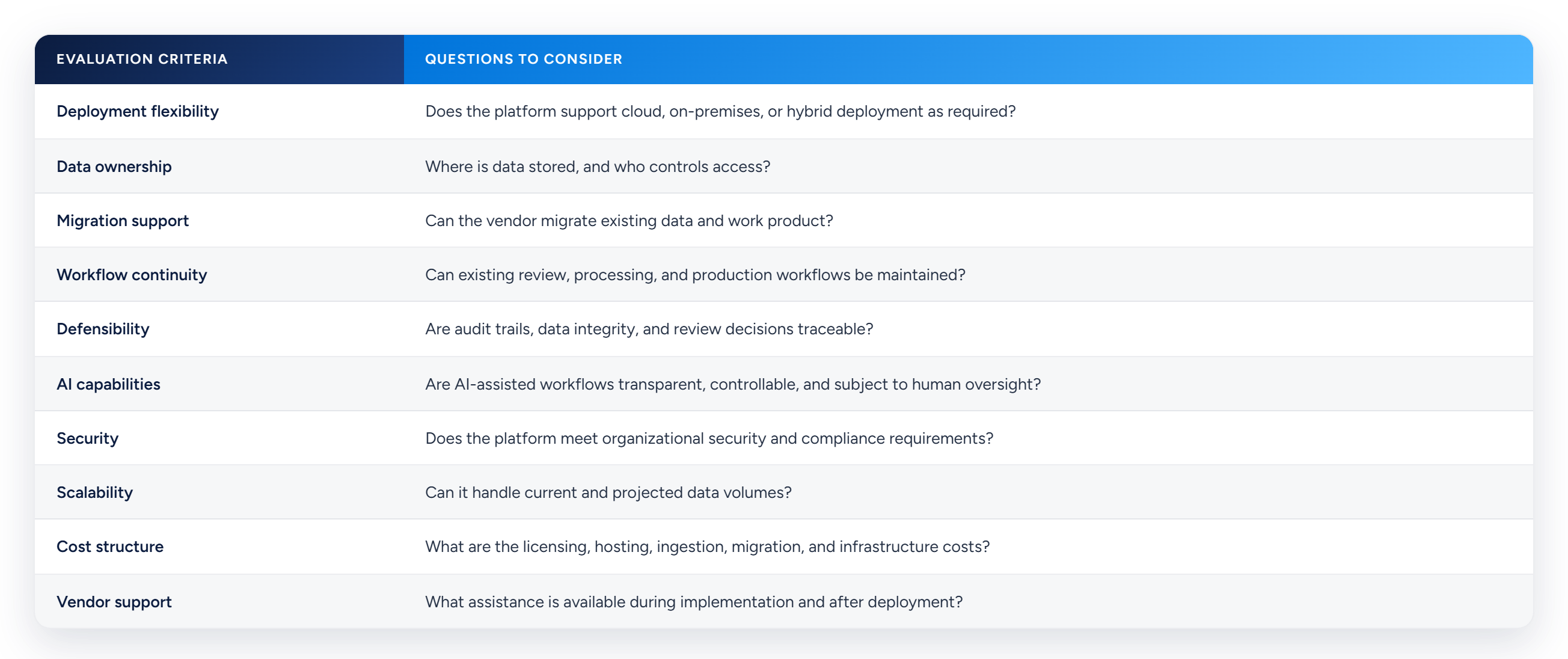
We evaluated the market’s leading eDiscovery platforms using these exact standards. Here is the comparison summary :
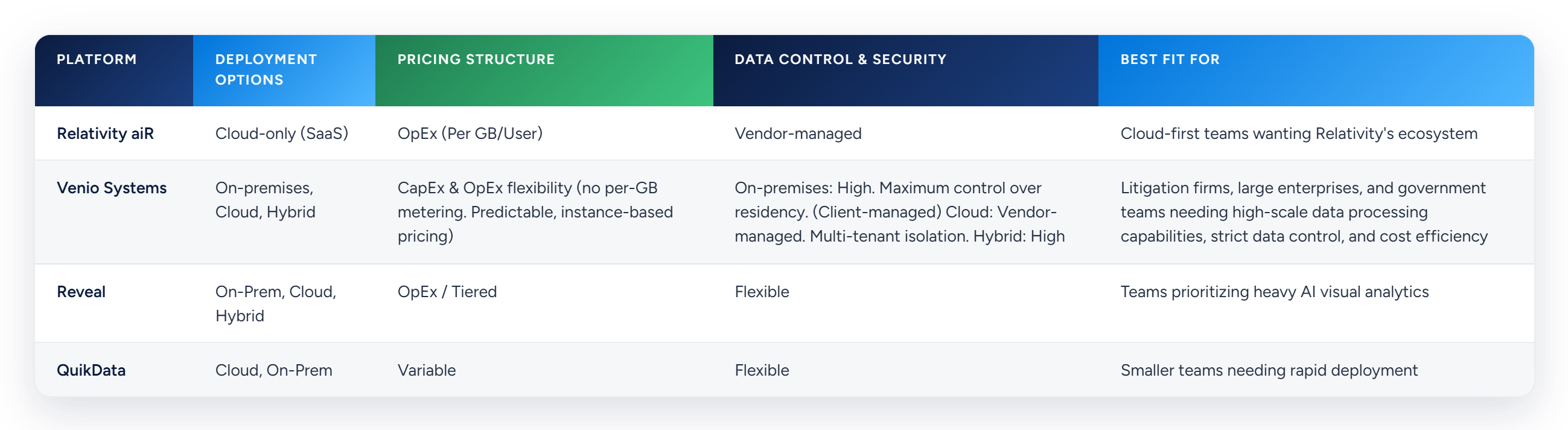
Need detailed comparison? Check our comparison pages: Venio vs Relativity, vs Nuix.
Before You Move: Relativity Server Migration Checklist
1. Assess Your Environment: Identify active matters, archived workspaces, data volumes, and custom application dependencies.
2. Define What Must Migrate: List the metadata, coding, tags, redactions, and productions to keep.
3. Test a Pilot Workspace: Migrate one workspace and validate counts, hashes, and coding.
4. Confirm Workflow Fit: Confirm processing, review, and production match current workflows.
5. Clear Security Review: Confirm data residency and certifications meet IT and client rules.
6. Phase the Transition: Set migration waves, owners, timelines, and sign-offs.
7. Model Total Cost: Compare licensing, hosting, migration, and training over three to five years.
8. Align Stakeholders: Set approval gates across Legal Ops, Litigation Support, Information Governance, Compliance, and IT Procurement.
Future-Proof Your eDiscovery Ahead of the Relativity Sunset
Software transitions are inherently disruptive, but they also present a rare opportunity to audit inefficiencies and upgrade your firm's operational capacity. The sunsetting of Relativity Server is more than just a software end-of-life announcement; it is your chance to evaluate better eDiscovery alternatives in the market, compare your annual savings, and plan a strategic transition.
By initiating your platform evaluation today, you reclaim control over your data and your bottom line.
Frequently asked questions
1. What happens to Relativity Server after 2027?
Relativity Server will no longer allow the creation of new matters or workspaces starting January 1, 2028. It will transition strictly to a maintenance and security-patch phase for existing legacy cases.
2. Can I continue using Relativity Server in 2028?
You can only use it to work on existing matters created before December 31, 2027. All new cases must be hosted either on RelativityAir or elsewhere.
3. What happens to existing Relativity Server workspaces?
They stay accessible and supported. Patches depend on your version, and Server 2024 support ends December 31, 2026.
4. What are the alternatives to Relativity aiR?
Top alternatives include Venio Systems, Nuix, OpenText, Reveal, and QuikData, all of which offer flexible on-premises and hybrid deployment models for organizations that cannot move to a purely SaaS environment. The right fit depends on data residency, pricing, and migration support.
5. Can I migrate from Relativity Server to another eDiscovery platform?
Yes. Most platforms ingest standard Relativity load files, and platforms like Venio even preserve coding, tags, and redactions. Test a pilot workspace before committing.
6. How difficult is it to migrate data from Relativity Server?
It depends on volume and work product. Documents and metadata usually move cleanly, while redactions, coding, and custom apps need mapping and validation. Venio offers seamless data migration from Relativity without disrupting active matters. For other platforms, check migration feasibility before deciding.
7. How do I move active matters from Relativity Server?
Most teams finish active matters on Server and open new ones elsewhere. If a matter must move, migrate it during a review pause and validate coding first. Tools like Relativity Migrate allow legal teams to snapshot databases or pre-stage native files while preserving chain of custody and review work product. Alternatively, you can use Venio to ingest Relativity exports while perfectly preserving all metadata, tags, and prior review coding. This ensures 100% workflow continuity and maintains your chain of custody without losing past work product.
8. What should I consider before moving from Relativity Server to the cloud?
Evaluate the long-term impact of transitioning from a CapEx to an OpEx pricing model, ensure the cloud provider meets your client's data sovereignty requirements, and confirm that your preferred review workflows are fully supported. Also, check where data and AI processing will reside, how AI usage is metered, multi-year cost, client hosting restrictions, and exit terms.
Related Articles
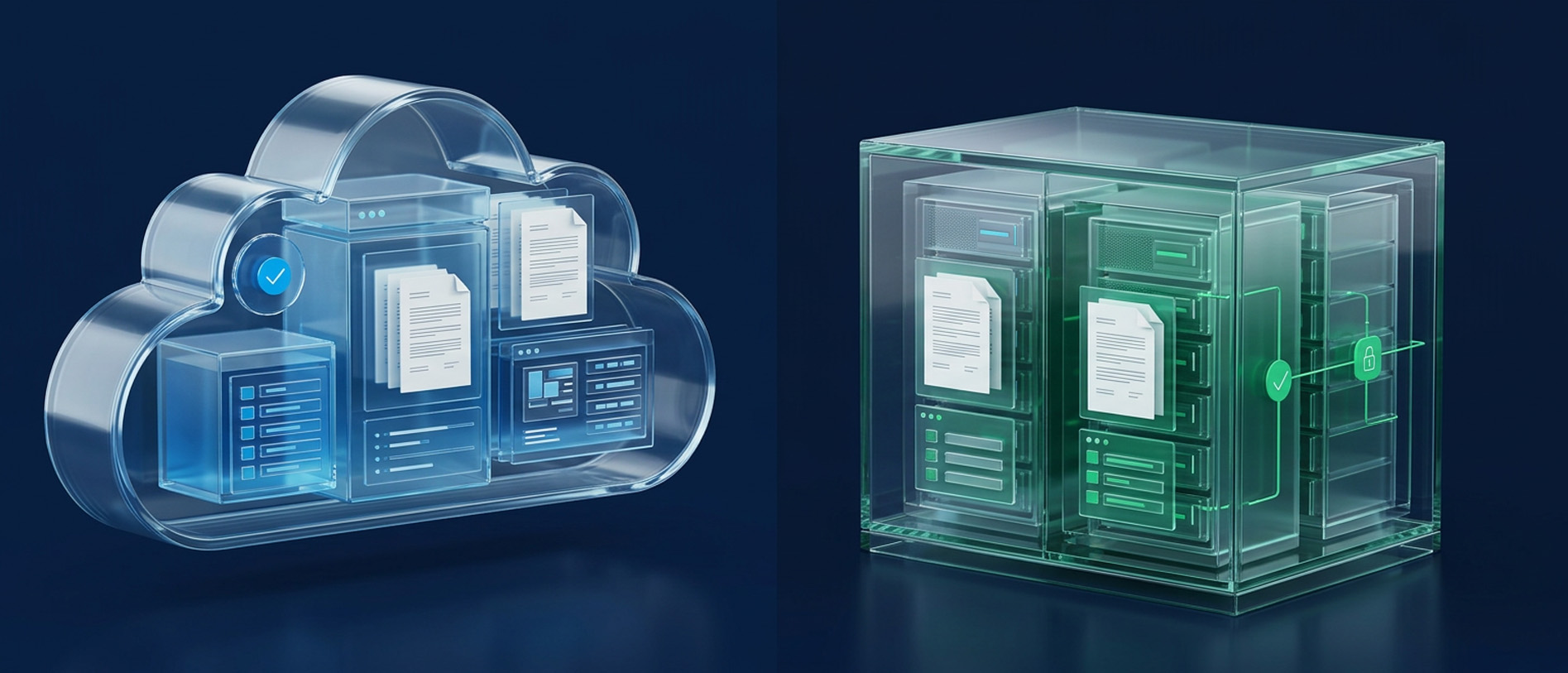
Cloud vs. On-Premise Security: Which eDiscovery Model Works Best for Government?
Is cloud more secure than on-premises for government eDiscovery? Compare securi
Read Article
Everlaw vs Relativity: A Better Third Choice
This guide compares Everlaw vs Relativity honestly, covering where each platform
Read Article
eDiscovery Pricing Models & Costs in 2026: The Complete Guide
The eDiscovery market is growing fast, and by 2030, it’s expected to reach $31.5
Read Article