Is AI Document Review Defensible in Court? Lessons From 2026 Case Law
Ready to get started?
built for clarity, control, and scale.
Share
In September 2026, a Lyft discovery dispute focused on documents that keyword searches would exclude before technology assisted review. The court required sampling of those excluded documents because the governing protocol contemplated validation across the broader review process.
That dispute raises a practical question about what a model’s performance can actually tell you regarding documents it never receives. AI document review can be defensible in court when the process satisfies applicable discovery obligations and court orders.
Traditional TAR has substantial judicial acceptance, while newer generative AI decisions address particular workflows, disclosures, and disputed review choices. The Lyft order concerned traditional TAR, but its validation lesson also matters when planning workflows that incorporate generative AI.
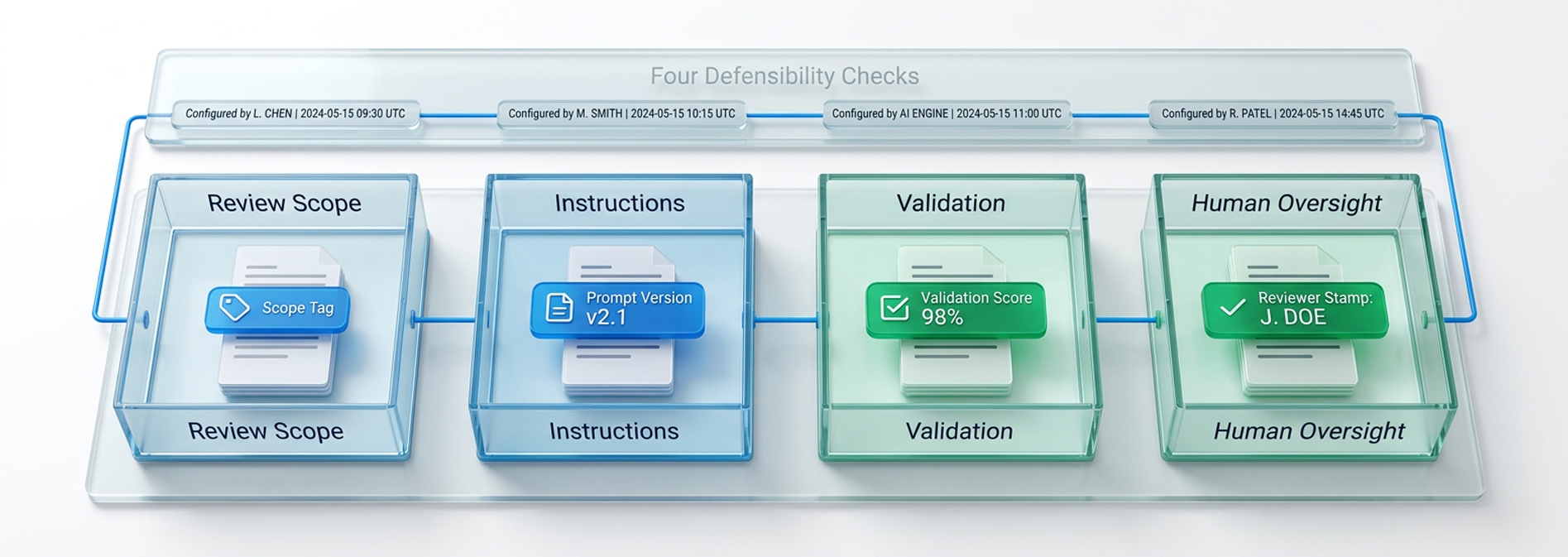
For legal teams evaluating software, the 2026 cases provide concrete questions about review scope, instructions, validation, and professional responsibility. Understanding those questions helps counsel choose appropriate controls before production deadlines make changes considerably harder to manage.
Where Courts Already Accept AI Document Review
Courts have addressed technology assisted review for years, beginning with decisions that examined predictive coding and quality control. In 2012, Da Silva Moore v. Publicis Groupe accepted computer-assisted review in an appropriate case with safeguards addressing review quality.
By 2015, Rio Tinto v. Vale described judicial acceptance of a producing party’s use of TAR as well established. That history supports AI in eDiscovery, although newer methods require teams to understand how their particular systems reach classifications.
Three methods now sit behind the phrase AI document review, and they reach their classifications in different ways.
- Predictive Coding: Traditional predictive coding in eDiscovery learns from reviewer-coded examples, using those judgments to rank or classify other documents.
- Continuous Active Learning: Continuous active learning in eDiscovery repeatedly incorporates reviewer decisions, updating document priorities as the review progresses through the collection.
- Generative AI Classification: Generative AI can classify documents using written instructions, examples, and matter context without following the same training process.
Our discussion of the Federal Rules of Civil Procedure explains the discovery obligations within which these methods must operate.
Those distinctions became concrete in Schulte v. LinkedIn, through an order addressing GenAI review filed on July 1, 2026. LinkedIn disclosed that Ai in ediscovery software made final responsiveness decisions, while human reviewers performed quality-control sampling across responsiveness categories.
The company applied search strings first, and plaintiffs sought to prohibit that filtering and compel additional review metrics. The court denied those requests because the record did not justify them under the governing order and proportionality principles.
Plaintiffs had not demonstrated deficient search strings, and broader review would impose substantial burdens given the collection’s size. However, the court still required the parties to meet and confer about whether those search strings needed adjustments.
Schulte shows how a GenAI workflow can operate within established discovery principles without receiving blanket approval for every configuration. Buying the same software cannot establish that another team selected appropriate inputs, instructions, validation procedures, or production decisions.
The Documents AI Never Sees Can Still Be Challenged
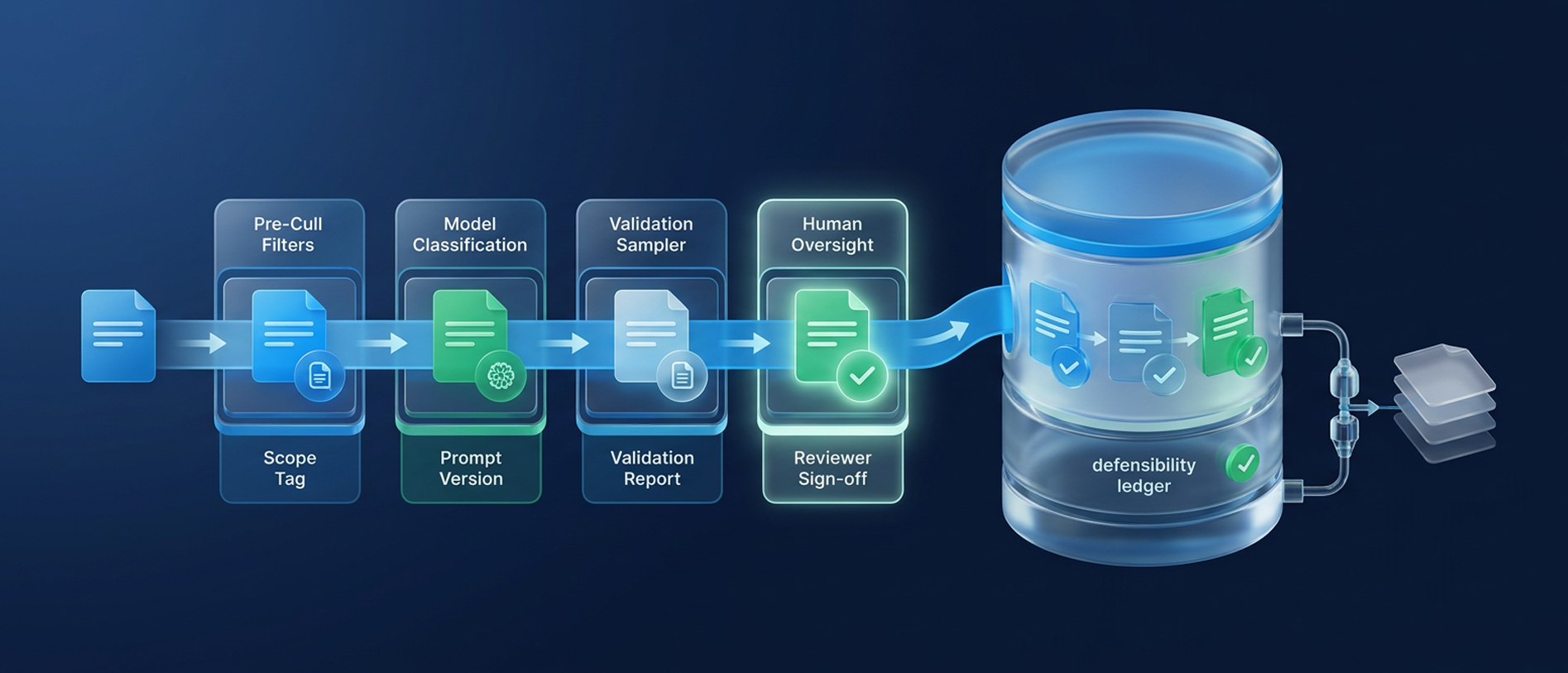
Filtering documents before review can reduce costs, but it also determines what the review system can possibly find. A responsive document removed during keyword filtering cannot be recovered by a model reviewing only the remaining material.
Consider a collection narrowed through custodian selection, date restrictions, file exclusions, and keyword searches before AI classification begins. Each decision changes the review population, creating questions about whether the remaining documents adequately address the discovery requests.
In the Lyft litigation, the parties disputed whether validation should include documents excluded through search terms before TAR. Their ESI protocol contemplated validation across the broader process, rather than limiting assessment to documents reaching the review technology.
The September 20 order required a sample of keyword-excluded documents and rejected postponing validation until production had fully concluded. Testing earlier gives teams an opportunity to investigate problems while changes remain manageable within the existing discovery schedule.
The court distinguished Schulte because permission to use pre-culling and the obligation to validate exclusions address different questions. A reasonable filtering method can still require testing when the applicable protocol and circumstances support that additional scrutiny.
For a TAR eDiscovery workflow, identify whether reported metrics describe the collected population, keyword hits, or successfully processed documents. Also establish how unreadable scans, unsupported formats, and processing failures receive further attention before anything is excluded from production.
A technical failure should trigger an exception decision, with someone responsible for resolving its effect on the review. Otherwise, a document can disappear from consideration without anyone making a reasoned judgment about its relevance to the matter.
An Accuracy Score Cannot Explain What Was Missed
A percentage can appear reassuring while measuring something different from the question counsel actually needs the review to answer. Imagine a hypothetical collection containing 100,000 documents, including 1,000 responsive documents that the system incorrectly labels as nonresponsive.
If the system labels everything nonresponsive, it classifies 99,000 documents correctly and achieves an overall accuracy of 99%. The same system finds none of the responsive documents, showing why overall accuracy alone can conceal a serious failure.
When assessing how accurate AI document review is, examine the measurements before relying on any advertised percentage. Recall, precision, and elusion answer different questions, and each depends on the document population used for its calculation.
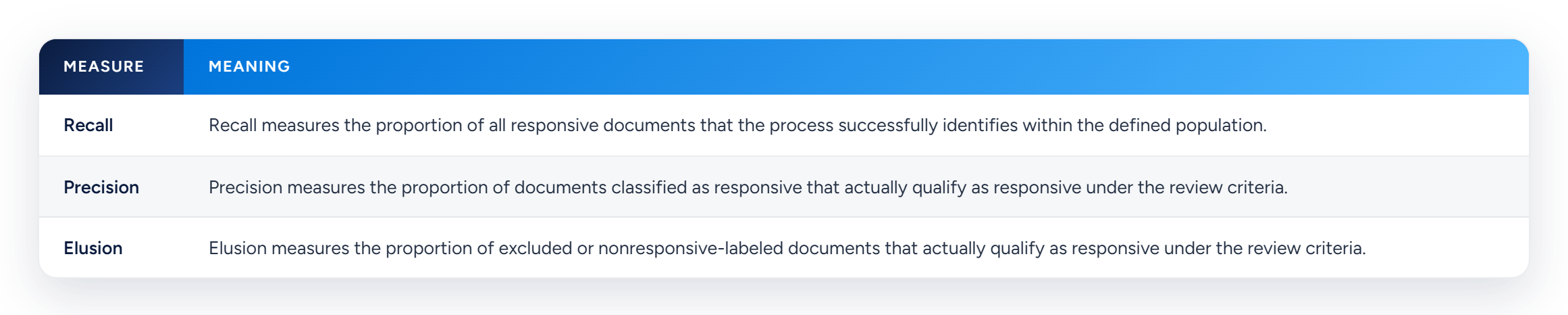
In this hypothetical example, recall is zero while elusion is only 1%, despite every responsive document being missed. The example demonstrates why a low elusion figure needs context, particularly when responsive material is rare within the collection.
On July 2, 2026, FTC v. Uber addressed a proposed increase in TAR recall shortly before a production deadline. The court declined the requested increase from 75% to 85%, but ordered random sampling of training documents marked nonresponsive.
That decision addressed the circumstances and timing of the dispute without establishing either percentage as a universal legal standard. It also showed that maintaining an existing target does not necessarily prevent further scrutiny of underlying coding decisions.
When deciding how to validate technology assisted review, begin with the measurement decisions rather than the reported figure.
- Population, Sampling Method, and Reference Judgments: Establish what is being tested, how the sample was selected, and which judgments the comparison rests on.
- Reviewer Resolution: Qualified reviewers should resolve coding disagreements, investigate recurring errors, and explain whether additional review or revised instructions are appropriate.
- Recorded Basis: Record sample selection, statistical assumptions, results, and corrective work so another person can understand the basis for the conclusion.
If instructions change during testing, use an appropriate further assessment to determine whether the revised approach performs reliably.
Your Review Protocol Can Put Prompts and Models Under Scrutiny
Generative AI review introduces another practical question about which instructions produced the classifications your team now proposes to rely upon. A change that improves future classifications can also expose weaknesses in documents already reviewed under the earlier instructions.
Suppose an initial prompt covers completed acquisitions, but counsel later determines that abandoned negotiations also fall within the requests. Updating the prompt requires assessing whether earlier decisions should be revisited, rather than assuming subsequent improvements resolve previous omissions.
Without a record of those changes, the team may struggle to identify which classifications require additional attention or testing. That difficulty becomes more significant when multiple reviewers, changing configurations, or successive productions are involved in the same matter.
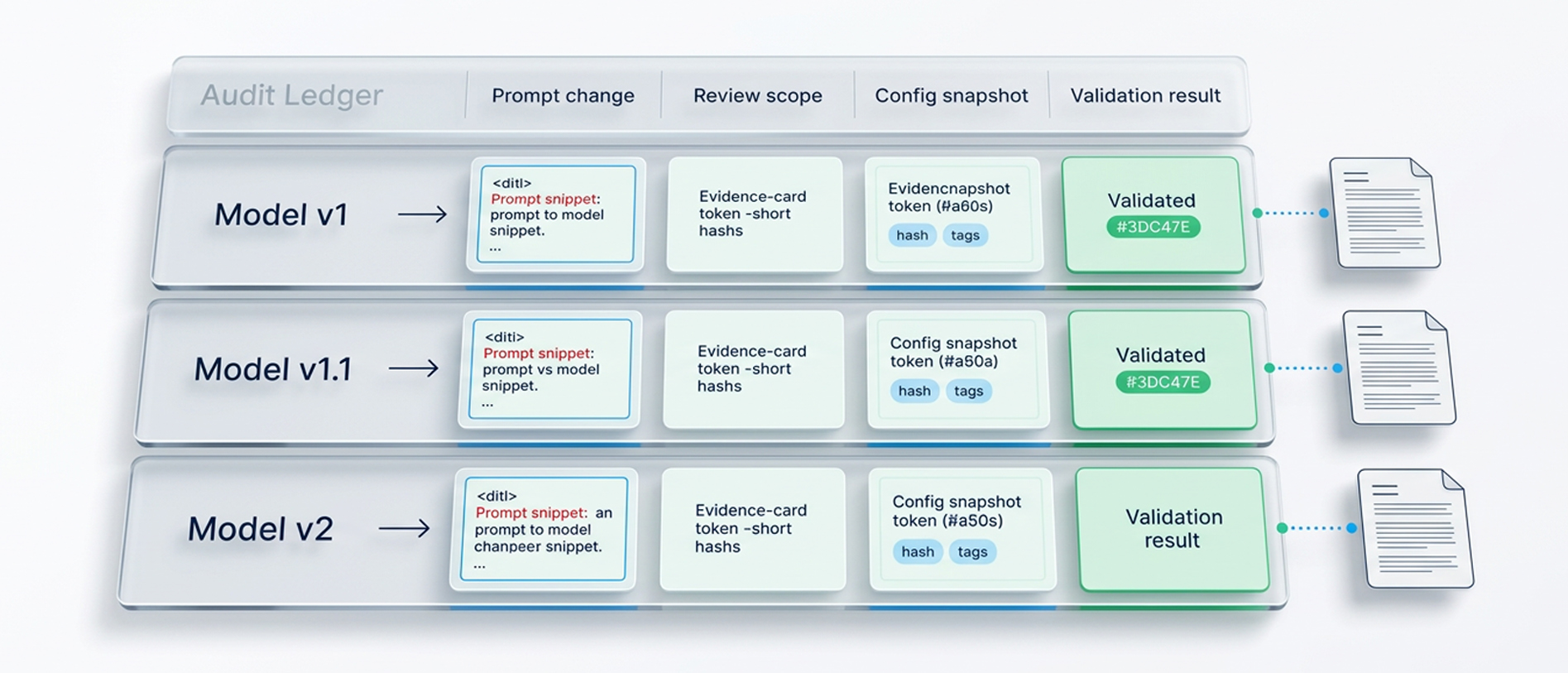
James v. Cerebras Systems illustrates how specifically an agreed protocol can address these issues before AI review proceeds. The court entered the stipulated ESI order on July 7, 2026, including a dedicated appendix addressing AI review requirements.
That appendix set out the details the parties agreed to pin down before the review began.
- Model and Hosting: Model identity, version, and hosting environment were specified rather than left to later description.
- Review Scope: Review populations and excluded formats were defined, so the measured population was settled in advance.
- Prompts and Changes: Prompts and configuration changes were covered, with modifications disclosed through redlines within three business days.
- Oversight and Validation: Oversight and validation procedures were agreed, including human confirmation of privilege determinations.
Those terms governed that litigation, and their inclusion does not transform them into requirements applying automatically in every case. The practical lesson is to establish the applicable protocol before the review expands around assumptions nobody has formally resolved.
For teams asking whether AI prompts are discoverable, their purpose, content, applicable protections, and governing orders all require attention. Keeping an internal record differs from disclosing that record, and counsel should evaluate each obligation on its own terms.
During software evaluation, ask which instructions and configuration changes can be retained, retrieved, and exported for the relevant matter. Confirm which records the platform maintains automatically and which responsibilities require additional procedures from your team or service provider.
Privilege and Confidentiality Need Separate Safeguards
A workflow can identify responsive documents effectively while leaving unresolved questions about privileged material and confidential information handling. AI privilege review therefore requires separate attention to legal protection, appropriate redactions, and accurate descriptions supporting any claimed withholding.
Three questions sit behind that work, and a strong responsiveness result answers none of them.
- Identifying Privileged Material: Someone must own uncertain privilege calls and check generated log descriptions against the underlying source documents.
- Protecting Confidential Documents: There is a distinct question about whether the documents may enter the proposed AI processing environment at all.
- Discoverability of Prompts and Work Product: Whether instructions and related records can be sought by another party depends on the orders governing that litigation.
A team’s preferred review method must remain consistent with protective orders, contractual commitments, and confidentiality obligations governing the matter.
In Morgan v. V2X, the court addressed AI use by amending a protective order on March 30, 2026. The plaintiff had to identify platforms used with confidential information, and the order restricted mainstream AI tools for that material.
The decision makes platform selection part of the confidentiality discussion, alongside the legal team’s intended use of the technology. Before deployment, establish where information is processed, who can access it, and whether retention or training arrangements create concerns.
An enterprise label alone cannot establish that a particular deployment satisfies the obligations attached to the documents being reviewed. The relevant commitments need examination, including any distinctions between available configurations, contracted services, and the specific tools being used.
The Cerebras protocol expressly required human confirmation of privilege determinations, illustrating how oversight can become a specific matter obligation. Counsel should also consider a Rule 502(d) order addressing waiver consequences for disclosures connected with the litigation before production begins.
Such protection does not authorize uploading confidential documents in violation of a separate restriction governing the selected AI service.
Could You Reconstruct the Review Six Months Later?
By the time a review faces a challenge, its original designers may have changed roles or moved onto other matters. Reviewers may no longer remember why particular documents were excluded, especially when instructions changed during several rounds of production.
A defensible explanation should rely on records that survive those changes and allow others to understand the decisions made. When evaluating AI document review software, request a walkthrough demonstrating how your team would retrieve the information supporting those decisions.
The following questions provide a practical evaluation exercise without suggesting that every court requires an identical documentation checklist.
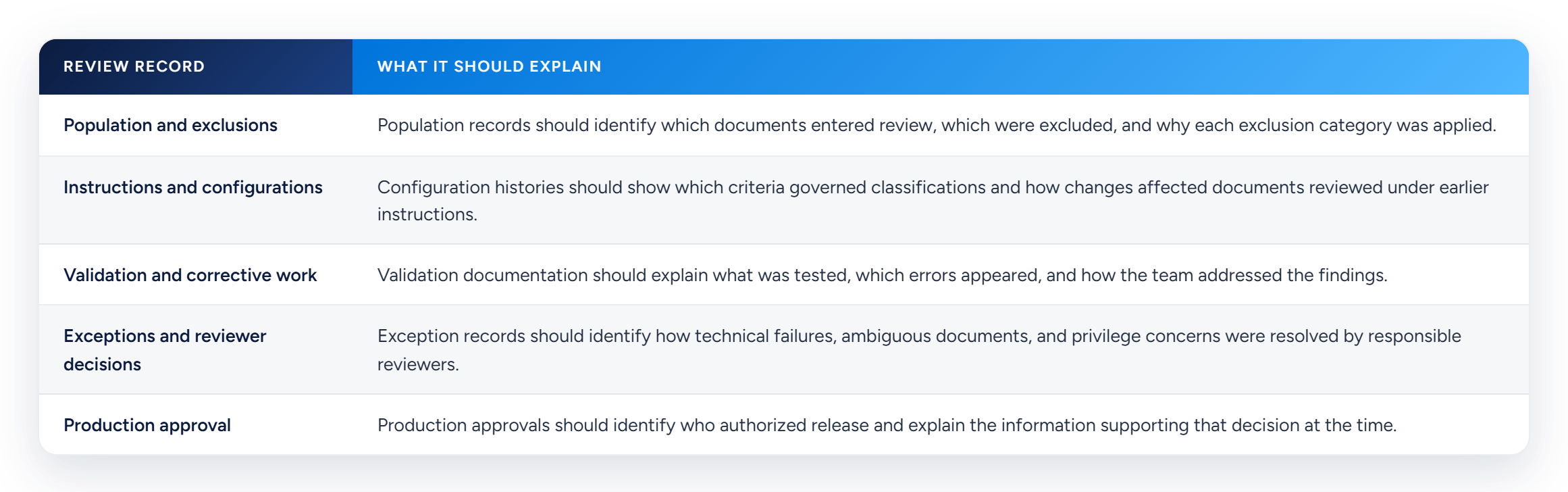
Ask the provider to follow three documents through the proposed workflow, because the gaps usually appear at the edges rather than in the straightforward cases.
- An Included Document: Trace how it entered the population, how it was classified, and who approved its release.
- An Excluded Document: Trace which stage removed it, which criteria applied, and whether any sample ever tested that exclusion.
- A Processing Exception: Trace how the failure was flagged, who resolved it, and what record explains the final decision.
This exercise helps reveal whether your team can investigate decisions without reconstructing the entire matter from scattered notes.
For AI eDiscovery software, also establish how records remain connected across processing, review, quality control, and the eventual production. Confirm which capabilities are included in the proposed deployment and which depend on additional modules, services, or manual procedures.
AI can narrow the review, while your team remains responsible for explaining and defending the decisions behind those exclusions.
See How Venio Supports Your Review Process
Everything this article asks of a review process comes back to the same thing, which is whether your team can show what entered the review, what was removed from it, and who approved the result. Venio Review holds Continuous Active Learning, Smart Tagging and Coding Panels, Review Set Batching, and In-Line Redactions inside a single review environment, with Integrated QC and Reviewer Audits running alongside them.
Secondary review, sampling, and audit workflows run inside the platform rather than in a separate tracker that nobody updates, and Defensible Audit Trails hold the record of what was decided at each stage. Venio’s eDiscovery AI integration adds AI-driven relevance review together with privilege identification, review, and logging across the review process.
None of that replaces the judgment your counsel applies to each matter, because the inputs, the instructions, and the oversight are still yours to set and defend. If someone challenged your last production, the weakness would show up in whatever your team could no longer reconstruct.
Book a Demo to trace your own workflow through the platform, following an included document, an excluded document, and a processing exception from collection through to production.
Frequently Asked Questions
Is AI Document Review Admissible?
AI document review describes a discovery method, while admissibility concerns whether particular evidence can be used in court proceedings, which makes the two questions separate rather than interchangeable. Using AI to classify documents does not automatically satisfy requirements involving relevance, authentication, hearsay, or other applicable evidentiary rules, and the defensibility of the review process is assessed on its own terms.
Do You Need Court Approval Before Using AI Document Review?
There is no universal requirement to obtain advance judicial approval for every AI document review or technology assisted review workflow undertaken during litigation discovery, and courts have accepted these methods for more than a decade. Counsel should still check applicable orders, agreements, local requirements, and governing law before committing documents to a particular TAR eDiscovery workflow, because a negotiated ESI protocol can impose its own conditions.
Does Every AI-Reviewed Document Need Human Review?
No universal rule requires a lawyer to reread every document classified through an AI-assisted review process, and most uses of AI in eDiscovery rely on sampling rather than full rereview. A continuous active learning eDiscovery workflow already incorporates reviewer decisions as the review progresses, although privilege determinations are potentially subject to more specific obligations under the governing protocol.
What Recall Rate Makes AI Review Defensible?
No single recall percentage guarantees defensibility across matters because the relevant population, validation method, uncertainty, and governing requirements vary from one case to the next. AI document review software will report a figure, but the percentages addressed in FTC v. Uber reflected that dispute's circumstances and did not establish a nationwide legal threshold.
Are AI Prompts Discoverable?
AI prompts can be discoverable, depending on their role, content, applicable protections, and the orders governing the particular litigation, so the answer rarely transfers between matters. Cerebras required prompt disclosure under its stipulated protocol, but that result does not make every prompt automatically discoverable elsewhere, and internal recordkeeping remains separate from external disclosure.
How Is AI Privilege Review Different From Responsiveness Review?
AI privilege review addresses whether material is legally protected, which is a different question from whether a document is responsive to a request, and a strong responsiveness result does not answer it. Privilege work also requires accurate log descriptions, appropriate redactions, and human confirmation of uncertain calls, which the Cerebras protocol made an express condition of the review.
Related Articles
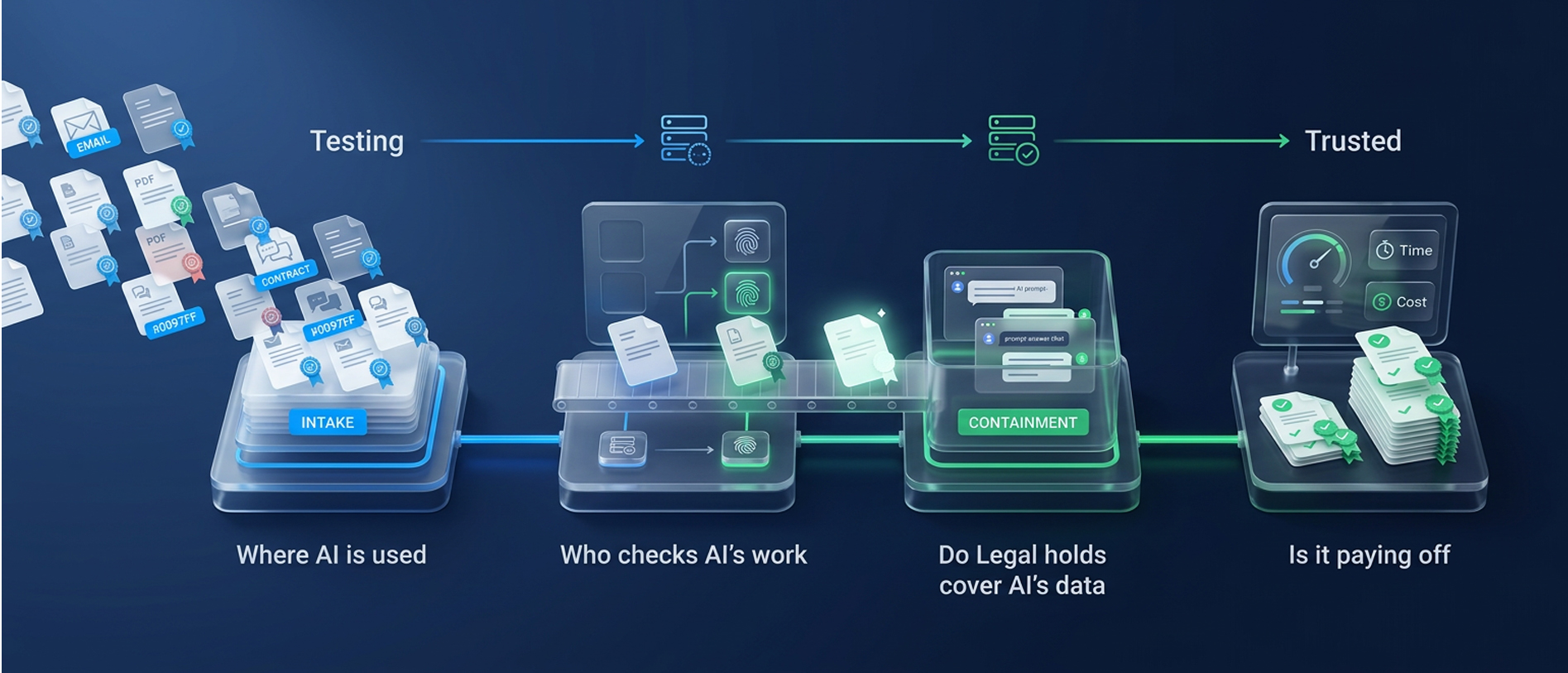
From Testing to Trusted: The Open Questions on AI in eDiscovery
Where is AI used, who checks its work, do legal holds cover AI data, and is it p
Read Article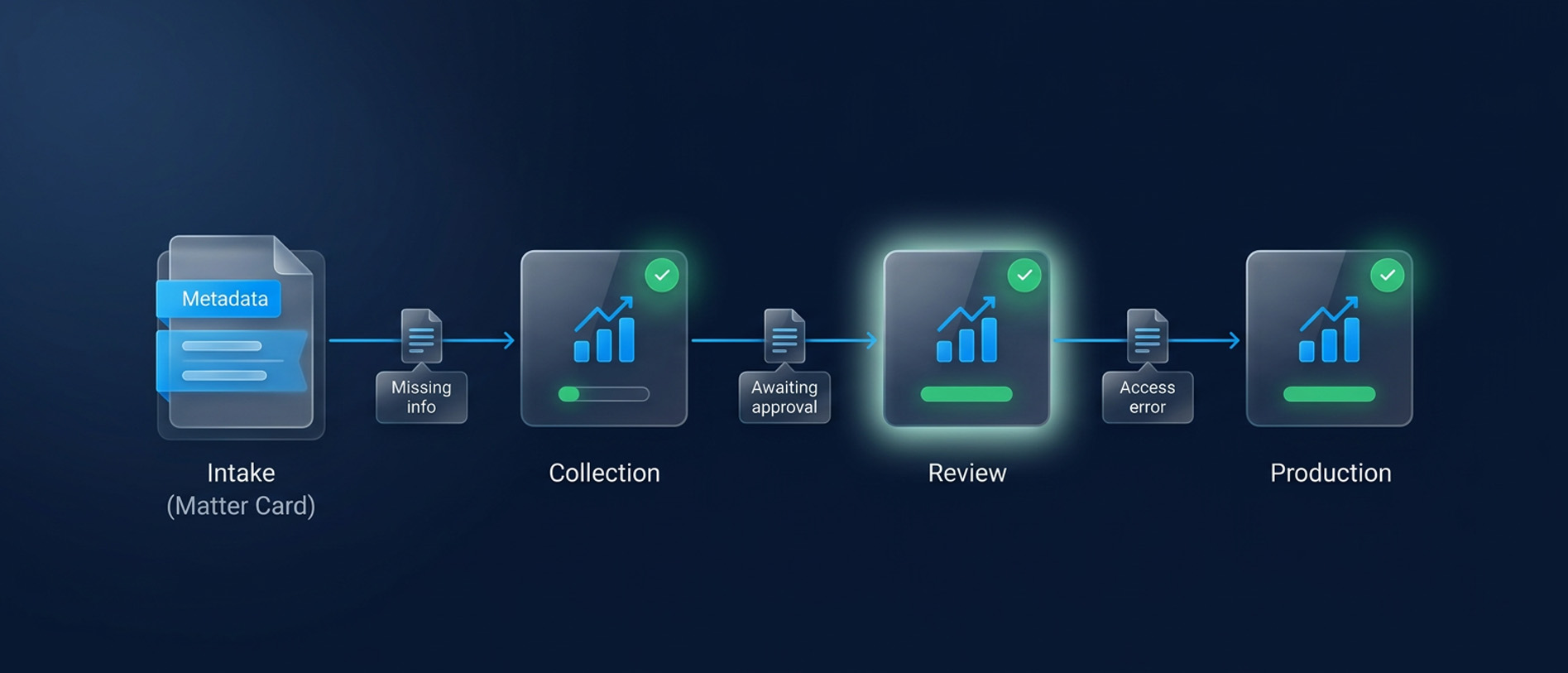
Legal Workflow Automation for Faster eDiscovery
Reduce discovery delays with legal workflow automation. Clarify ownership, resol
Read Article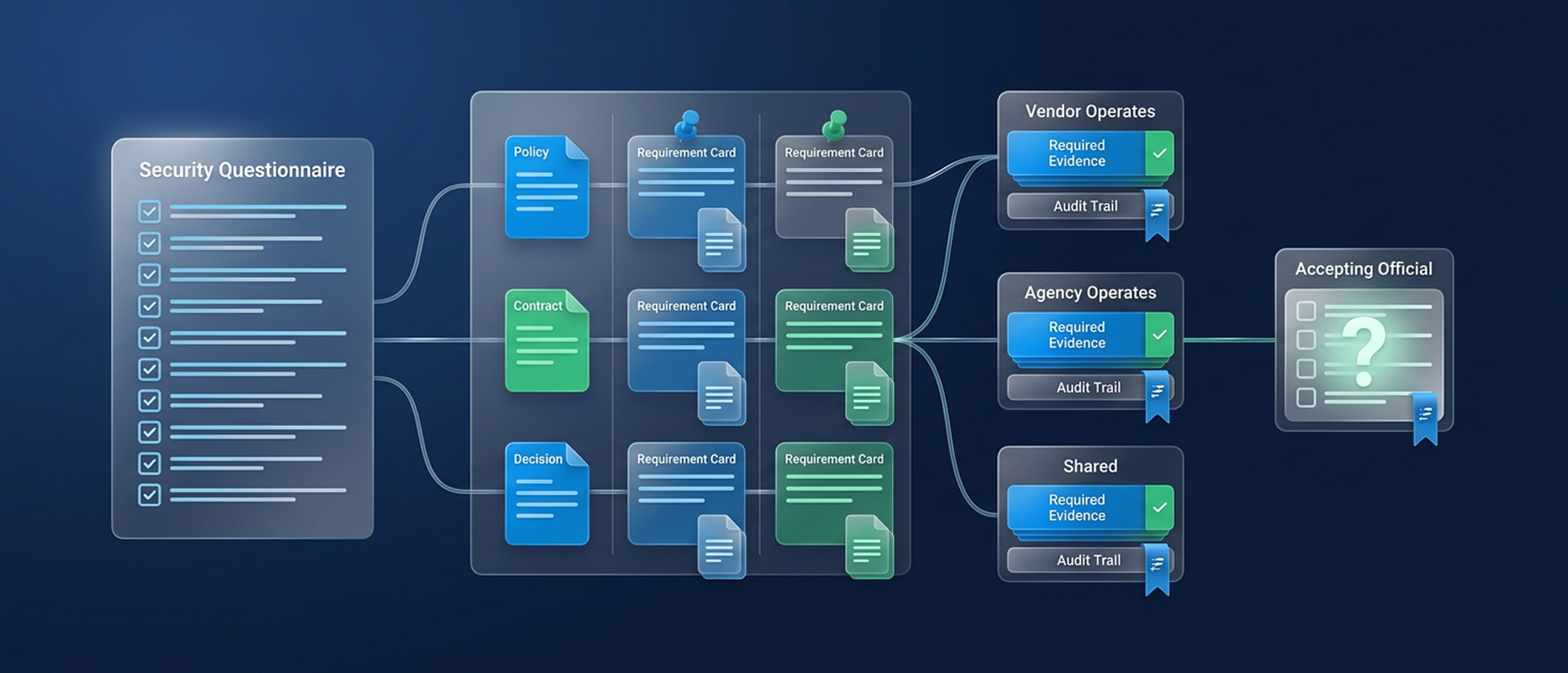
A Buyer’s Guide to Government eDiscovery Security
Evaluate government eDiscovery security requirements, FedRAMP 20x and NIST contr
Read Article