Information Governance and eDiscovery Readiness
Ready to get started?
built for clarity, control, and scale.
Share
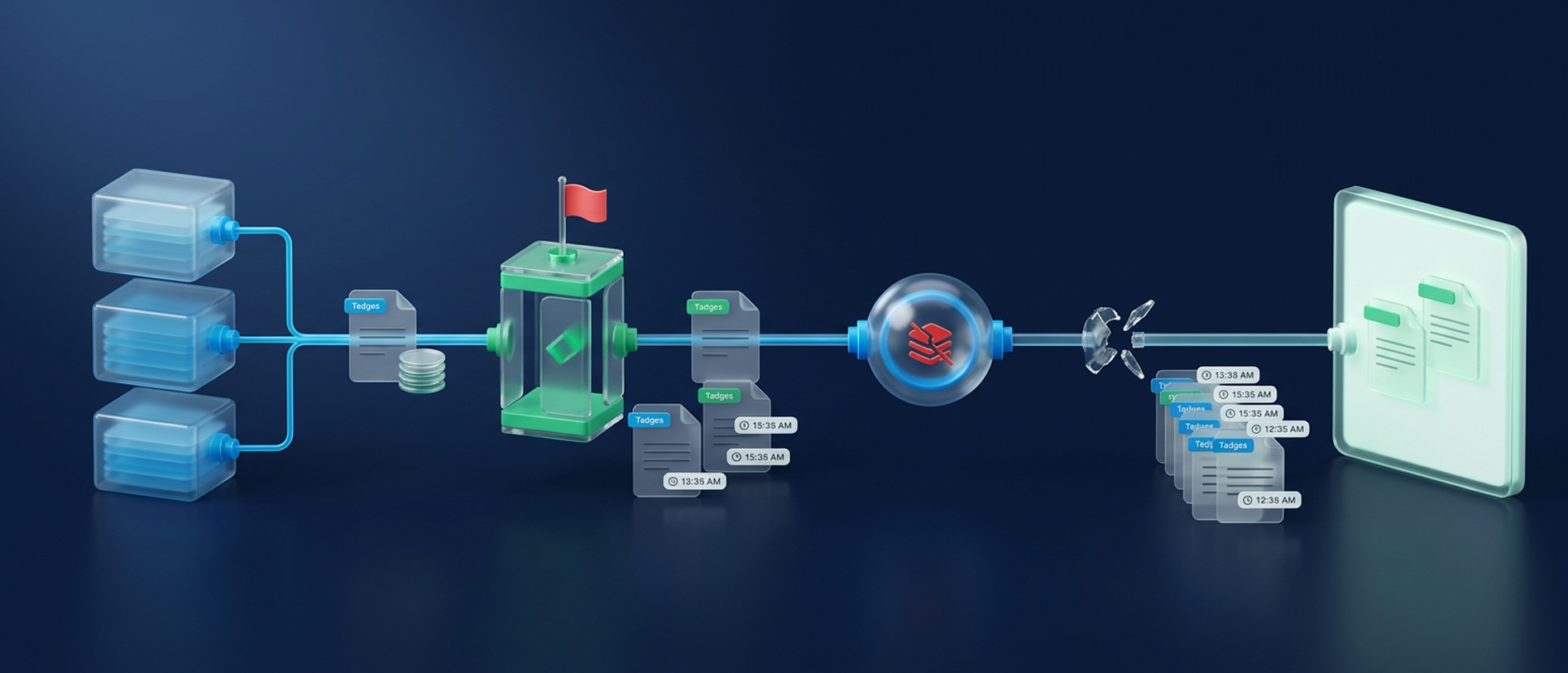
Your organization may already have retention policies, clear responsibilities, and discovery tools in place.Yet when legal needs data ready for review, it may still be unclear how quickly your team can deliver.
Finding the right administrator or resolving an incomplete export can delay review. Counsel waits to assess risk, while legal operations struggle to estimate costs.
An information governance readiness assessment helps uncover these gaps before a deadline adds pressure. It checks whether your team can find, preserve, collect, and prepare relevant information for review. The questions below will help you identify where time is lost, decide what needs fixing, and evaluate whether Venio can improve the workflow.
Why Stored Data Still Slows Legal Down
Records management defines how records are classified, retained, and disposed of. Information lifecycle management follows information through creation, use, storage, and eventual disposition. Information governance coordinates those activities with legal, privacy, security, and business requirements.
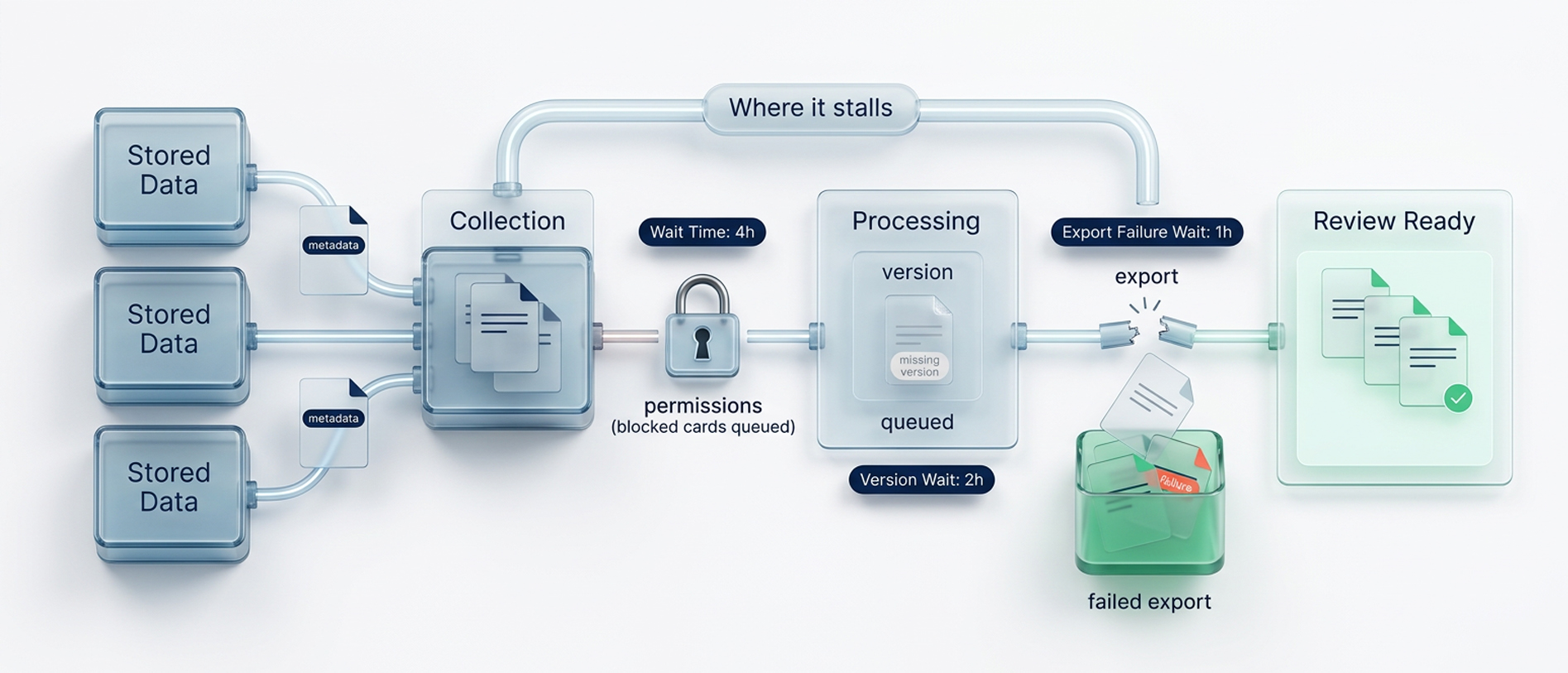
For discovery, those controls need to produce a usable result. A record can exist in storage while remaining inaccessible to the collection team. A message can be preserved while its linked document needs separate attention. A completed export can still contain files that never become searchable.
That is why extending data retention alone cannot establish readiness. Keeping information longer does not resolve permissions, recover an uncaptured version, or explain a processing exception.
Venio’s information governance guide explains how to manage information across your organization. Readiness testing shows whether those practices help your team deliver usable data to counsel within a reliable timeframe.
The EDRM 2.0 framework, released September 1, 2026, reinforces this connection. It places information governance beneath the discovery lifecycle and groups identification, preservation, collection, and processing under Data Acquisition. It is a professional framework, not a new law. For your assessment, its value is the reminder to test the transitions between activities.
Measure Where the Time Actually Goes
A processing-speed claim tells you little about time spent waiting for access, correcting an export, or finding someone to resolve a failed file. Start by measuring the elapsed time from an authorized collection request to a usable review set. Record time spent waiting separately from time spent working. Note where work has to be repeated.
For example, if permissions take three days and processing takes two hours, faster processing will barely change the overall response time. If access is immediate but every matter requires repeated exports between tools, the improvement opportunity sits elsewhere.
This gives legal operations a more useful starting point for a business case. Count the staff hours spent chasing dependencies, correcting data, and repeating transfers. Add the relevant vendor charges. You now have a baseline against which to evaluate a proposed change, without relying on generic savings percentages.
Run a Test on Real Sample Data
Choose a bounded exercise using authorized sample data, a few custodians, and the source types your team regularly encounters. Include some difficult items, such as a linked document, a chat conversation, and a file requiring exception handling.
Use the actual operators and access arrangements you would depend on. Set a target turnaround time appropriate to your organization. Identify several known records the process should retrieve, then follow them into review. Finding those records is a useful check, although it does not establish completeness across an entire matter.
The following questions expose different causes of delay. Each should end with evidence of what worked and an owner for what did not.
1. Can You Prove What Is Preserved
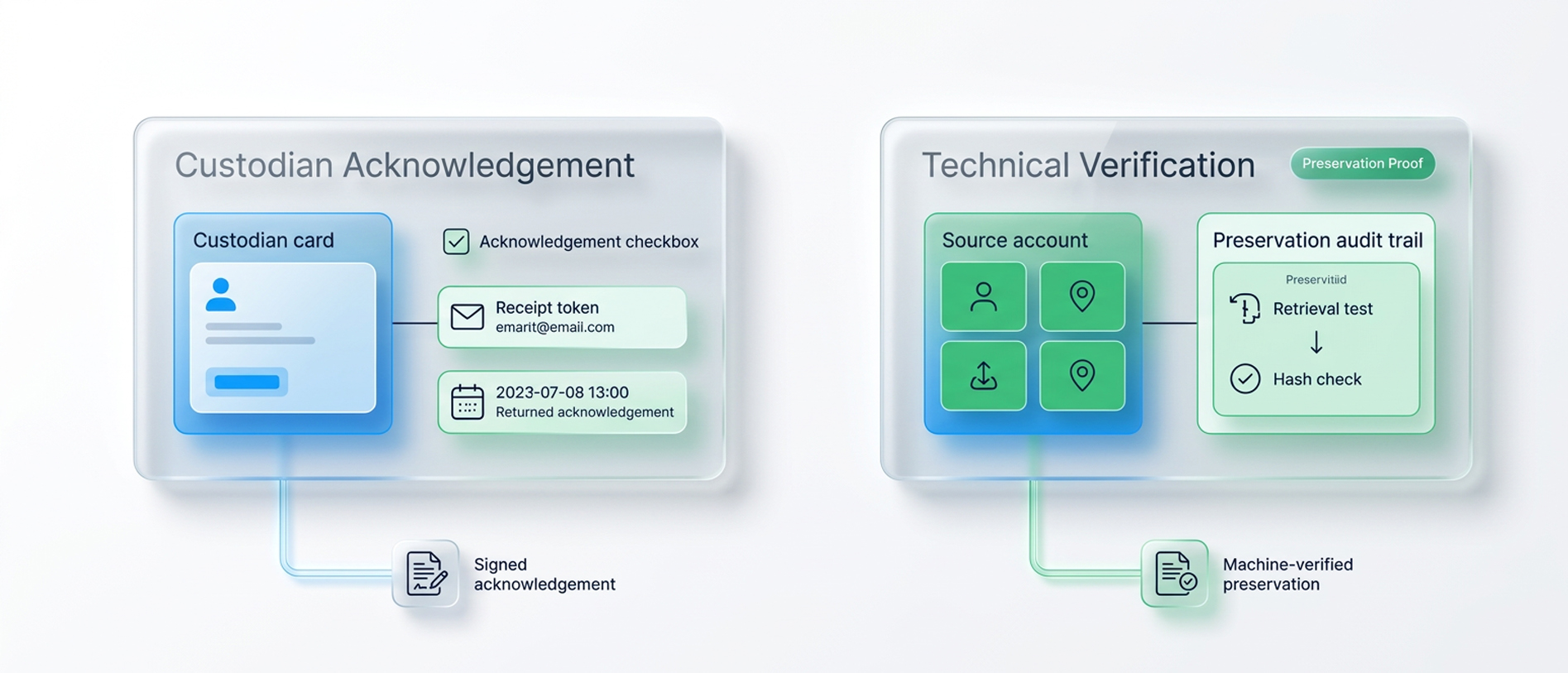
A custodian’s acknowledgement confirms they received the hold notice. A technical preservation check verifies whether the relevant data is actually protected.
The acknowledgement records a person’s response. The technical check establishes whether the intended accounts, locations, and content types are covered. For controlled test records, verify what happens after an edit or deletion and whether preserved content can be retrieved. Do not run deletion tests against live evidence.
If the recurring problem is chasing custodians and reconstructing follow-ups, Venio Legal Hold addresses that administrative burden through automated notices, reminders, escalations, and acknowledgment tracking. A centralized hold record gives the team a place to see outstanding responses across matters.
Source-system verification still matters. Venio’s M365 and Google Vault guide explains the interaction between holds and deletion settings. The assessment should capture both the hold workflow and the technical evidence supporting preservation.
2. Did You Get the File That Was Shared
A linked document can change after someone sends the message containing it. Collecting the message and the current file may leave counsel unable to determine what the recipient saw at the relevant time.
This is a documented collection issue. Microsoft’s cloud-attachment guidance distinguishes the live document from the version shared earlier. It also identifies unsupported scenarios and explains configuration for preserving shared versions.
Include one such item in the exercise. Identify the version you expect, check what arrives, and record whether the message-to-document relationship remains understandable. Verify the collection method against the source’s current capabilities.
If a required version was never captured and cannot be recovered, downstream review technology cannot recreate it. That finding belongs with the source-system owner and counsel. If the information exists but loses its context during transfer, investigate the collection and ingestion workflow.
Understanding where the problem starts helps you choose the right solution. Review software cannot recover information that was never preserved or collected.
3. Can You Explain Every Missing Item
A successful import is only the beginning of this check. Compare what was collected with what reviewers can actually examine, then explain every material difference.
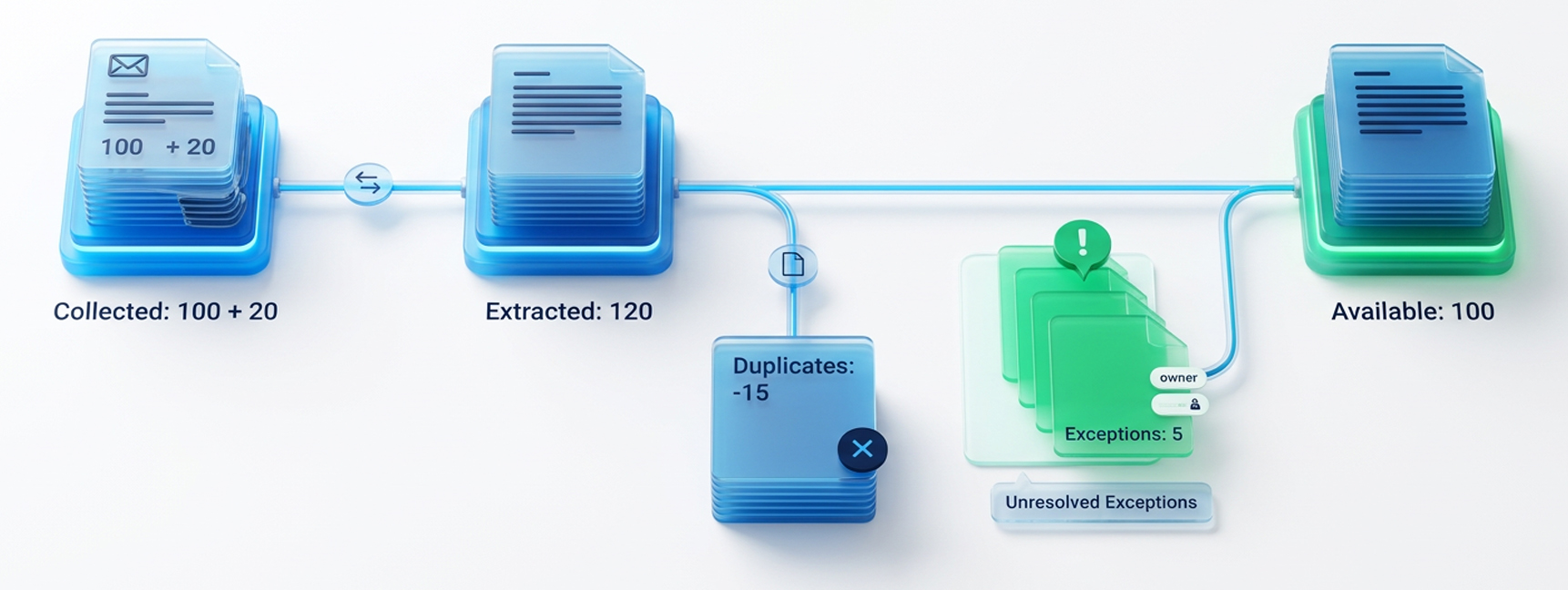
Consider this simplified reconciliation, using illustrative figures rather than a product benchmark:
- Collected: 100 emails containing 20 embedded attachments.
- Extracted: 120 items after separating messages and attachments.
- Excluded as Duplicates: 15 items, with the deduplication decision recorded.
- Pending Exceptions: 5 items that cannot yet be reviewed.
- Available for Review: 100 items.
The initial and final counts happen to match. Yet five items remain unresolved. A report saying “100 collected, 100 available” would conceal that problem.
Real systems count messages, families, containers, and extracted items differently. The point is to reconcile those definitions and dispositions, not demand identical totals. Check the known records and assign each exception to someone who can resolve it or explain the limitation.
Putting eDiscovery best practices into action means tracking what was collected, what was excluded, and what remains unresolved. This exercise helps your team confirm that the data is ready for review and identify any gaps.
4. Can Counsel Work With What You Send
Share the sample review set with counsel, along with a brief summary of the sources, date ranges, and filters used. Note any unresolved issues or missing context, and explain how they could affect the scope or delivery date.
The FRCP amendments effective December 1, 2025 require parties to plan when and how they will describe information withheld as privileged or protected work product. The court may also address those arrangements in its scheduling order.
Knowing what metadata is available helps counsel propose a workable approach. Discovering missing sender details after agreeing on that approach can mean repeating work. The amendments do not require this assessment or any particular technology.
A useful readiness assessment shows which sources were tested, which records are usable, and which issues remain unresolved. That helps the team explain what it can deliver next.
Fix the Process or Buy a Platform
The assessment should help you avoid buying around a problem you have not diagnosed. Apply data governance best practices such as clear ownership, consistent classification, and documented lineage to each finding. Then identify the change that would actually improve the result.
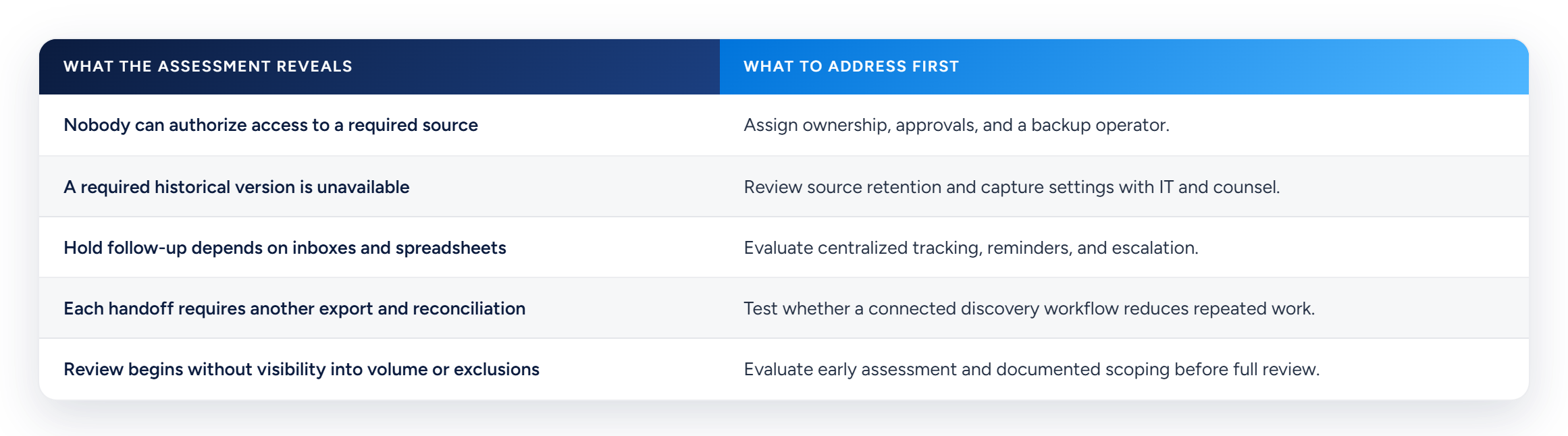
An information governance software purchase should follow that diagnosis. Enterprise governance and eDiscovery have related responsibilities, but a discovery platform does not replace decisions about what the business should retain or who owns a source.
Venio becomes relevant when your team needs to execute the discovery workflow more consistently. Administer legal holds, assess collected information, and move into review and production with fewer separate transfers. That is a concrete reason to evaluate the platform against the way your team works today.
Test Venio Against Your Baseline
If legal cannot get an early view of the collection, start with Venio ECA. Its keyword and metadata search, deduplication, and concept clustering support examination of collected data before full review. Those capabilities help the team investigate scope and volume while there is still an opportunity to adjust the plan.
During evaluation, ask the operator to find records you know are in the sample and show which documents a filter would exclude. Your team should understand why documents are removed from review. Choosing what to review first does not change what must be preserved.
If your team repeats work when moving between tools, assess how Venio connects processing, ECA, review, and production. Ask which transfers it could eliminate and which collection steps would still be needed.
Compare the results with your current process, including time taken, manual effort, unresolved issues, and supporting records. Apply information governance best practices by checking whether each capability solves a known problem and delivers an improvement you can verify.
Know the Answer Before Legal Asks
This piece opened on a question, if you could tell the legal team how quickly a reviewable collection would arrive. Once the exercise is done you can answer it with tested sources, a measured turnaround, and a short list of exceptions that still carry an owner.
That answer is worth more than any feature comparison, because it shows which part of the workflow is costing your team time and whether the fix belongs with a source owner, a process change, or a platform that removes the repeated handoffs. Venio covers the third one, holding legal hold, processing, early case assessment, review, and production in a single workflow.
If the delay you measured sits in the moves between those stages, Book a Demo and spend the session on that one number, because a turnaround time your team can commit to is the only result worth changing tools for.
Frequently Asked Questions
What Does eDiscovery Readiness Mean
It means governed information can become usable evidence for a defined discovery task, covering source access, preservation, collection context, processing exceptions, and the handoff to counsel. Information governance sets the controls over what is kept and who owns it, while eDiscovery best practices govern how that data moves once a matter begins. What you end up with is a record of demonstrated capabilities and unresolved gaps.
How Does Records Management Support eDiscovery Readiness
Records management provides classification, retention, and disposition controls, while information lifecycle management follows the same information from creation through use, storage, and disposal. Readiness checks whether information subject to those controls can be located, preserved, collected, and reviewed when needed. Both are necessary to connect policy decisions with discovery operations.
Is a Data Retention Policy Enough for Discovery
No, because a data retention policy does not establish that the collection team has access, that a needed historical version exists, or that exported files will be searchable. Check those conditions using representative records, and write down the limitations before anyone relies on them.
Does Venio Replace Existing Information Governance Tools
Venio supports discovery activities including legal hold management, processing, early case assessment, review, and production, so it works alongside information governance software rather than standing in for it. Evaluate it next to your source systems and governance controls. The right fit depends on where you find repeated manual work, limited visibility, or difficult handoffs.
How Often Should You Run These Checks
Work through the affected parts again after migrations, retention changes, new data sources, or changes to operators and providers. Data governance best practices such as clear ownership and documented lineage make that repeat far less painful. Information governance best practices point toward a routine review frequency based on your risk and rate of change, since earlier results are useful only while they reflect the environment your team uses.
Related Articles
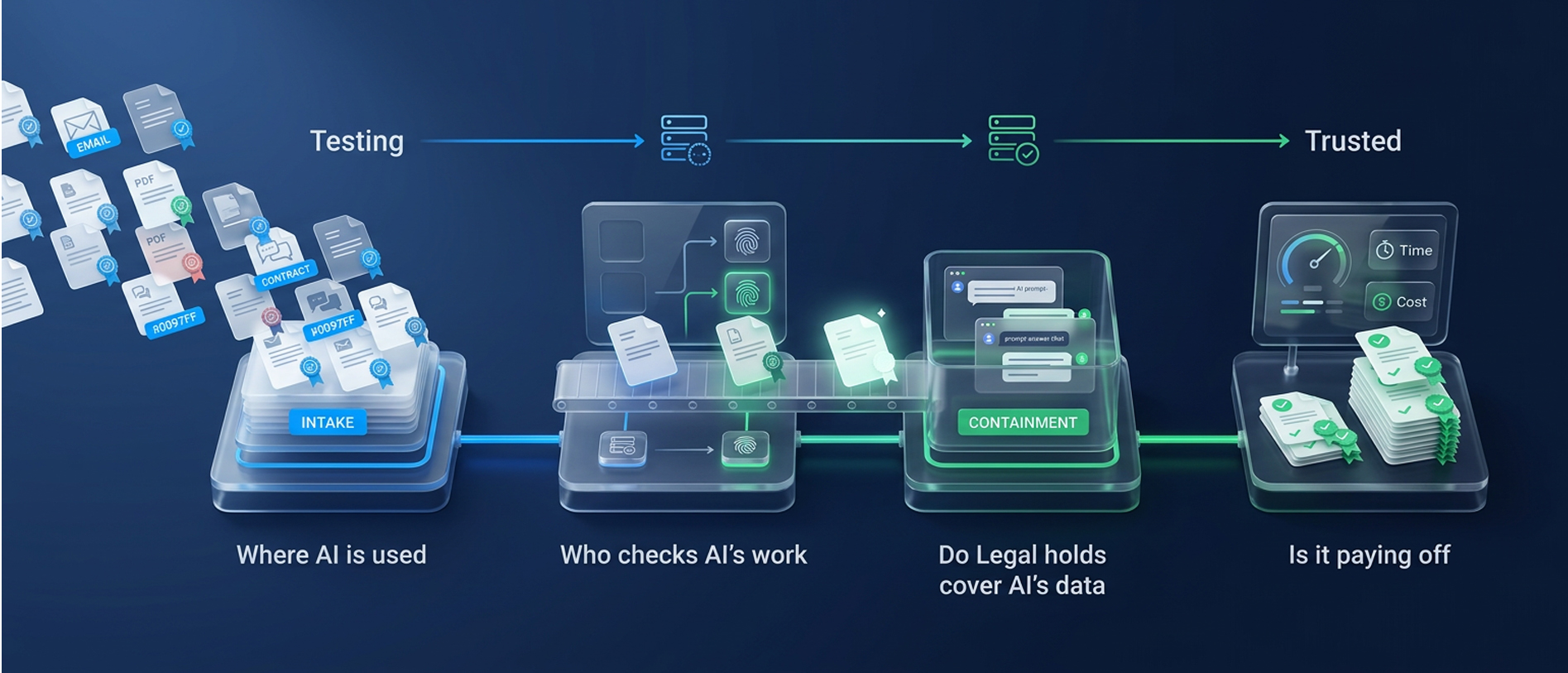
From Testing to Trusted: The Open Questions on AI in eDiscovery
Where is AI used, who checks its work, do legal holds cover AI data, and is it p
Read Article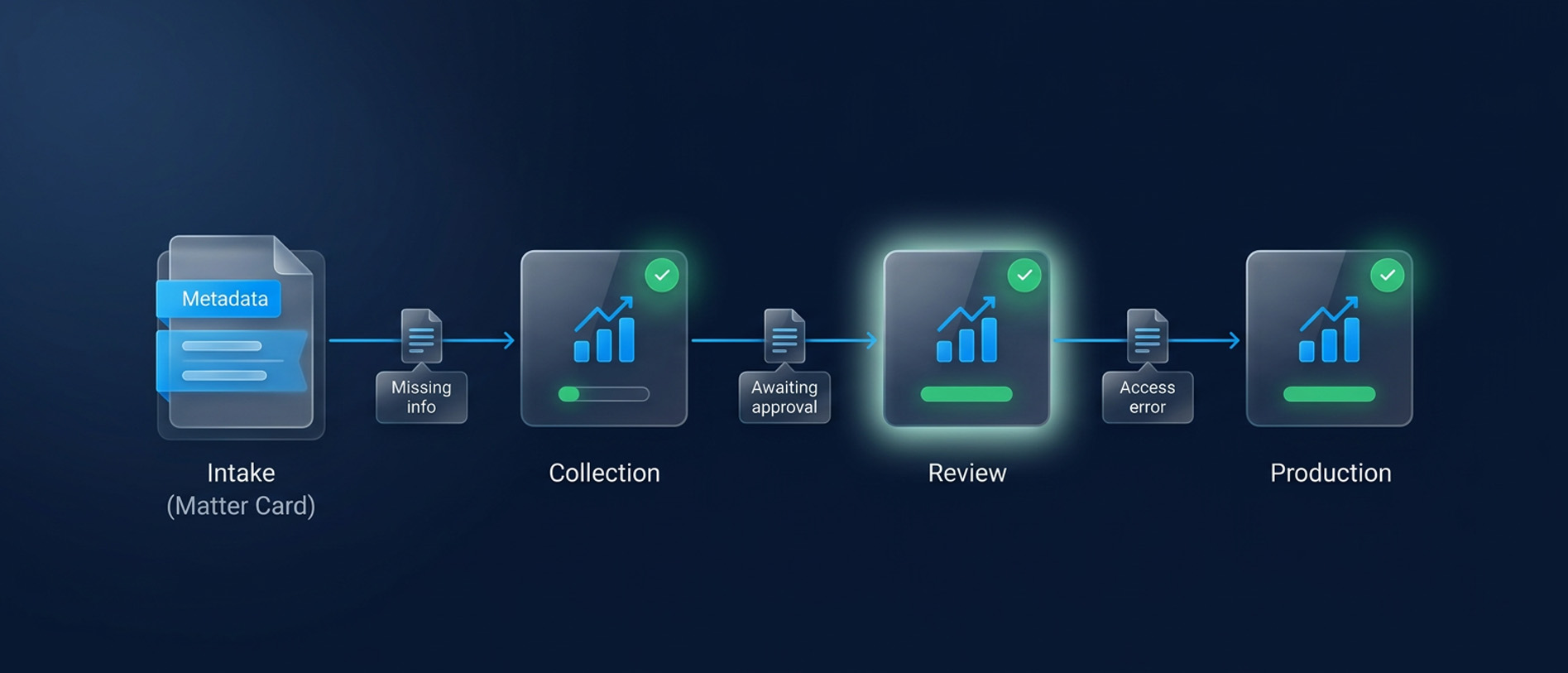
Legal Workflow Automation for Faster eDiscovery
Reduce discovery delays with legal workflow automation. Clarify ownership, resol
Read Article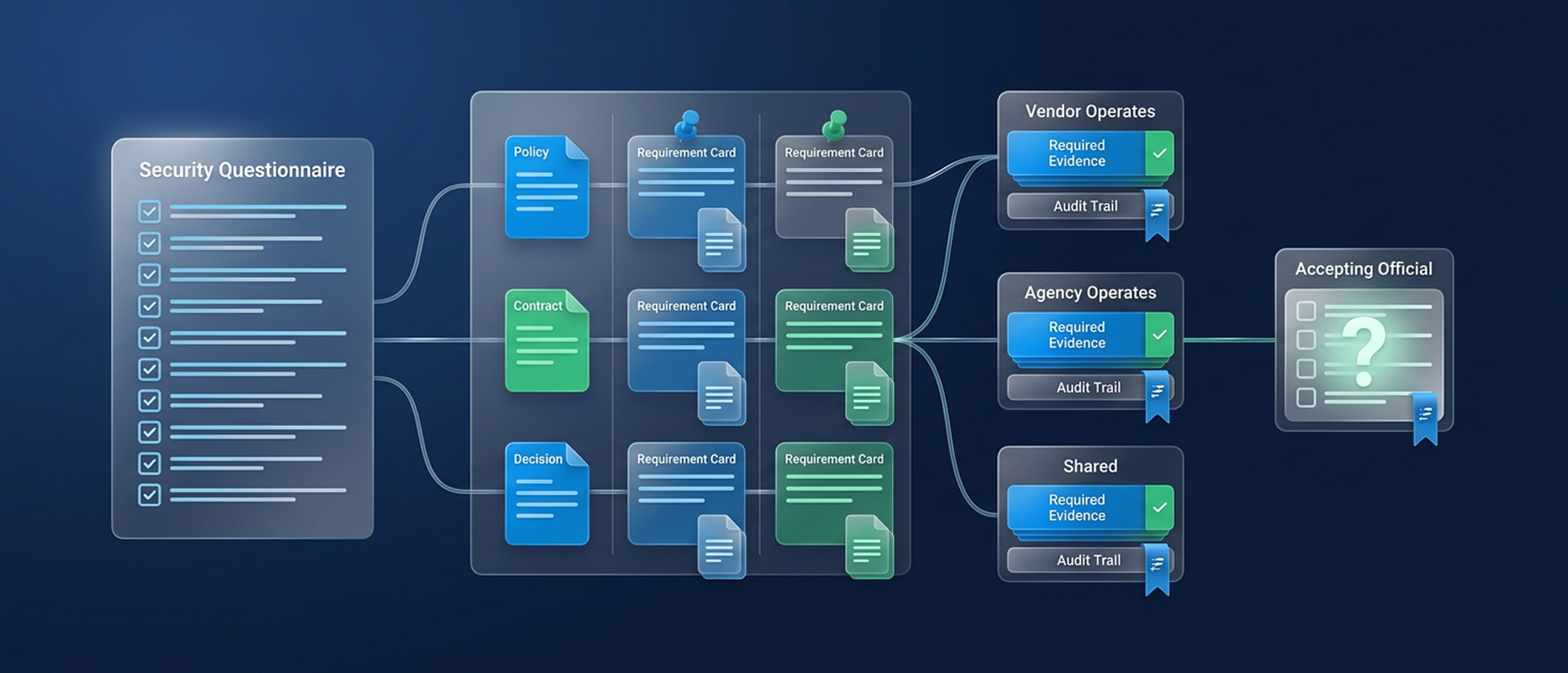
A Buyer’s Guide to Government eDiscovery Security
Evaluate government eDiscovery security requirements, FedRAMP 20x and NIST contr
Read Article