When Does the Duty to Preserve Trigger?
Ready to get started?
built for clarity, control, and scale.
Share
The complaint arrives on a Tuesday, you issue the legal hold that afternoon, and every custodian acknowledges within the week.
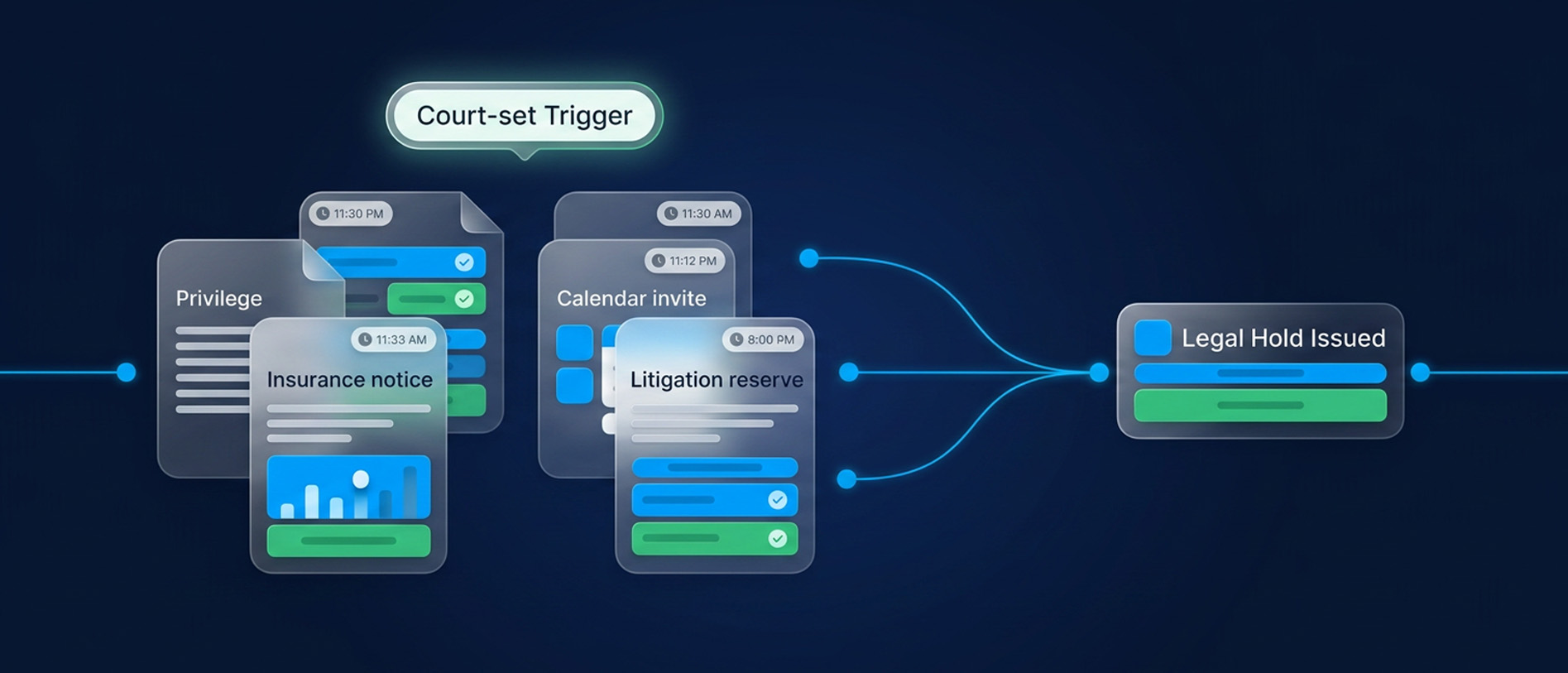
Eighteen months later, opposing counsel tells the court that your duty to preserve began in March rather than September. The proof is not a demand letter or a filed claim of any kind. It is a privilege header on an HR thread, a note to your carrier, and a calendar invite naming counsel.
Nobody created those records while thinking about preservation of evidence, and every one of them carries a date. Six months of routine deletion now sits inside a window your organization never knew that it had.
That gap is the part most articles on this topic skip, and it is where preservation disputes are actually decided. They explain that the duty begins when litigation is reasonably anticipated, that the test is fact-specific, and that documentation matters. All of that is accurate, and none of it warns you that the final say on the date is not yours.
A court decides it years later, working backward through records your organization has already created and cannot now change. This guide covers the standard a court actually applies and the internal records that fix your date for you. It also covers why the trigger is rarely a single date, and how to run the same analysis against the other side.
What Triggers the Duty to Preserve Evidence
The duty to preserve begins when litigation becomes reasonably anticipated, which in practice is almost always before a complaint is filed. The Sedona Conference Commentary on Legal Holds, Second Edition, frames that test as credible probability rather than certainty.
Reasonable anticipation is a judgment about probability, so it is not a status that anyone can simply look up. Three conditions carry most of the weight when a court works out whether the duty had already been attached.
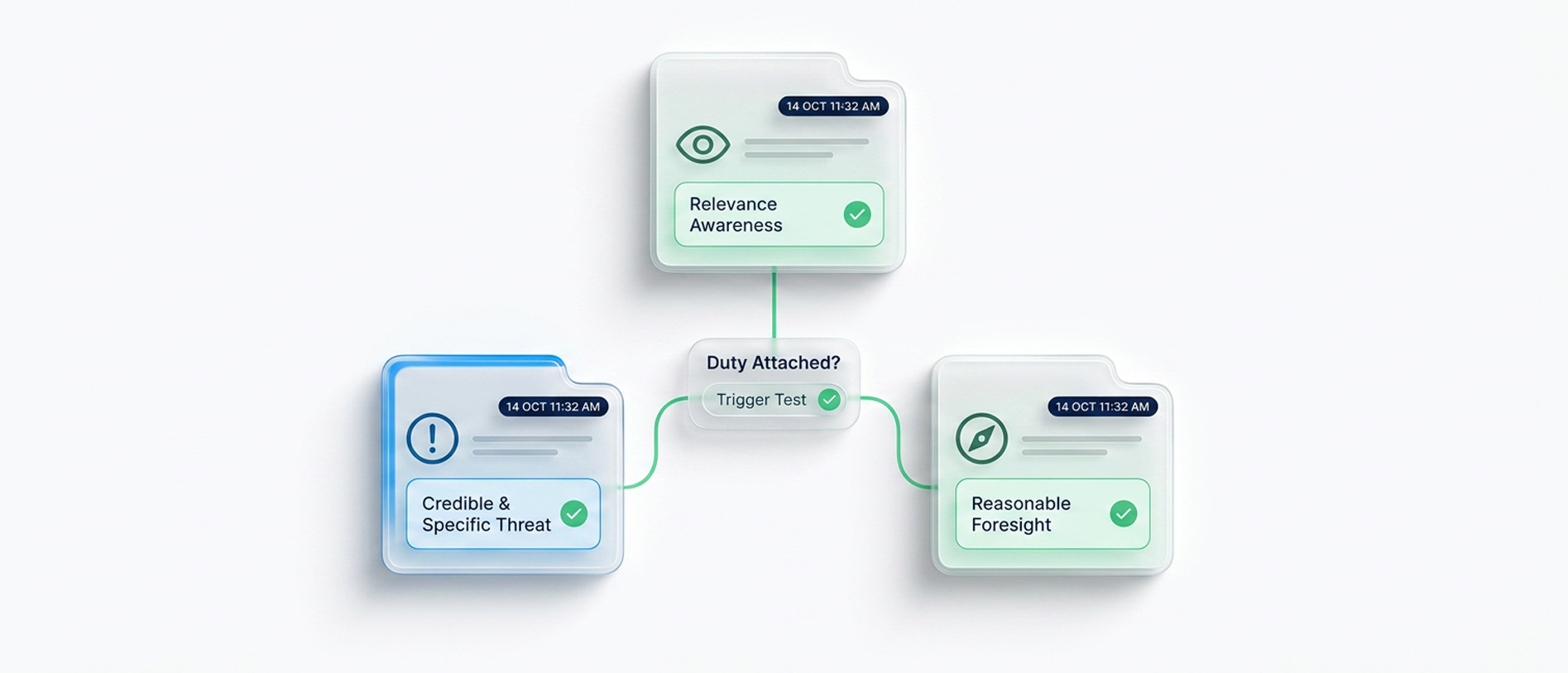
- Relevance Awareness: You know, or reasonably should know, that the information may matter to a dispute you can identify.
- Credible And Specific Threat: The signal is concrete rather than a passing complaint, an unsupported rumor, or general industry risk.
- Reasonable Foresight: A sensible organization in your position would have expected litigation to follow from what it knew.
No rule sets the start date, and FRCP Rule 37(e) governs only what happens when preserved information is lost. That silence about timing is precisely why trigger dates end up being argued years after the fact.
Once the duty attaches, you have to preserve evidence across every system holding relevant electronically stored information. From that point onward, ordinary housekeeping becomes spoliation, whatever your retention policy happens to say.
Your Trigger Date Is Set in Hindsight
Your trigger date is assigned retroactively by a court ruling on a spoliation motion, usually two or three years later. You propose a date at the moment, and the court decides a different one with the benefit of everything that follows.
That inversion changes what the work actually is on any given matter. At the moment you are asking whether a dispute looks probable enough to justify the disruption that a hold creates.
In the hearing your opponent is working backward through your records, hunting for the earliest date on which your organization looked worried. Those two exercises rarely land in the same month, and the difference between them is where sanctions live.
Your contemporaneous judgment still counts for a great deal, and courts weigh it seriously when it is written down and reasoned. It functions as evidence of good faith rather than as the answer. The standard remains what a reasonable organization should have concluded.
So the useful question is not whether your duty to preserve has triggered today. It is which records you are creating today that a court will later read as proof that it already had.
What Fixes Your Preservation of Evidence Date
Courts fix trigger dates using ordinary business records created by people who were not thinking about litigation at all. Each one carries a timestamp, and each one shows some part of the organization quietly forming a view about risk.
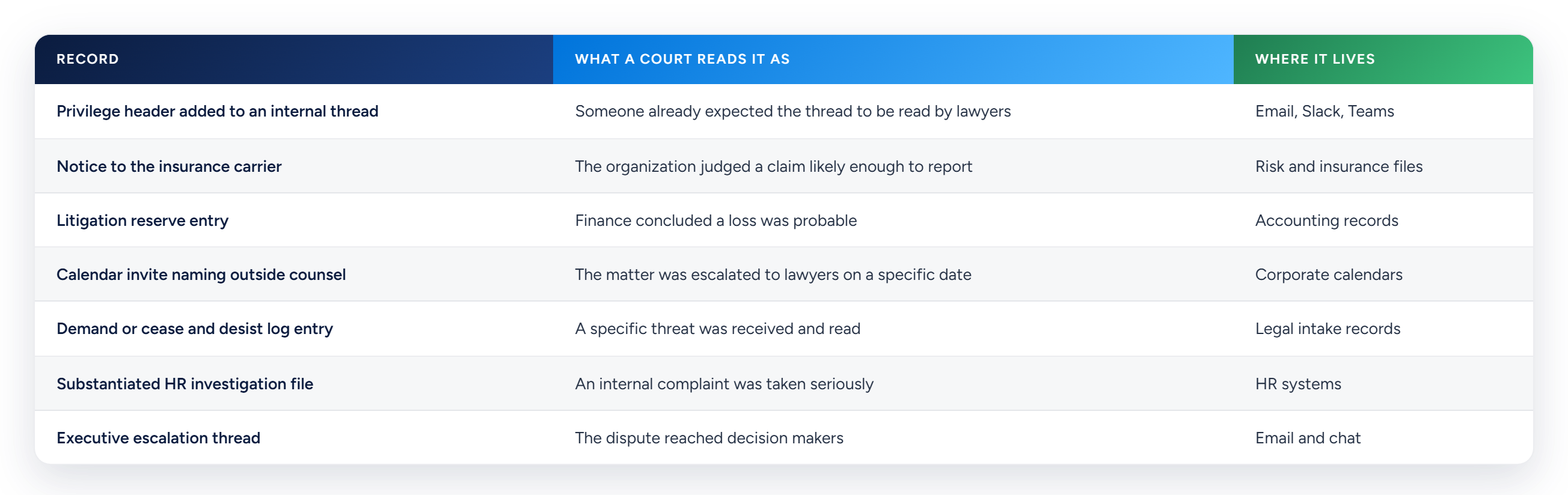
None of these documents mentions preservation of evidence anywhere in its text, and that is exactly why they persuade. A privilege header is an unguarded admission that somebody already expected the thread to end up in front of lawyers.
Consider a sequence that most legal teams would recognize immediately from their own matters. An employee complaint reaches HR in March, and the internal thread carries a privilege header within that same week.
Finance books a reserve against the claim in April, and outside counsel appears on a leadership calendar in May. The charge itself arrives in September, and the hold issues competently on the very same day.
Six months of routine mailbox purges now sit inside the preservation window that a court will later recognize. The hold was fast and the acknowledgment rate was perfect, and neither of those facts reached data that had already gone.
The counter is not faster to hold issuance, because issuance speed was never the problem in that sequence. It is capturing the trigger event when somebody first recognizes it, with a timestamp generated by a system rather than reconstructed afterwards. Venio Legal Hold logs the trigger event, the reasoning behind it, and the notice that followed within a single audit trail. The earliest documented date on the record is then a date your organization chose deliberately.
Preservation of Evidence Is Not One Date
The duty can attach at different times for different custodians and different systems inside the same organization. Treating the trigger as a single company-wide date is the most common scoping error in preservation of evidence.
HR knew in March, finance knew in April, and a regional sales team had no reason to know anything until September. A hold that starts all three custodial groups in September understates your genuine exposure on two of them.
The reverse error is the one that costs money at every stage that follows. A hold that starts all three in March sweeps in custodians who were never relevant. That single error inflates collection volume and review spend for the whole matter.
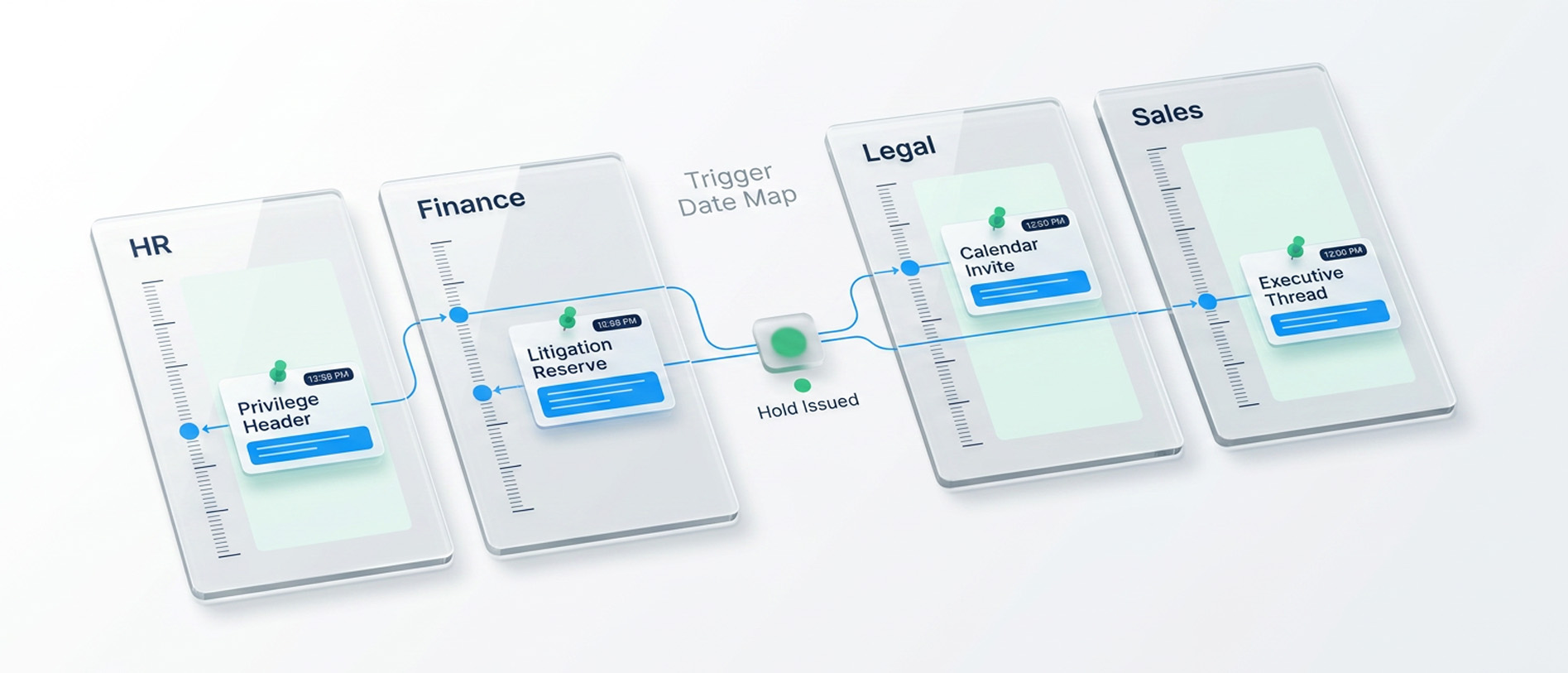
Mapping custodians and data sources to the date each became relevant is what makes your scope both defensible and proportional. Structured custodian interviews are how that map gets built. Collaboration platforms such as Slack and Teams are where the mapping most often breaks down in practice.
Run the Same Analysis on the Other Side
Everything above works just as well in reverse, and almost nobody writing about legal holds bothers to point that out.
The records that date your own duty will also date theirs, because every organization generates the same artifacts under pressure. When you are the plaintiff, the other side has carriers, reserves, calendars, and privilege headers of exactly the same kind.
Most spoliation motions fail on the threshold question rather than on the loss itself. The movant proves that data is gone but cannot prove the duty had attached at the moment it went.
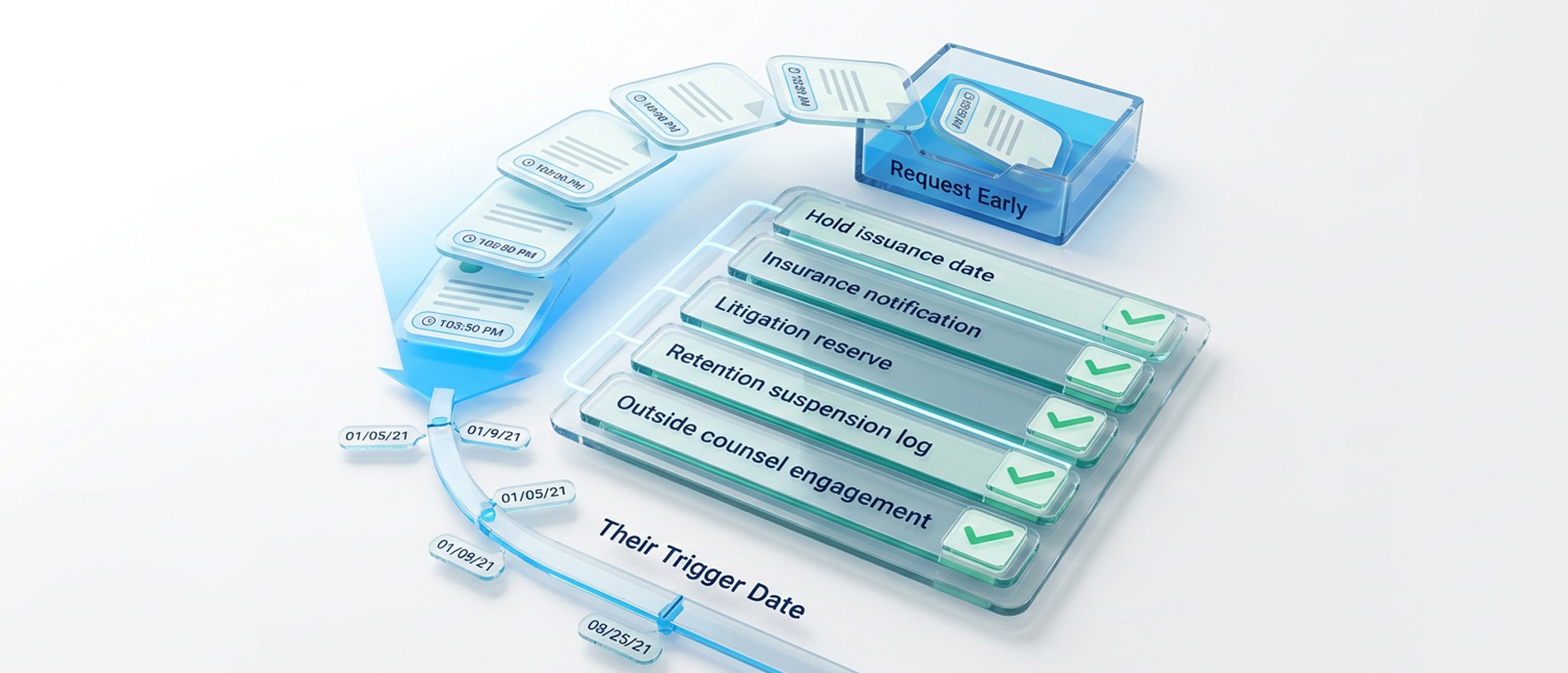
Build these requests into your first discovery set rather than saving them for a later motion when memories have faded. Ask for the date the opposing party issued its own hold, along with the date on which it notified its insurance carrier.
Ask as well for the retention schedule and the suspension log that should accompany any decision to preserve evidence. Privilege protects the content of those records far more often than it protects their existence and their timing.
The hold issuance date is the most useful item on that list and, in practice, the least frequently requested one. A party that issued in August while notifying its carrier in March has handed you a five month gap without argument.
Does Anticipation of Litigation Require a Filed Case?
No, because the anticipation of litigation standard runs on foreseeability rather than on procedure. A filed case is the latest possible trigger for the duty to preserve, and it is very rarely the earliest one.
This catches potential plaintiffs hardest, since legal hold guidance is written almost entirely from the perspective of the defendant. The unstated assumption running through that material is that a preservation duty always arrives from outside, in an envelope.
When your organization is the party preparing to sue, the duty arrives from inside instead, during a meeting. The trigger is usually the conversation in which leadership asks counsel to evaluate the strength of a potential claim.
Everything after that conversation sits inside the preservation window, including the internal debate about whether to file at all. A plaintiff whose retention policy ran unchecked through that period cannot credibly demand records held by the defendant. The same discipline applies in reverse, from the first hours after you get sued onwards.
Is a Preservation Order the Same as a Legal Hold?
No. A preservation order is a court directive requiring a party to protect specified evidence during a proceeding. A legal hold is the internal process through which you meet a duty that you already owe independently.
The distinction matters mostly for timing, and it catches teams out more often than it really should. Your duty is self-executing and needs no order at all. An order of preservation almost always arrives months into an obligation that was already running.
A preservation letter from opposing counsel sits somewhere between the two, and it is worth treating with care. It carries no independent legal force, but it is dated, and it removes any later argument that the threat was not credible.
Treat a preservation order as a scope document rather than as a starting gun for your preservation efforts. It tells you what the court wants protected, and it shows your opponent exactly where to look if anything is missing.
What a Preservation Notice or Litigation Hold Letter Must Say
A preservation notice, often called a litigation hold letter, converts an abstract duty into instructions that a custodian can actually follow. The most common defect is a notice that explains the matter at length without telling the custodian what changes for them.
A defensible preservation notice states the following six things.
1. Matter name and hold reference, so that the instruction attaches to one specific matter rather than to preservation generally.
2. The trigger date, which is the date preservation runs from and the date a court will later ask you about.
3. Scope in plain terms, covering the subject matter, the relevant date range, and the systems that are in play.
4. Data sources named individually, including chat, collaboration tools, shared drives, and personal devices wherever those apply.
5. What the custodian must stop doing, stated in the terms they actually use during a normal working day.
6. Acknowledgment required, with a stated deadline and one named point of contact for any questions that arise.
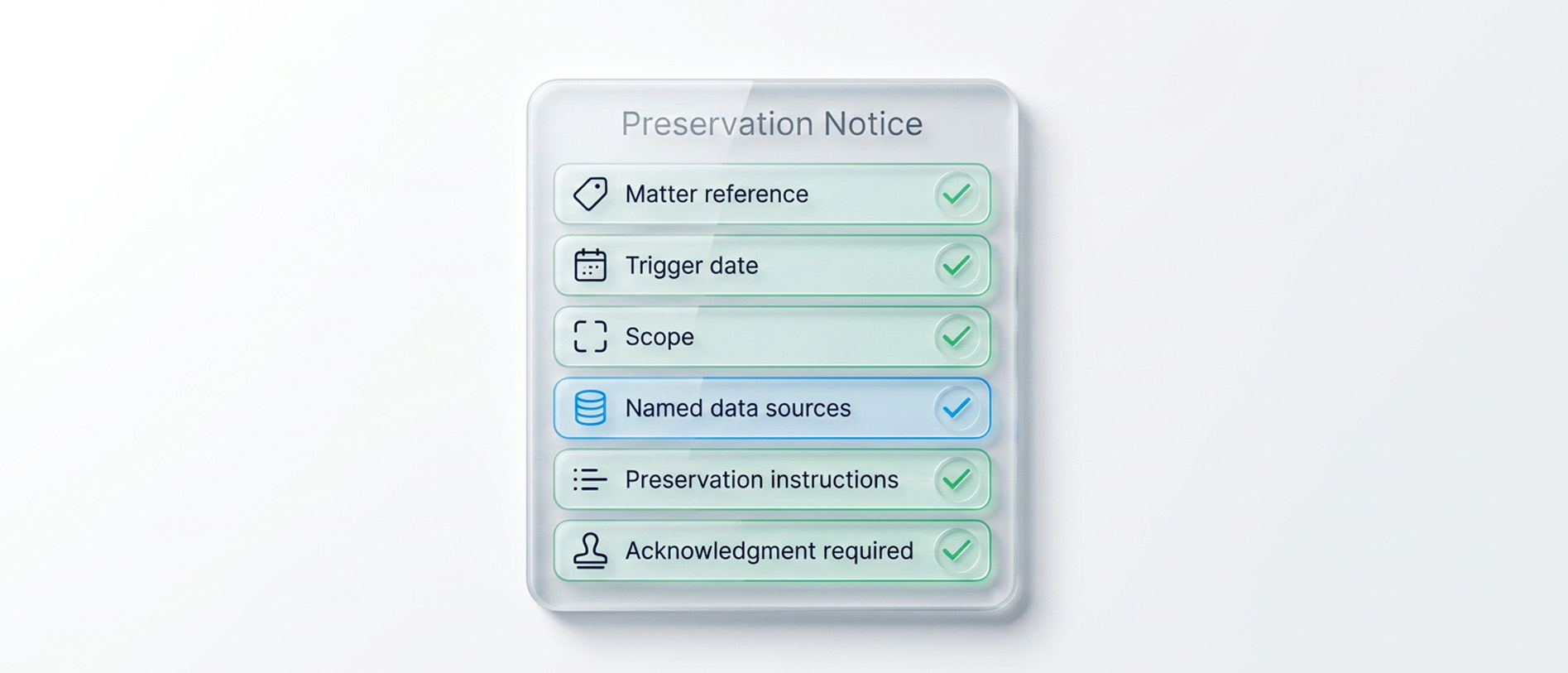
Item two is the one that most litigation hold letter templates quietly omit, and its absence causes real damage later. A notice without a trigger date leaves that date to be reconstructed afterwards, by somebody with an incentive to move it. Standing language kept as a reusable template is worth building into your legal hold process. Consistency of language across matters is itself read by courts as evidence of good faith.
The Memo for When You Decide Not to Issue
Most organizations document the holds they issue carefully and record nothing at all about the ones they decline. That gap is where trigger arguments are most often won by the other side, months or years after the decision was made.
A short dated memo covering four things is usually enough to close it.
- Facts Known: What was reported, by whom, and on the date the organization first became aware of it.
- Assessment: Why the threat looked speculative rather than credible against the information available at that time.
- Decision: Who made the call not to issue a hold, and under what delegated authority they made it.
- Review Date: When the underlying facts will be revisited, and which person or team owns that review.
The review date does more work than the other three fields combined, which is why it should never be left blank. Reasonable anticipation is not a one time test, and facts that looked thin in March can look considerably more serious by June.
A documented reassessment demonstrates a live process that responds to new information as that information arrives. A single memo with no follow up reads instead as a conclusion somebody reached once and then preferred not to revisit.
The Trigger Date Is Part of the Record
Preservation failures are rarely failures of intent, and that is exactly what makes them so frustrating to defend. Teams issue holds, chase acknowledgments, and still lose the argument on a date that nobody thought to write down.
The organizations that hold up under scrutiny treat the trigger as a documented legal decision rather than an administrative reflex. It is made against a standard, on a date, by somebody with authority, with the reasoning captured while it is still fresh.
That record is the entire asset when the question resurfaces two years later in front of a judge. Nobody remembers what was known in March by then, so the file either says so clearly or it does not.
Venio Legal Hold captures the trigger event, the notice, custodian acknowledgment, and release within one connected system. The date and the reasoning behind it stay on the record rather than in a sent folder. Book a Demo to see how the full hold lifecycle runs as a single defensible workflow.
Frequently Asked Questions
When does the duty to preserve trigger?
It triggers when litigation becomes reasonably anticipated, which is usually well before a complaint has been filed. A credible demand, a substantiated internal complaint, a regulatory inquiry, or a decision to sue can each start the clock. Courts assess that date in hindsight, against what a reasonable organization should have concluded at the time.
What does anticipation of litigation mean in practice?
It means a credible probability of a dispute rather than a certainty that one will be filed. The signal has to be specific enough that a sensible organization would act on it rather than note it. General industry risk, vague complaints, and unsupported rumors do not usually meet that standard.
Is a preservation order the same as a preservation notice?
No. An order of preservation is issued by a court and defines exactly what a party must protect. A preservation notice, also called a litigation hold letter, is your own internal instruction to named custodians. The order adds court supervision, and your underlying duty was already running well before it arrived.
Do you have to preserve evidence if you are the party suing?
Yes. The duty attaches once you seriously contemplate a claim, usually at the meeting where counsel is asked to assess it. A retention policy that keeps running through that period creates the same exposure that any defendant would face.
Can the duty to preserve trigger at different times for different people?
Yes. The duty attaches per custodian and per data source, based on when each of them became relevant to the dispute. Treating the trigger as one company-wide date usually produces a hold that is simultaneously overbroad and late.
What happens if the trigger date turns out to be wrong?
Sanctions under FRCP Rule 37(e) turn on prejudice and intent rather than on perfect execution. A documented, reasoned decision taken in good faith is treated very differently from a date reconstructed after a motion is filed.
Related Articles
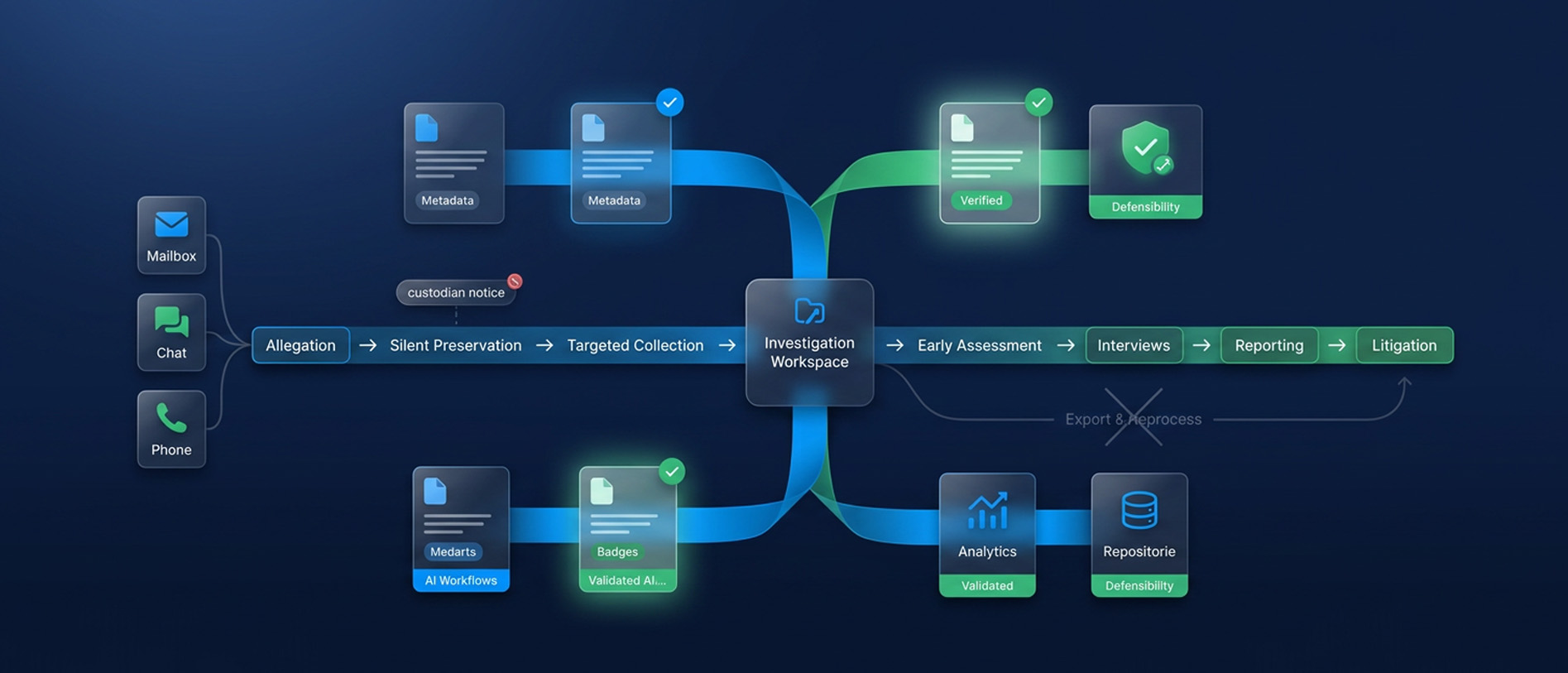
Internal Investigations: Getting the Facts Without Blowing the Matter Open
An internal investigation offers no court schedule and no second chance at prese
Read Article
eDiscovery Data Analytics & Visualization for Trial Preparation
Most litigation teams don’t lose at trial because they lack evidence. They lose
Read Article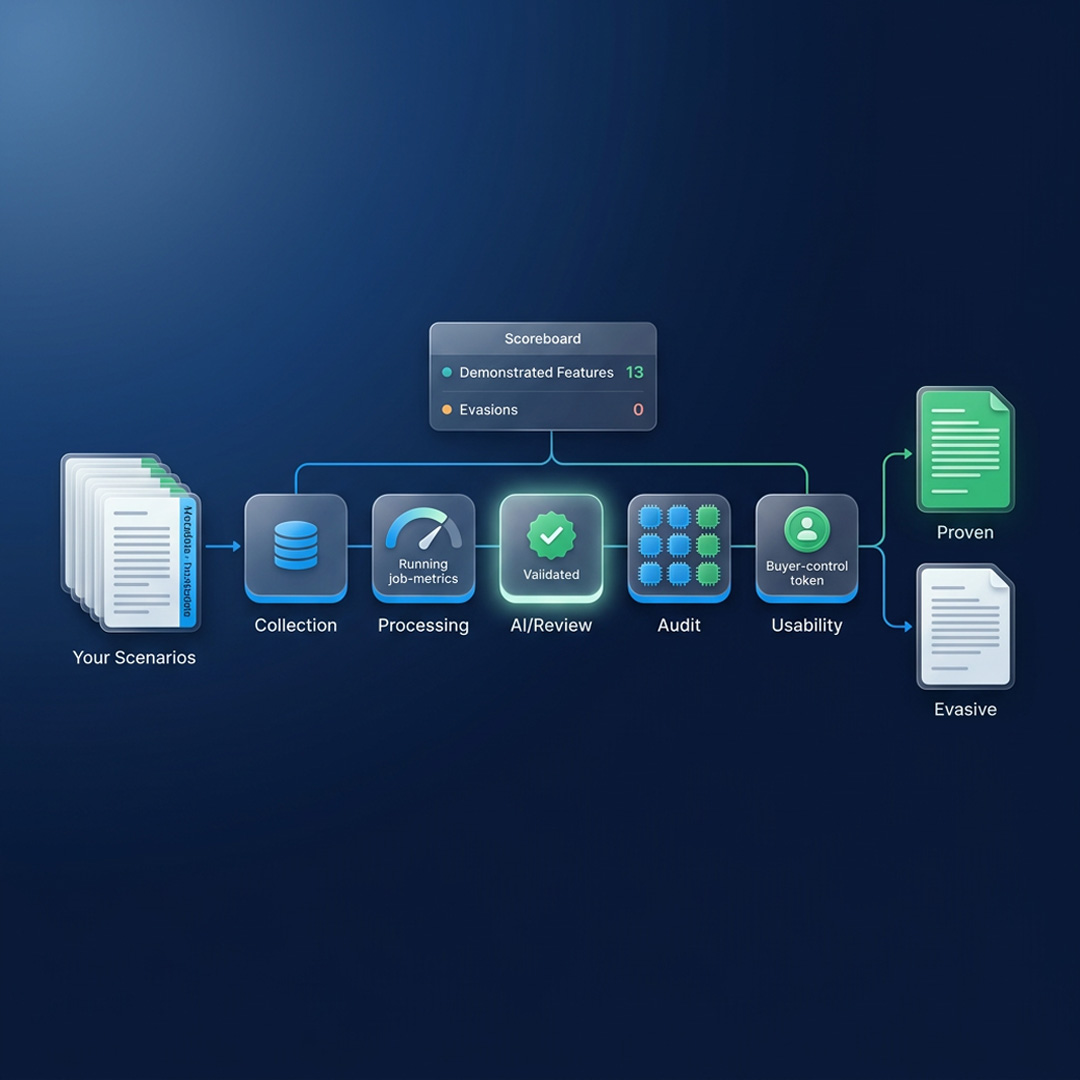
What to Ask in an eDiscovery Demo Before You Sign
Twenty questions that make an eDiscovery vendor prove processing, AI, security a
Read Article