eDiscovery Best Practices: A Guide to Defensible Discovery
Ready to get started?
built for clarity, control, and scale.
Share
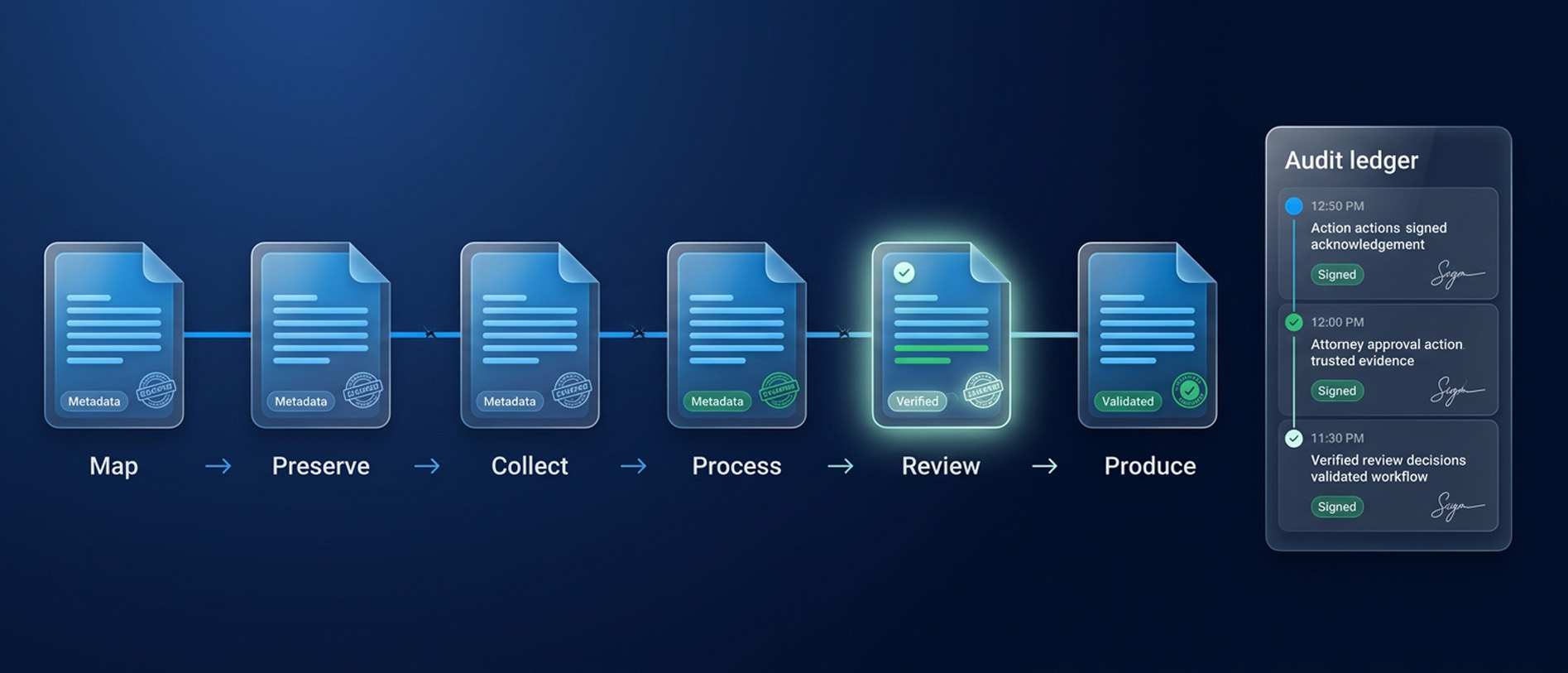
Most teams know the basics of eDiscovery. You identify the data, preserve it, collect it, review it, and produce it. That’s eDiscovery 101, and the eDiscovery workflow, i.e., the Electronic Discovery Reference Model (EDRM), looks straightforward on paper.
In practice, it rarely is.
The real test of eDiscovery best practices isn’t whether you can move data from one stage to the next. It’s whether you can explain and defend every decision along the way. From eDiscovery preservation and data mapping to defensible data collection, every step can affect the credibility of the process.
That matters because courts don’t just look at what information was produced. They can also look at what should have been preserved, how it was handled, and whether reasonable steps were taken to protect it. Under Federal Rule of Civil Procedure 37(e), failures in preservation can lead to serious consequences when lost ESI cannot be restored or replaced.
So, think of this as more than an eDiscovery 101 guide. It’s a practical look at how to build an eDiscovery process that holds up under scrutiny, from identifying an eDiscovery custodian and mapping data to preserving, collecting, reviewing, and producing it.
Because the best eDiscovery workflow isn’t simply efficient. It’s defensible.
Start Before Litigation: eDiscovery Data Mapping
eDiscovery data mapping is the practice of documenting where your organization's data lives, who controls it, how long it is retained, and how it can be preserved and collected. It is the single highest-leverage best practice on this list because it happens before any matter exists, when you have time to do it right.
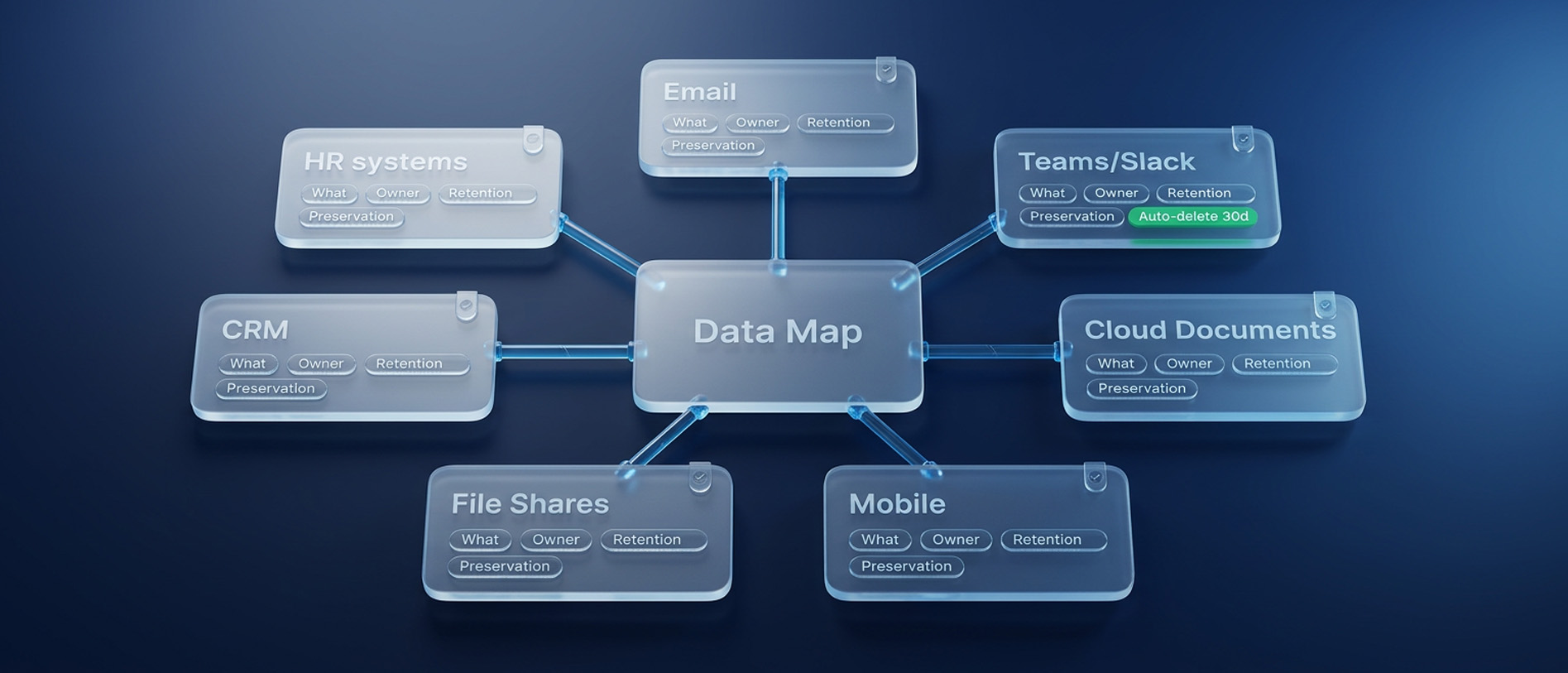
A workable data map answers four questions for every system:
- What is it? Email, chat, file shares, CRM, HR systems, mobile devices, cloud collaboration tools.
- Who owns it? The IT administrator or business owner who can execute a hold or a collection.
- What is the retention behavior? Auto-deletion windows, versioning, archival policies.
- How is it preserved and collected? In-place hold capability, export tooling, forensic access.
Here is why this matters in practice. Imagine a products liability matter lands and your team discovers, three weeks in, that the engineering team's chat platform auto-deletes messages after 30 days.
If that setting was never suspended, potentially relevant ESI is already gone, and the clock started before anyone thought to ask. A current data map turns that scramble into a checklist item executed on day one.
Modern data mapping must also cover the sources older guides ignore: collaboration platforms like Teams and Slack, hyperlinked cloud documents that replace attachments, mobile messaging, and ephemeral apps. These are now routine battlegrounds in discovery disputes, and a map that stops at email is a map of the past.
Best practices for the data map itself:
- Review and update it at least annually, and after any major system migration.
- Involve IT, legal, compliance, and records management. No single team sees the whole picture.
- Note which systems support in-place legal holds versus those requiring manual intervention.
- Flag systems with auto-deletion so hold execution includes suspending those policies.
eDiscovery Preservation: Move Fast and Document Everything
eDiscovery preservation is the obligation to protect potentially relevant Electronically Stored Information (ESI) from alteration or deletion once litigation is reasonably anticipated. Not when the complaint is filed. Not when discovery requests arrive. When a reasonable party would anticipate litigation, which can be triggered by a demand letter, an internal complaint, a regulator's inquiry, or a workplace incident.
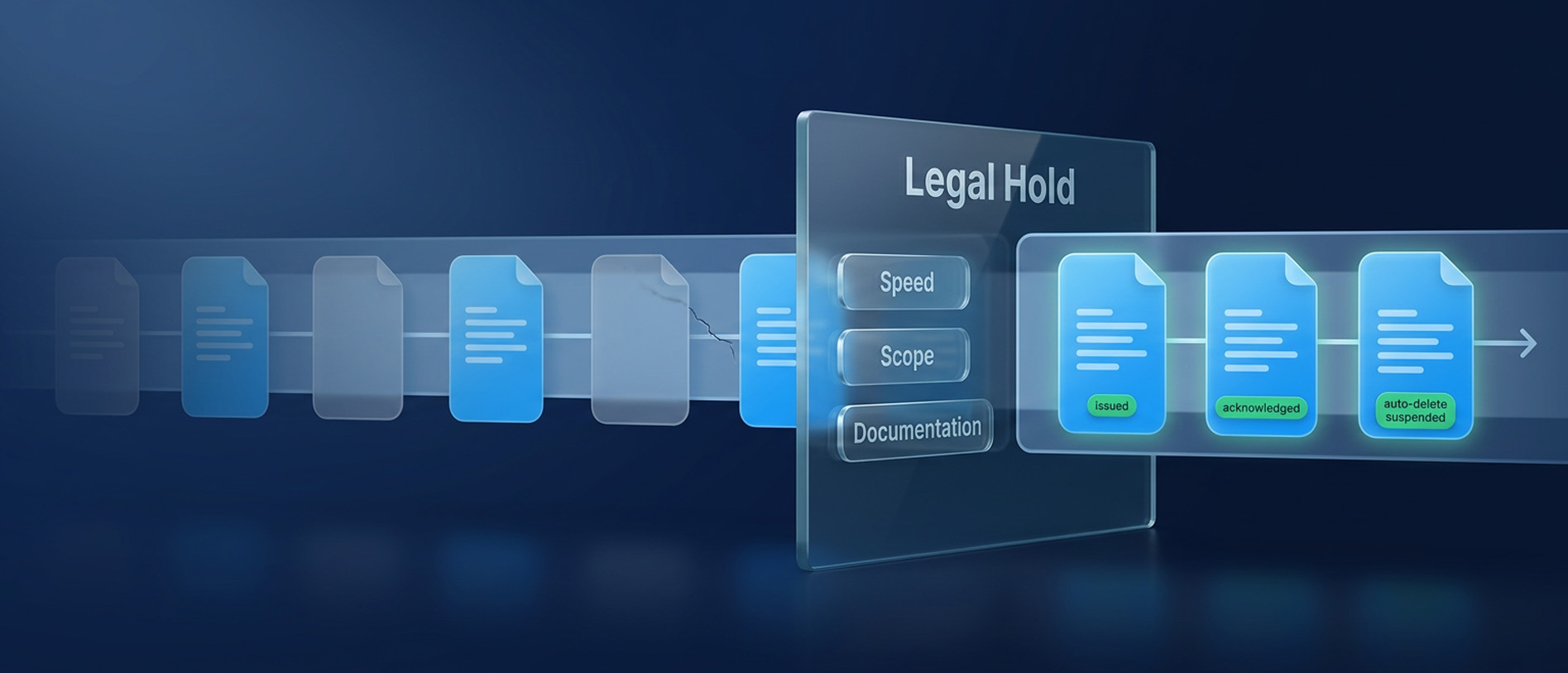
Best-practice preservation has three components: speed, scope, and documentation.
- Speed: Issue litigation hold notices as soon as the duty attaches. Every day between trigger and hold is a day routine deletion policies keep running. Automating hold issuance and tracking through a platform with integrated legal hold removes the lag between "we should send holds" and holds actually landing in inboxes.
- Scope: Holds should reach every custodian and every system identified in your data map as potentially relevant. Over-preservation is expensive, but under-preservation is dangerous, so scope deliberately: document why each custodian and source was included or excluded.
- Documentation: Record when the duty was triggered, when holds went out, who acknowledged them, what systems were suspended from auto-deletion, and every scoping decision. Under Rule 37(e), the question is whether you took reasonable steps. Documentation is how you prove reasonableness after the fact.
Managing the eDiscovery Custodian Relationship
An eDiscovery custodian is any person who possesses or controls potentially relevant ESI. Custodian management is where preservation succeeds or quietly fails, because a hold notice that is sent, ignored, and never followed up is barely better than no hold at all.
Make custodian handling defensible with four steps:
- Require acknowledgment
Track who has confirmed receipt of the hold, and escalate non-responders. Silence is not compliance.
- Interview key custodians
A short, structured interview surfaces data sources the map missed: the personal device used for work texts, the shared drive nobody documented, the departed employee's archived mailbox.
- Send periodic reminders
Litigation runs for years. A hold acknowledged in month one is forgotten by month eighteen unless it is reinforced.
- Handle departures deliberately
Departing custodians are the highest-risk moment in preservation. Build a legal hold check into offboarding so devices and accounts are preserved before they are wiped and reissued.
Defensible Data Collection: Prove It, Do Not Just Do It
Defensible data collection means gathering ESI in a way that preserves the data, its metadata, and a documented chain of custody, so that the collection itself cannot become the subject of dispute. The test is simple: could a qualified person repeat your collection from your documentation and get the same result?
Three practices separate defensible data collection from the risky kind:
- Preserve metadata, always
Dragging files to a folder or forwarding emails alters timestamps, authorship data, and system metadata that may themselves be evidence. Use collection methods that capture ESI with metadata intact, whether through forensic tooling, API-based collection from cloud platforms, or a platform that ingests natively.
- Document the chain of custody
For every collection, record what was collected, from which source and custodian, by whom, when, with what tool, and using what parameters. Hash values verify that what was collected is what was processed. This is tedious exactly once: when you build it into the workflow. After that, it is automatic.
- Match the method to the matter
A full forensic image of every laptop is rarely proportionate; a targeted collection scoped by custodian, date range, and source usually is. Proportionality is built into the discovery rules through FRCP Rule 26, which limits discovery to what is relevant and proportional to the needs of the case.
A concrete example: in an employment dispute involving three custodians over an eighteen-month window, a defensible approach collects those custodians' mailboxes, chat channels, and relevant file shares for that window, with documented search parameters, rather than imaging the entire email server. Narrower, faster, cheaper, and easier to defend, because every scoping decision has a documented rationale tied to the claims.
Design an eDiscovery Workflow That Survives Scrutiny
An eDiscovery workflow is the repeatable sequence your team follows from identification through production. The operative word is repeatable. Ad-hoc decisions made matter by matter are where inconsistency creeps in, and inconsistency is what opposing counsel exploits.
Build your eDiscovery workflow around these practices:
- Cull early, cull defensibly.
Deduplication, de-NISTing, date filtering, and early case assessment can dramatically reduce the volume that reaches review, which matters because document review is the most expensive stage of eDiscovery, accounting for up to 80 percent of total cost. Every culling decision should be logged with its criteria so the reduction is explainable, not mysterious.
AI can now do much of this early orientation work for you. Venio's Early Case Intelligence, enabled with a single option at ingestion, generates two layers of insight once processing completes: Case Insights surfaces the top key topics with subtopics, relevant documents, and top keyword lists.
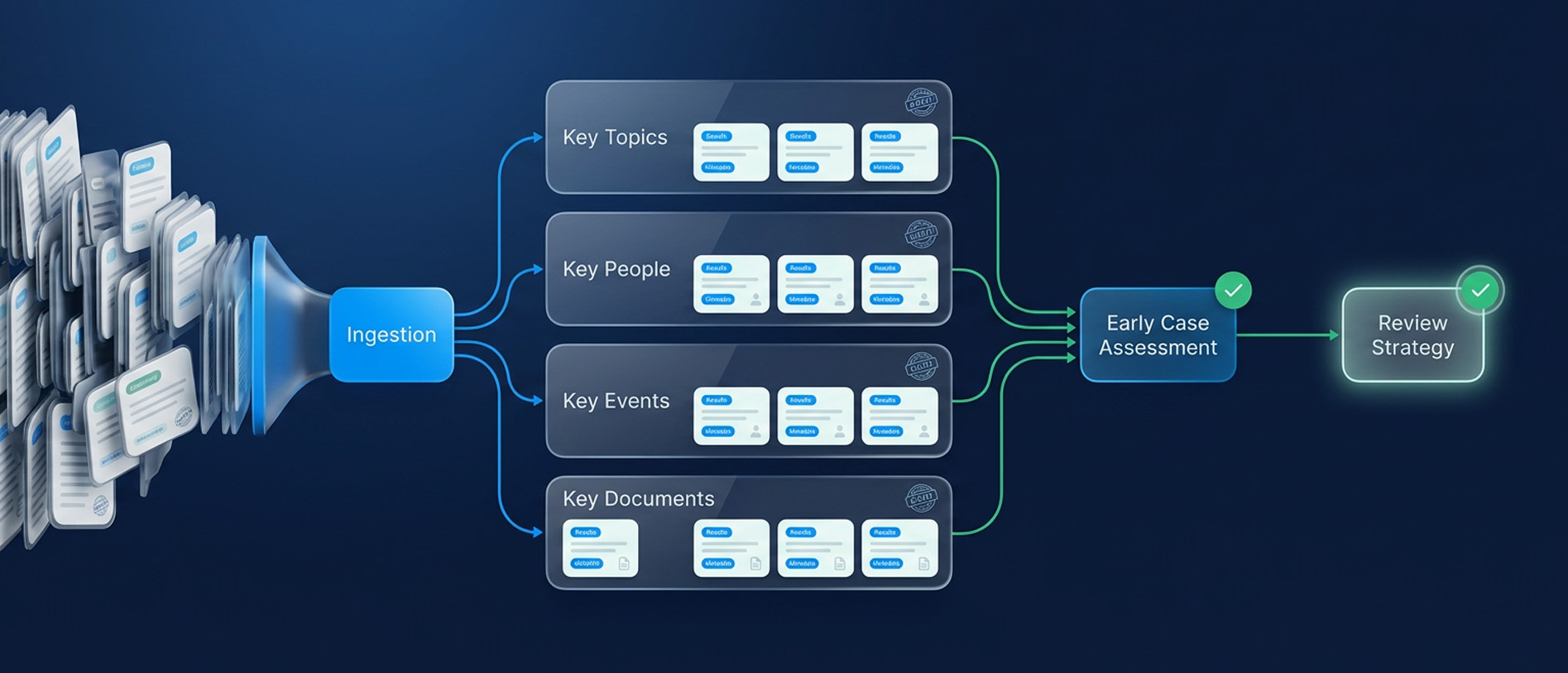
Case Elements identifies the key people, key events, and key documents in the matter. Because these outputs land right after processing, they inform both early case assessment and review strategy before a single reviewer opens a document.
- Standardize processing
Processing converts raw collected data into a searchable, reviewable set. Use consistent specifications for extraction, exception handling, and text and metadata normalization across matters.
- Make quality control continuous, not terminal
QC is not a gate at the end; it is a discipline at every stage. Validate search results with sampling, check privilege tags before production, and reconcile document counts at every handoff.
AI can accelerate the highest-risk QC task: within Venio Review, AI privilege identification tags documents as Privilege, Potentially Privilege, or Non-Privilege, giving your team a triaged starting point for privilege QC. Treat it as identification, not adjudication. A qualified reviewer should still validate privilege calls before anything is produced.
- Use AI and analytics with a documented methodology.
Technology-Assisted Review (TAR) and AI prioritization are now mainstream, but their defensibility depends on documentation: what model or workflow was used, how it was validated, and what sampling confirmed its performance. A tool you cannot explain is a deposition topic waiting to happen.
Explainability is exactly where purpose-built classification earns its keep. Venio's AI relevance classification, run in the Review module after ingestion, tags each document as Responsive, Non-Responsive, Needs Further Review, or Tech Issue and attaches an explanation for each tag. That per-document rationale is the difference between an AI workflow you can defend at a meet-and-confer and a black box you have to apologize for.
- Plan production at the meet and confer, not the week before the deadline
Format disputes, load file specifications, and metadata field requirements should all be settled early. The professional's guide to eDiscovery production walks through the production stage in detail.
eDiscovery and Legal Compliance: Privacy Is Part of Discovery Now
eDiscovery and legal compliance used to be separate conversations. They are not anymore. The same ESI that is discoverable in litigation is often subject to privacy law, and best-practice programs address both obligations in a single motion.
Three compliance realities shape modern eDiscovery:
- Privacy regulations follow the data into discovery
ESI containing personal data may be subject to GDPR, CCPA, HIPAA, or sector-specific rules even while under legal hold. Cross-border matters add data transfer restrictions on top. Your workflow needs the ability to identify, protect, and, where required, redact personal information within the discovery set, not as a separate downstream project.
This is another place AI does the heavy lifting: Venio's AI-powered PII identification and extraction, available in the Review module once ingestion completes, flags personal information across the document set so privacy handling starts with a map instead of a manual hunt.
- Retention policy and preservation obligation must be reconciled
A defensible deletion program is a compliance asset right up until a hold attaches, at which point suspension of deletion for held data must be immediate and provable. This is exactly the intersection where the data map, the hold system, and the retention schedule need to speak to each other.
- Deployment choice is a compliance decision
Some organizations and agencies face data residency or security requirements that rule out shared cloud infrastructure. Evaluating whether cloud, on-premises, or hybrid deployment fits your regulatory posture is itself an eDiscovery best practice, and it is one reason platforms offering all three deployment models on a single codebase have an advantage for regulated industries.
Common Mistakes That Turn Into Sanctions Motions
Knowing the best practices is half the job. Recognizing the failure patterns is the other half. These are the mistakes that show up again and again when discovery conduct gets challenged:
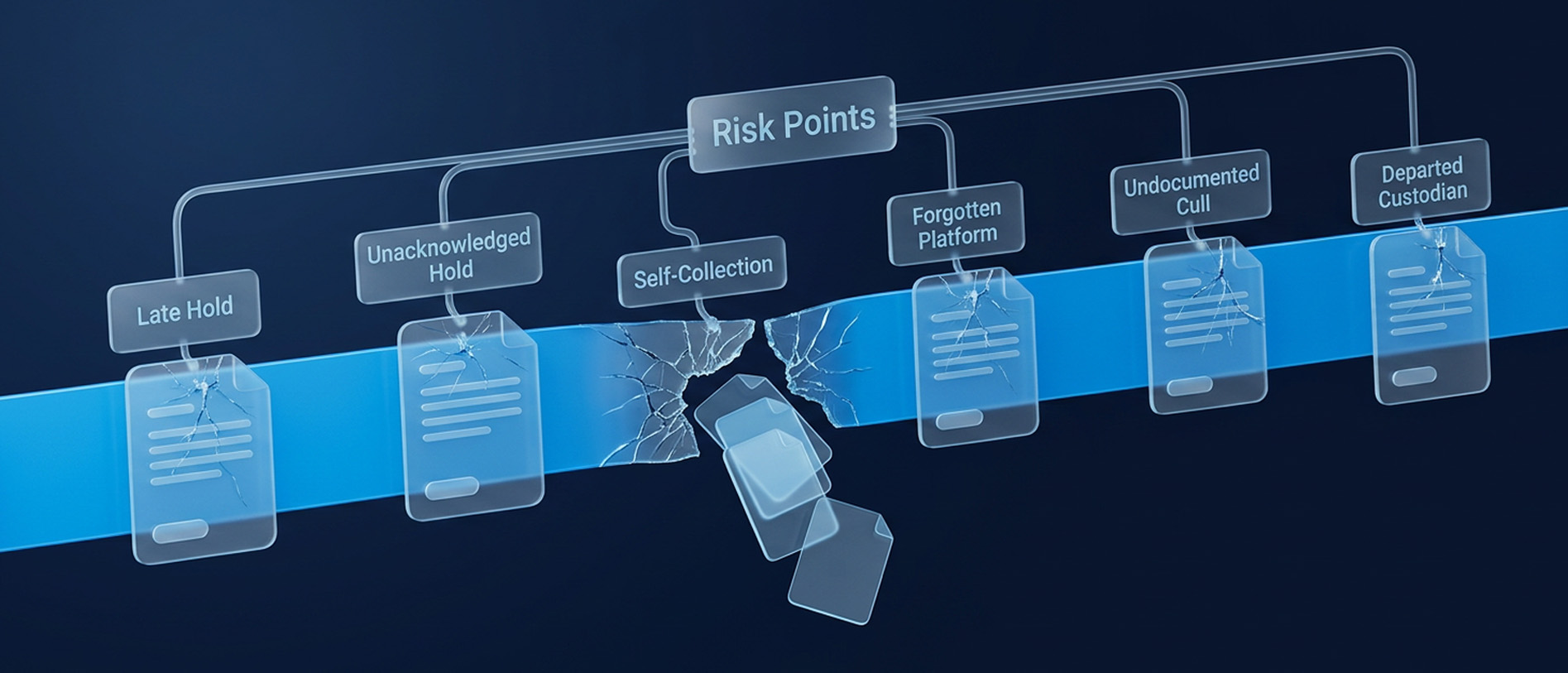
- The Late Hold: Litigation was reasonably anticipated in March; holds went out in July. Everything auto-deleted in between is now a Rule 37(e) argument.
- The Unacknowledged Hold: Notices were sent, nobody tracked responses, and a key custodian says they never saw it. Sent is not preserved.
- The Self-collection Trap: Custodians were asked to find and forward their own relevant documents. Metadata is altered, selection was self-interested, and the collection cannot be verified.
- The Forgotten Platform: Email was preserved flawlessly; the project chat tool where the actual decisions happened was never held.
- The Undocumented Cull: The review set was cut by 70 percent, and nobody can reconstruct the criteria. Defensible reduction becomes indefensible deletion.
- The Departed Custodian: IT wiped and reissued the laptop of an employee who left two months into the hold, because offboarding and legal hold were never connected.
Every one of these is preventable with the practices above, and every one is dramatically cheaper to prevent than to litigate.
Don’t Just Run eDiscovery. Make It Defensible with Venio
The best eDiscovery programs are built for the moment someone asks, “How do you know?” How was the data mapped? What preservation steps were taken? Who handled the evidence? Can you prove it?
That’s why defensibility should shape the entire eDiscovery workflow. Strong preservation, data mapping, documentation, and connected processes reduce risk and make every decision easier to explain.
Venio brings legal hold, early case assessment, processing, review, and production together on one platform, with cloud, on-premises, and hybrid deployment options. Every action stays connected and traceable from hold through production.
See what a defensible, end-to-end eDiscovery workflow looks like in practice. Schedule a personalized Venio demo and walk through your use case with our team.
Frequently Asked Questions
What are the main stages of the eDiscovery process?
The EDRM framework maps the eDiscovery lifecycle across stages that run from information governance and identification through preservation, collection, processing, review, analysis, production, and presentation. The stages are a reference model rather than a strict sequence, and matters often loop back through earlier stages as new sources emerge.
What makes a data collection defensible?
Defensible data collection preserves the ESI and its metadata intact, documents a complete chain of custody, uses methods appropriate to the source, and records the scope decisions behind what was and was not collected. The practical test is repeatability: your documentation should let a qualified person reproduce the collection and verify its integrity.
When does the duty of eDiscovery preservation begin?
The preservation duty attaches when litigation is reasonably anticipated, which is often well before a complaint is filed. Triggers can include demand letters, regulatory inquiries, internal complaints, or incidents likely to produce claims. Once the duty attaches, issue litigation holds promptly and suspend auto-deletion for potentially relevant sources.
What is an eDiscovery custodian?
An eDiscovery custodian is a person who possesses or controls potentially relevant electronically stored information. Custodian best practices include tracked hold acknowledgments, structured interviews to surface unmapped data sources, periodic hold reminders during long matters, and preservation checks built into employee offboarding.
What happens if ESI is lost after the duty to preserve attaches?
Under FRCP 37(e), if ESI that should have been preserved is lost because a party failed to take reasonable steps, and it cannot be restored or replaced, courts may order measures to cure prejudice. The most severe sanctions, such as adverse inference instructions or default judgment, require a finding that the party intended to deprive the other side of the information.
Is eDiscovery 101 knowledge enough to run a matter?
Understanding eDiscovery 101 concepts like the EDRM stages and ESI types is the foundation, but running a matter defensibly requires operational practices on top: a current data map, tracked litigation holds, documented collections, standardized workflows, and continuous quality control. The fundamentals tell you what the stages are; best practices determine whether your execution survives scrutiny.
Related Articles
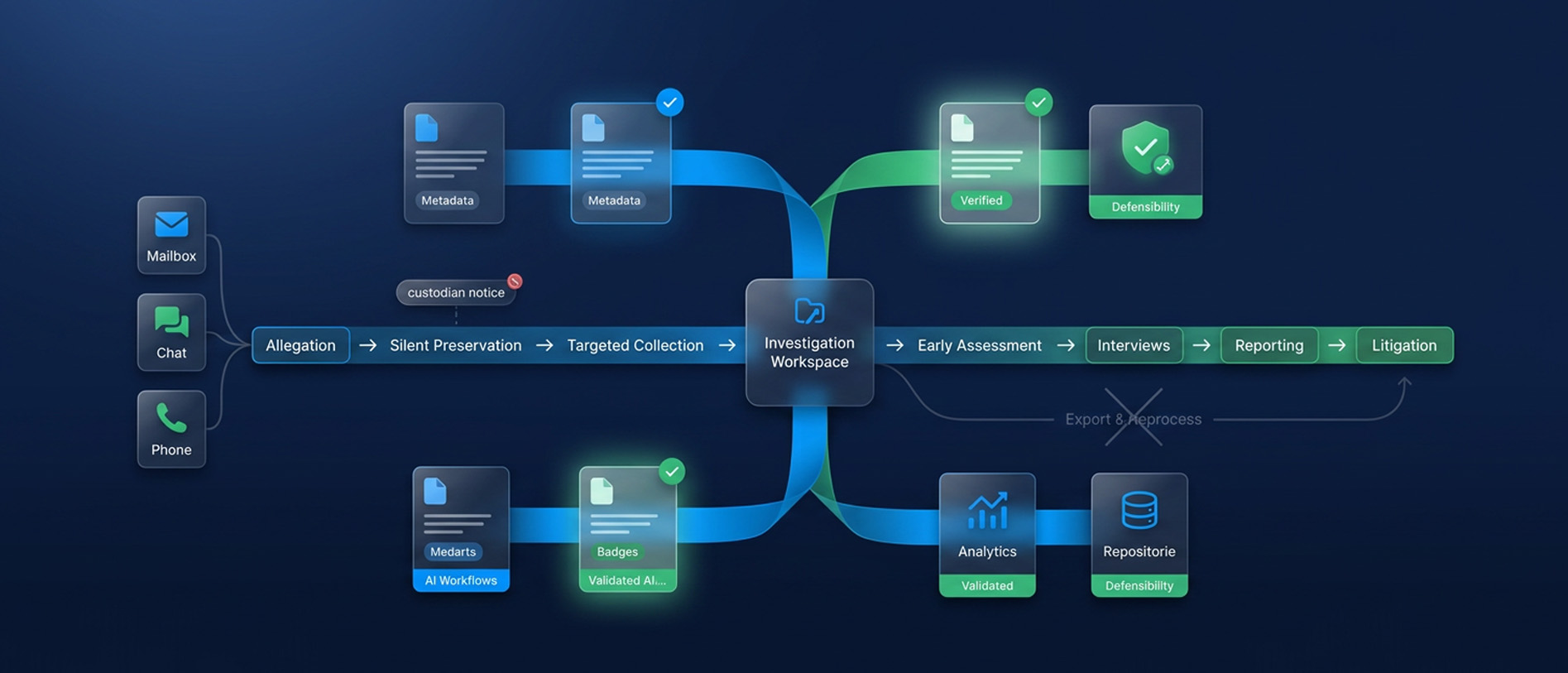
Internal Investigations: Getting the Facts Without Blowing the Matter Open
An internal investigation offers no court schedule and no second chance at prese
Read Article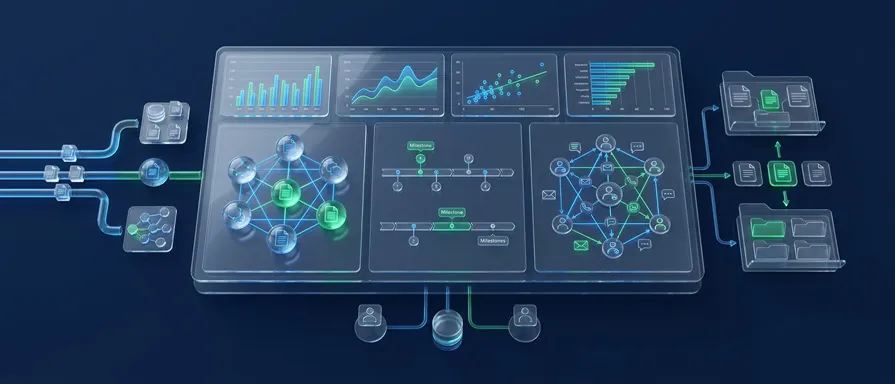
eDiscovery Data Analytics & Visualization for Trial Preparation
Most litigation teams don’t lose at trial because they lack evidence. They lose
Read Article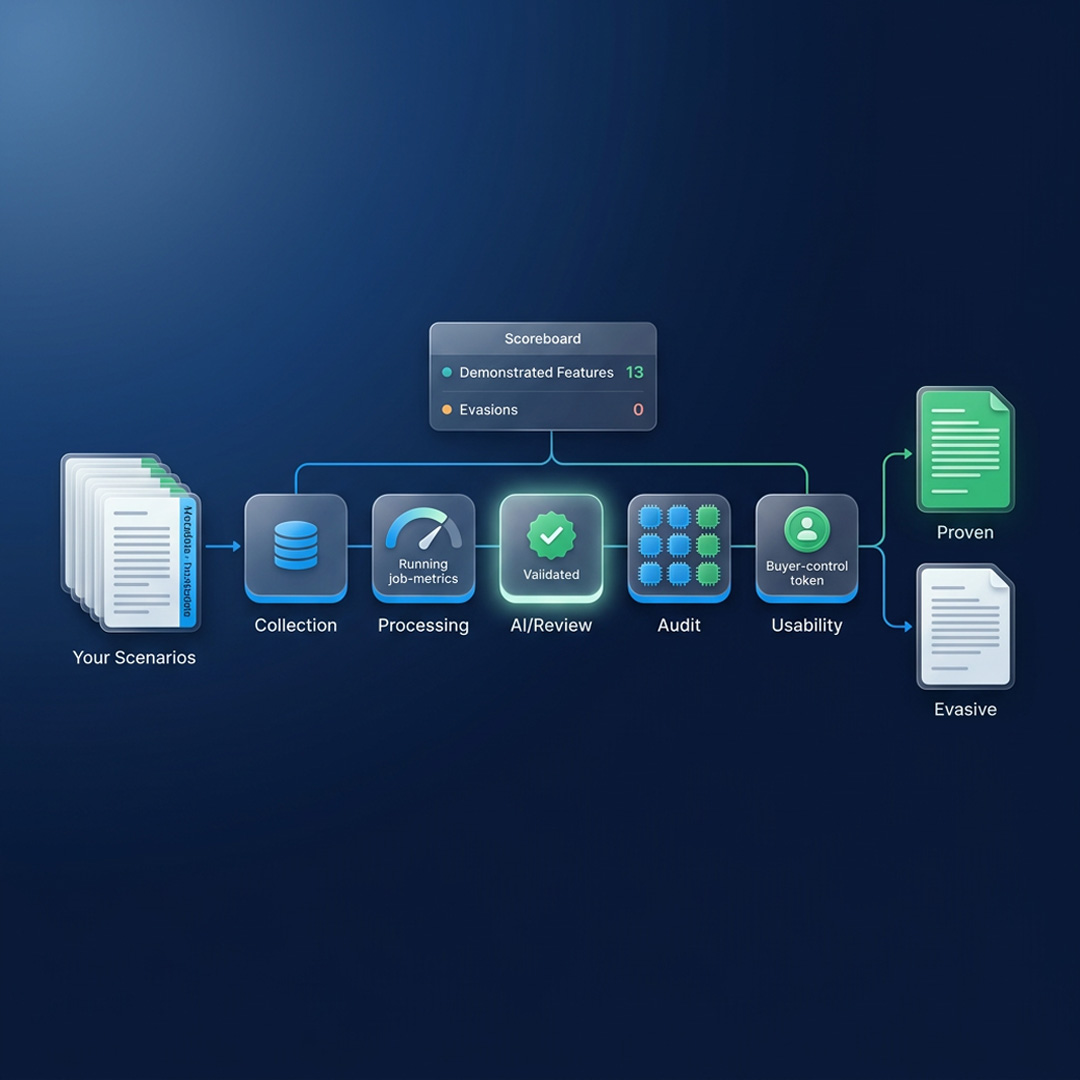
What to Ask in an eDiscovery Demo Before You Sign
Twenty questions that make an eDiscovery vendor prove processing, AI, security a
Read Article